When Is It Time to Upgrade to a Fully Automated LPG Cylinder Production Line?
Oct.02, 2026
When is it time to upgrade to a fully automated LPG cylinder production line? I would begin the assessment when capacity is constrained by manual stations, downtime repeatedly disrupts delivery schedules, defect rates are difficult to control, labor requirements keep rising, or safety and testing records remain incomplete. The decision should be based on measured production data, not only on equipment age or supplier claims.
For most manufacturers, full automation becomes relevant when several warning signs appear at the same time. These include sustained capacity utilization above 80–85%, recurring bottlenecks at welding or testing stations, frequent unplanned downtime, rising rework, insufficient skilled operators, and an order backlog that cannot be cleared through additional shifts. A proper evaluation should also compare the cost of retrofitting existing equipment with the cost, output, and commissioning risk of a new line.
!
Key Takeaways
- Upgrade when recurring bottlenecks, quality variation, and labor dependency limit profitable production growth.
- Full automation connects forming, welding, heat treatment, coating, testing, handling, and traceability.
- Retrofit individual stations when the existing frame, utilities, and process layout remain technically serviceable.
- Use capacity utilization, downtime, defect rates, payback period, and break-even volume before approving investment.
- A supplier must demonstrate commissioning support, operator training, maintenance planning, and documented testing procedures.
When Is It Time to Upgrade to a Fully Automated LPG Cylinder Production Line?
I recommend a structured diagnosis across seven areas: capacity, labor, quality, safety, downtime, compliance, and financial return. One isolated problem may be solved by replacing a machine, but several simultaneous problems usually indicate that the production system itself needs to be redesigned.
1. Capacity and order backlog
The first signal is a persistent mismatch between available output and confirmed demand. I normally compare planned capacity with actual good-cylinder output, excluding rejected, reworked, or waiting units. If a factory operates at more than 80–85% of available line capacity for several months and still carries an order backlog, additional automation may be justified.
Capacity should be measured by product type rather than by a single annual average. A line producing 6 kg, 12.5 kg, 15 kg, or larger cylinders may experience different forming, welding, handling, and testing cycle times. A manufacturer should record hourly output, changeover duration, first-pass yield, and the number of shifts required to meet the shipment plan.
2. Labor dependency and operating cost
Manual loading, positioning, welding, inspection, and material transfer create a direct labor dependency that becomes difficult to manage as production volume rises. The issue is not simply the number of workers; it is also the effect of absenteeism, training time, operator turnover, and inconsistent process execution. If one absent specialist can stop a welding or testing station, the line has a measurable operational risk.
I calculate labor pressure by comparing annual direct labor cost with the value of additional good cylinders that automation could produce. The calculation should include wages, overtime, recruitment, training, injury-related absence, and the cost of maintaining multiple shifts. Automated handling, PLC-controlled sequences, robotic welding support, and in-line inspection can reduce repetitive manual work, but they do not eliminate the need for qualified technicians.
3. Quality variation and rework
An LPG cylinder production line needs stable forming, welding, heat treatment, surface preparation, coating, and testing results. Repeated dimensional deviations, weld repairs, poor coating adhesion, valve-seat alignment problems, or failed leak tests indicate that process control is not sufficiently consistent. I would treat a rising defect or rework trend as an upgrade trigger even when shipment volume is still manageable.
The most useful indicators are first-pass yield, weld repair percentage, rejected cylinders per batch, average rework hours, and test failure by process station. Automation can improve repeatability through controlled positioning, programmed welding parameters, laser tracking for circumferential welding, and electronic records. However, the equipment must be matched to the cylinder design, material thickness, joint configuration, and applicable regulatory requirements.
4. Safety and inspection exposure
Manual movement of steel shells, hot work around welding stations, heat-treatment operations, shot blasting, coating, and pressure testing all create safety exposure. If operators frequently work close to moving fixtures, hot components, pressurized test equipment, or welding arcs, the factory should review whether handling and isolation can be automated.
An automated LPG cylinder inspection and testing line may include hydrostatic testing, air leakage testing, dimensional checks, barcode or serial-number tracking, and reject separation. In-line hydrostatic testing helps identify pressure-related failures before release, while automated leak testing provides a repeatable method for detecting sealing or weld defects. The objective is not merely faster testing; it is consistent test execution with records that can be traced to each cylinder or production batch.
5. Downtime and maintenance burden
Old equipment can remain operational while becoming increasingly expensive to maintain. I measure downtime by station, cause, duration, and recurrence rather than recording only total monthly hours. If the same welding fixture, hydraulic system, furnace component, sensor, or conveyor fails repeatedly, the factory may be paying for repairs without removing the underlying constraint.
A practical trigger is when unplanned downtime regularly exceeds 5–10% of scheduled production time, although the acceptable level depends on the factory’s product mix and delivery commitments. I also review spare-part availability, mean repair time, control-system obsolescence, and whether the original manufacturer still supports the equipment. A new line should include a maintenance schedule, critical spare-parts list, fault diagnostics, and training for electrical and mechanical technicians.
What Is a Fully Automated LPG Cylinder Production Line?
A fully automated LPG cylinder production line is an integrated manufacturing system in which material transfer, forming, welding, heat treatment, surface preparation, coating, inspection, and production records are coordinated through programmed controls. It does not mean that human involvement disappears. Operators still supervise production, load raw materials, verify quality records, adjust approved parameters, perform maintenance, and respond to abnormal conditions.
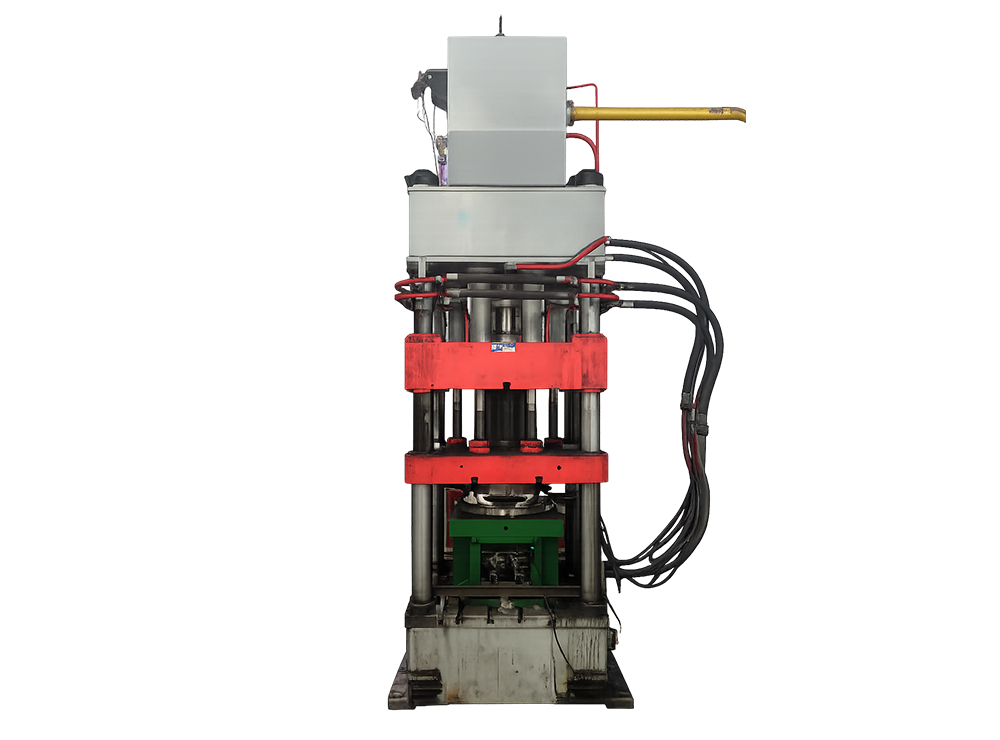
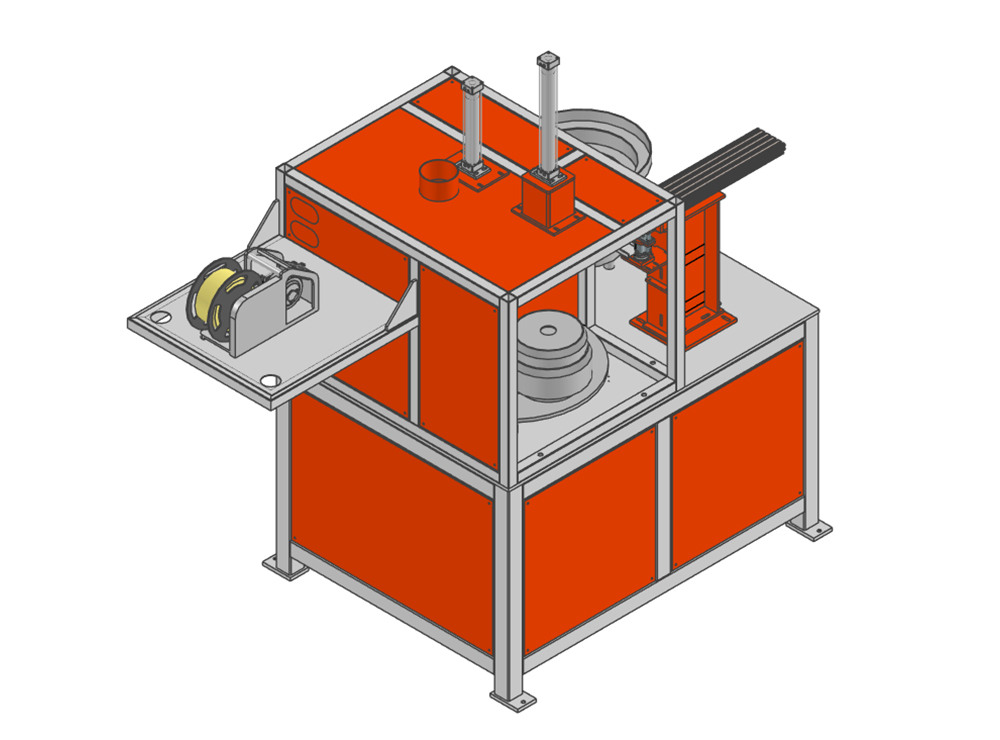
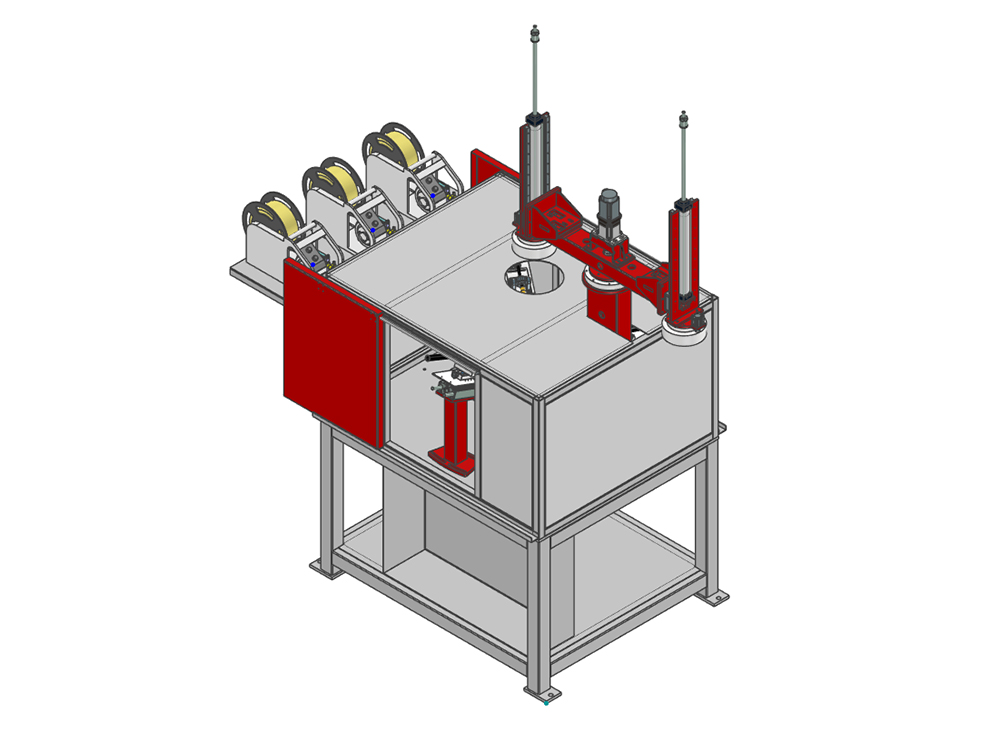
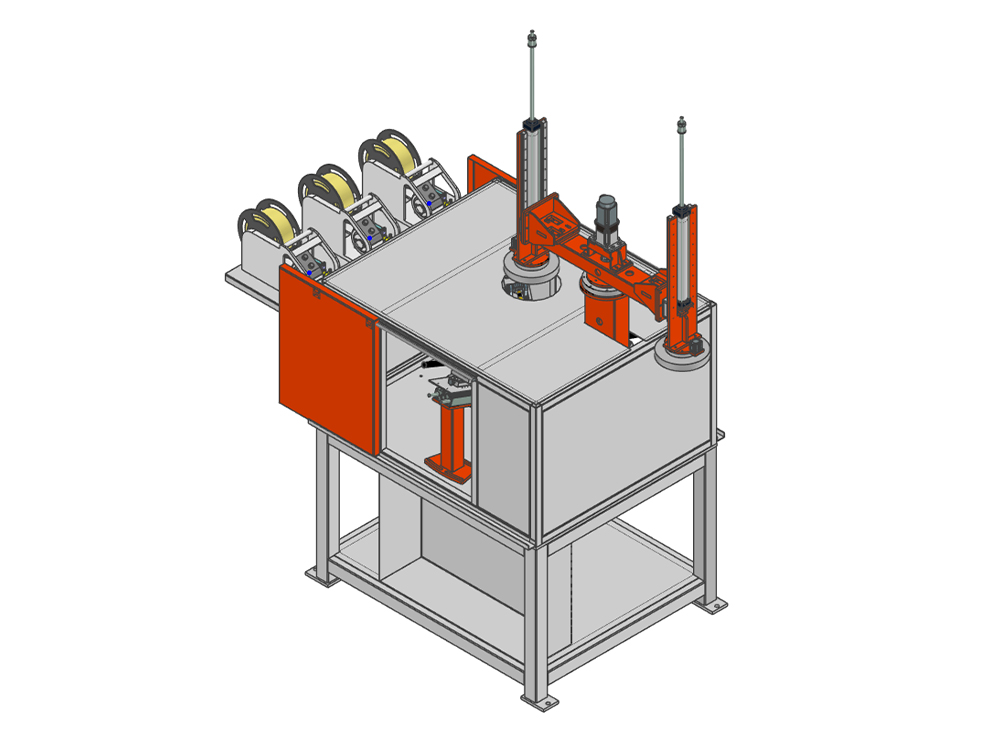
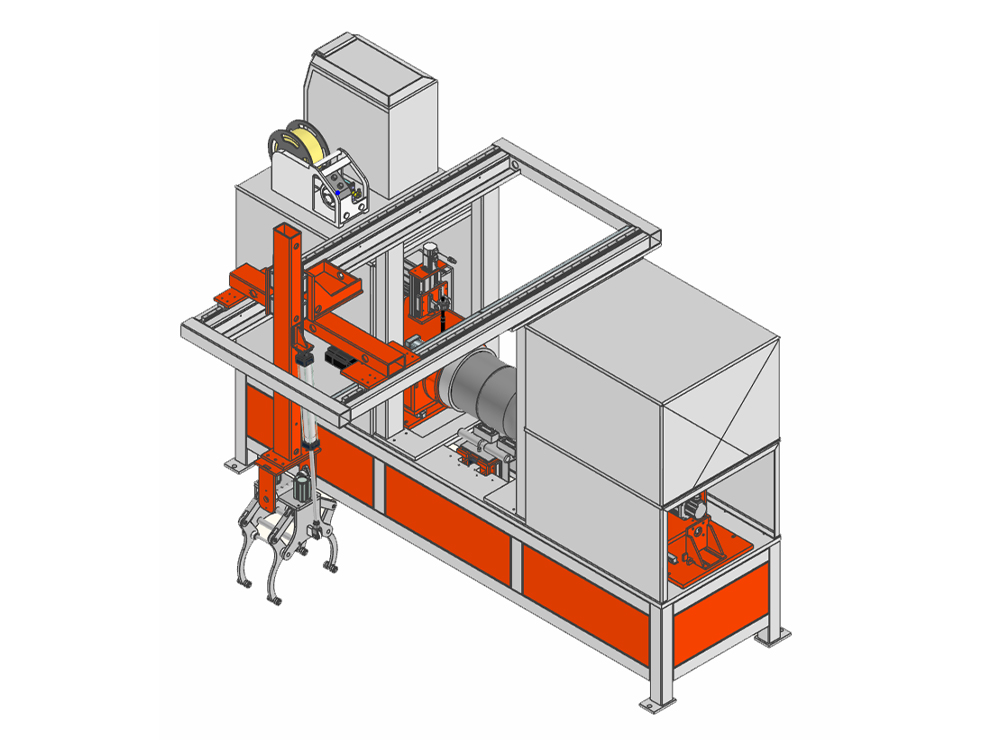
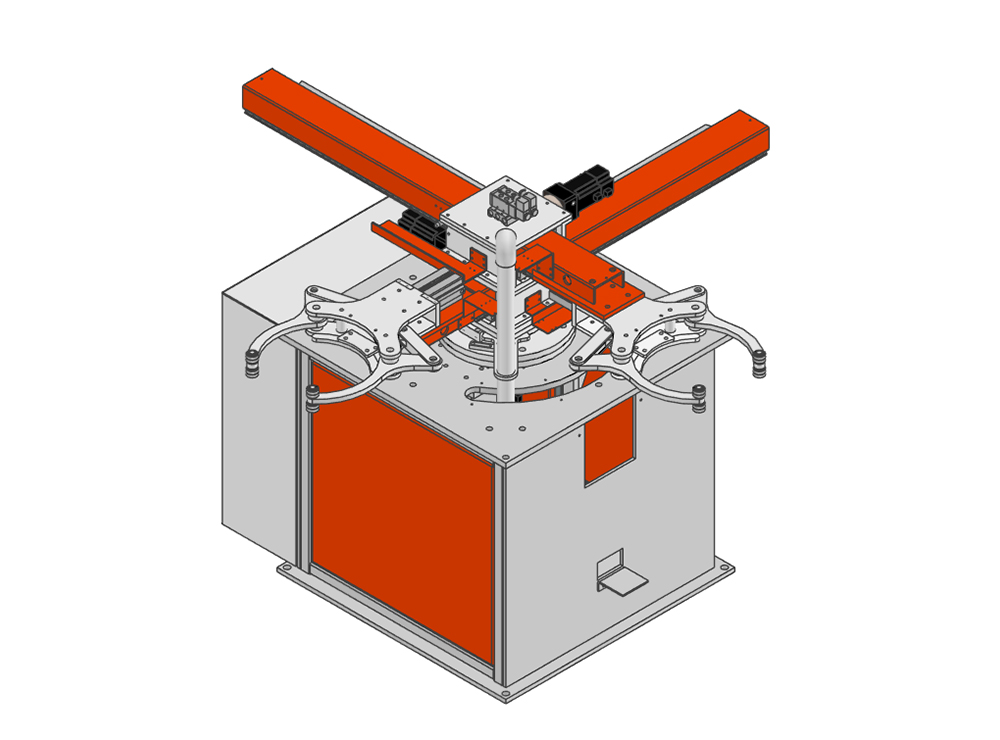
A typical configuration may include steel blank preparation, deep drawing, trimming and joggling, valve-seat welding, handle and base forming, circumferential welding, annealing or heat treatment, shot blasting, powder coating, valve mounting, silk printing, hydrostatic testing, air leakage testing, and final handling. Robotic handling systems or conveyors connect individual stations and reduce repeated manual transfers. A PLC-controlled LPG cylinder production line coordinates sensors, actuators, safety interlocks, recipes, alarms, and production data.
Shuofang presents Custom LPG Cylinder Production Lines through automated, semi-automated, and segmented configurations. Its stated project scope covers equipment design, manufacturing, installation, commissioning, operation guidance, and after-sales support, with a production base exceeding 20,000 square meters and reported experience of more than 10 years. The company also identifies projects including a new automated line with an annual output of 1.68 million LPG cylinders, which is a useful reference point when comparing capacity claims with a manufacturer’s actual project record.
Fully Automated vs Semi-Automated LPG Cylinder Production Line
The difference between a semi-automated and fully automated LPG cylinder production line is mainly the level of material movement, process coordination, inspection integration, and operator intervention. A semi-automated line may use automatic welding or forming machines while relying on workers to transfer shells, load fixtures, inspect parts, and move cylinders between departments. A fully automated system connects these stages into a controlled production flow.
| Factor | Semi-automated line | Fully automated line |
|---|---|---|
| Material handling | Manual or partly conveyor-based | Integrated conveyors, manipulators, or robotic handling |
| Welding | Automatic equipment with operator loading | Automatic loading, positioning, welding, and monitoring |
| Testing | Separate or batch-based inspection | In-line or connected hydrostatic and leak testing |
| Labor requirement | Higher station-level staffing | Lower repetitive labor, higher technical supervision |
| Flexibility | Often easier for mixed or lower volumes | Best when volume and product routing are stable |
| Upfront investment | Lower initial expenditure | Higher equipment, integration, and commissioning cost |
| Data traceability | Often manual records | PLC, barcode, recipe, alarm, and test records |
| Maintenance skill | Conventional mechanical and electrical skills | Automation, controls, sensors, robotics, and mechanical skills |
An upgraded existing line sits between these two models. A factory may automate the most constrained processes—such as circumferential welding, material handling, hydrostatic testing, or powder coating—without replacing every machine. This approach can reduce initial expenditure, but only if the existing layout, utilities, machine condition, control architecture, and product specifications support integration.
How to Choose Between Retrofitting and Full Replacement
I use a phased decision process rather than assuming that a complete replacement is always necessary. First, I inspect the frame condition, hydraulic and pneumatic systems, electrical cabinets, safety circuits, fixtures, tooling, utilities, and available floor space. Next, I identify whether the primary bottleneck comes from one station or from poor coordination across the entire line.
Retrofit individual processes when:
- One station causes more than 30–40% of total line waiting time.
- The existing machines have serviceable frames and compatible utilities.
- Product dimensions and welding requirements are stable.
- The control system can accept new sensors, drives, conveyors, or safety devices.
- The factory needs a staged investment over multiple budget cycles.
Typical retrofit candidates include automated LPG cylinder welding and forming equipment, robotic handling, valve mounting, shot blasting, powder coating, hydrostatic testing, and air leakage testing. Retrofitting can also be suitable when the factory has a temporary capacity problem caused by one outdated machine rather than a general system failure.
Replace the complete line when:
- Several major stations are obsolete or unsupported.
- The layout causes repeated manual transport and long waiting times.
- The line cannot maintain required output across multiple cylinder models.
- Quality failures occur at several unrelated process stages.
- Utilities, safety systems, and controls cannot support modern equipment.
- The required annual capacity is more than twice the current reliable output.
A full replacement normally provides better coordination between forming, welding, heat treatment, surface finishing, inspection, and material handling. It also creates a clearer commissioning plan, although the initial investment and implementation risk are higher.
How to Calculate LPG Cylinder Production Line Automation ROI
For an investment decision, I separate capacity gains from cost savings. A simple annual benefit model is:
Annual benefit = labor savings + additional contribution margin from good cylinders + reduced rework cost + reduced downtime cost − additional maintenance and energy cost
The calculation should use good-cylinder output rather than total machine cycles. For example, if a factory produces 400,000 acceptable cylinders annually and an upgraded line increases output to 600,000, the additional 200,000 units should be multiplied by contribution margin, not selling price. The model should also account for demand limits, raw-material availability, working capital, and the time needed to reach stable production after commissioning.
How much production volume justifies full automation?
There is no universal volume threshold because labor rates, cylinder specifications, product mix, factory utilization, and financing costs vary by country. As a screening method, I would compare full automation with semi-automation when the factory has a stable demand plan, sustained utilization above 80%, and enough annual volume to operate the line at a commercially useful load. A project producing 1.68 million cylinders annually, for example, requires a different automation model from a plant producing 100,000 mixed-specification cylinders.
The break-even volume can be estimated as:
Break-even cylinders = net automation investment ÷ contribution margin per additional good cylinder
For payback, I divide the total project cost by annual net benefit. A target payback of three to five years is often used for industrial screening, but the final decision should include financing cost, depreciation, taxes, commissioning losses, maintenance, spare parts, energy consumption, and expected equipment life. I also calculate total cost of ownership over 10 years so that a lower-price machine is not selected if it carries excessive downtime or maintenance risk.
Expected Benefits and Operational Trade-Offs
A fully automated line can increase production capacity by reducing manual transfer time, balancing station cycle times, and running more consistently across shifts. It can also reduce labor requirements for repetitive positioning, loading, inspection, and movement. These benefits become measurable only when the line achieves stable uptime and the factory has sufficient demand for the additional output.
Quality consistency may improve through fixed tooling, programmed welding parameters, controlled heat-treatment recipes, standardized testing, and automatic rejection of nonconforming cylinders. Traceability improves when each cylinder or batch is linked to process parameters, test results, operator actions, and equipment alarms. Automation does not correct poor product design, unsuitable raw material, incorrect welding procedures, or weak quality planning, so those factors must be addressed during engineering.
Safety gains may result from reducing manual handling near welding, heat-treatment, blasting, coating, and pressure-testing areas. Maintenance requirements, however, become more specialized because the factory must support sensors, servo drives, PLCs, variable-frequency drives, pneumatic systems, robots, and networked control panels. A supplier should define response times, spare-parts availability, software backup, remote support, training hours, and warranty coverage before contract approval.
A Practical Upgrade Roadmap
I recommend dividing the project into six controlled phases. This reduces the risk of buying equipment before the factory has defined its actual production requirements.
-
Collect baseline data. Record output, good-cylinder yield, cycle time, changeover time, downtime, labor by station, energy use, rework, test failures, and order backlog for at least four to eight weeks.
-
Map the production constraint. Identify whether the primary limitation is forming, welding, handling, heat treatment, coating, inspection, utilities, or labor availability. Rank each bottleneck by lost hours and lost good-cylinder output.
-
Define the target state. Set annual output, shift pattern, cylinder sizes, acceptable defect rate, testing requirements, traceability level, floor-space limits, and operator skill requirements.
-
Compare three options. Evaluate the existing line with repairs, a phased retrofit, and a complete automated production line. Use the same assumptions for capacity, labor, maintenance, commissioning, and financing.
-
Verify the supplier technically. Request process layouts, cycle-time calculations, utility requirements, control architecture, testing procedures, acceptance criteria, spare-parts lists, training plans, and references from comparable projects.
-
Commission in measured stages. Approve installation, dry runs, individual-machine tests, integrated line tests, trial production, and final acceptance separately. Do not judge the investment only by the first week of production; measure stable output, first-pass yield, downtime, and maintenance response after the ramp-up period.
Final Decision Matrix
| Factory condition | Recommended direction | Main reason |
|---|---|---|
| Low volume, many cylinder models, limited capital | Selective automation or segmented line | Preserves flexibility and limits upfront cost |
| Stable demand, one major welding bottleneck | Retrofit welding and handling | Targets the largest capacity constraint |
| High labor cost, repetitive manual transfer, stable product mix | Semi-automated to fully automated upgrade | Reduces labor dependency and cycle variation |
| Multiple obsolete machines and frequent downtime | Complete line replacement | Avoids integrating incompatible equipment |
| High testing workload and weak traceability | Automated inspection and testing line | Improves test consistency and production records |
| Annual target above current reliable capacity by 2× or more | Full automation study | Capacity gap may exceed retrofit capability |
| Limited maintenance capability | Phased upgrade with supplier training | Reduces commissioning and service risk |
Conclusion
When is it time to upgrade to a fully automated LPG cylinder production line? The clearest answer is when capacity utilization, downtime, labor dependency, quality variation, safety exposure, and order backlog show that the current system is limiting profitable growth. I would not approve a project based only on equipment age or a promised output figure; I would first build a baseline using good-cylinder output, first-pass yield, station downtime, labor cost, testing failures, and demand forecasts.
The next step is to compare three scenarios: repair the existing line, retrofit the constraint stations, or replace the production system with a fully integrated solution. Include automated LPG cylinder welding and forming, robotic handling, heat treatment, shot blasting, powder coating, hydrostatic testing, air leakage testing, and traceability where they directly address measured losses. For manufacturers evaluating Shuofang or another supplier, request a factory-specific layout, capacity calculation, commissioning schedule, training plan, warranty terms, and 10-year total cost of ownership model before making the final decision.