The Importance of Edge Trimming in LPG Cylinder Manufacturing
Oct.01, 2026
Edge trimming is the controlled removal of excess material from formed LPG-cylinder halves so each shell has a consistent, weld-ready circumference. In my view, this operation directly affects fit-up, circumferential weld quality, dimensional accuracy, downstream inspection, and production safety. A properly selected LPG Cylinder Edge Trimming Machine also reduces manual correction, burr formation, and variation between production batches.
The operation usually follows deep drawing or shell forming and precedes edge preparation, joggling, circumferential welding, heat treatment, surface finishing, and pressure or leakage testing. Its purpose is not simply to make the cylinder edge look cleaner; it establishes the geometry required for repeatable assembly and pressure-vessel production.
!
What Is Edge Trimming in LPG Cylinder Manufacturing?
In LPG cylinder production, edge trimming removes uneven, stretched, or excess metal from the open perimeter of a formed cylinder half. The machine holds the shell in a controlled position while a cutting or trimming tool follows the required circumference. The finished edge must match the approved drawing, tooling profile, and welding process requirements.
The operation generally includes these stages:
- Load the formed cylinder half onto a locating fixture or rotary support.
- Clamp the shell without distorting its wall or opening.
- Position the trimming tool according to the required edge height and profile.
- Rotate the workpiece or move the cutting head around the circumference.
- Remove burrs, chips, and loose metal particles from the trimmed edge.
- Inspect edge height, roundness, wall condition, and surface preparation.
- Transfer accepted shells to joggling or circumferential welding.
I treat edge trimming as a dimensional preparation operation rather than a cosmetic finishing step. If the edge is too high, too low, angled, or locally damaged, the two cylinder halves may not align correctly during welding. That variation can change the weld gap, alter heat input, and increase the chance of incomplete fusion, excessive reinforcement, undercut, or inconsistent weld penetration.
Where Edge Trimming Fits in the LPG Cylinder Manufacturing Process
The complete LPG cylinder manufacturing process normally begins with steel sheet preparation and blanking. The blanks are then deep-drawn or pressed into upper and lower shell halves, followed by trimming, edge preparation, component welding, shell assembly, circumferential welding, heat treatment, surface treatment, valve fitting, marking, and final testing.
Edge trimming sits between forming and welding because forming rarely produces a finished circumference with identical height around the entire shell. Material flow during drawing can produce local differences caused by blank positioning, die clearance, lubrication, press condition, sheet thickness, or forming force. Trimming creates a controlled reference edge before the two halves are brought together.
This sequence also explains why LPG cylinder weld seam quality depends on more than the welding machine itself. A welding system can maintain a controlled current, voltage, travel speed, or rotation rate, but it cannot fully compensate for badly prepared edges. Consistent edge geometry supports stable fit-up, repeatable weld positioning, and more uniform heat distribution around the cylinder.
Why Edge Trimming Is Important in LPG Cylinder Manufacturing
1. It controls circumferential weld preparation
The circumferential weld joins the two formed cylinder halves and is one of the most important structural seams in the finished vessel. Edge trimming determines how evenly the two halves meet before welding. A controlled edge reduces local gaps, steps, and misalignment that can force the welding system to compensate during rotation.
When the fit-up changes around the circumference, the welding process may deliver different effective heat input to different areas. Excessive gaps can increase burn-through risk or require additional filler material, while tight or misaligned areas can contribute to incomplete fusion. Trimming therefore supports the repeatability of the weld preparation before any arc or resistance welding begins.
2. It improves dimensional consistency
LPG cylinders must maintain consistent overall height, diameter, opening profile, and shell alignment. If the trimmed edge varies around the perimeter, the final assembled cylinder may show uneven height or a tilted joint. Such variation can affect the installation of handguards, foot rings, valve components, and other fittings.
I recommend measuring the first approved piece after every setup change and recording the result against the production drawing. During normal production, operators should perform scheduled checks and inspect every shell visually for obvious steps, tears, sharp burrs, and excessive material removal. The exact dimensional tolerance must come from the cylinder design and applicable regulatory requirements rather than from a universal value.
3. It reduces burrs and handling hazards
Untrimmed or poorly trimmed steel edges can contain sharp burrs, torn sections, and loose chips. These defects create risks for operators during loading, transfer, welding, grinding, coating, and inspection. They can also damage fixtures, interfere with sensors, and contaminate welding areas.
Controlled trimming reduces the need for heavy manual grinding after forming. However, trimming should not be treated as a substitute for all post-processing. If the cutting tool leaves a sharp lip or raised burr, a defined deburring or edge-finishing operation should follow, with metal particles removed before welding.
4. It improves downstream inspection
A repeatable edge gives inspectors a consistent reference for checking shell height, roundness, alignment, and weld preparation. It also makes defects easier to distinguish. For example, a local high spot caused by poor trimming should not be confused with a welding distortion or forming defect.
The inspection record should identify the machine, tooling condition, operator, material batch, setup, and disposition of rejected parts. This information helps production teams connect recurring defects to a specific fixture, cutter, clamping method, or parameter rather than relying on visual judgment alone.
How the LPG Cylinder Edge Trimming Process Works
A typical LPG cylinder edge trimming process begins with shell loading. The operator places the formed half on a fixture designed around the shell diameter and opening geometry. The locating system must support the shell without creating local dents or forcing an out-of-round part into the wrong shape.
The second stage is clamping and alignment. The shell should be centered relative to the cutting path, and the fixture should prevent rotation or vibration that could produce a wavy edge. If the shell is not aligned, the machine may remove too much material from one side and too little from another.
The third stage is cutting or trimming. Depending on the machine design, the shell may rotate while the tool remains fixed, or the cutting unit may travel around a stationary workpiece. Tool position, feed rate, cutting depth, and support pressure must be selected according to the steel grade, wall thickness, shell diameter, and required edge profile.
The final stage is inspection and transfer. Operators should check the complete circumference for uneven height, burrs, torn metal, excessive removal, local overheating, and visible deformation. Accepted shells move to the next operation, while rejected shells are segregated and reviewed before any repair is attempted.
Common Edge-Trimming Defects and Their Likely Causes
| Trimming symptom | Likely cause | Recommended investigation |
|---|---|---|
| Uneven edge height | Misalignment, worn guide, incorrect tool position | Check fixture centerline, guide wear, and setup record |
| Heavy burrs | Dull cutter, incorrect feed, unstable clamping | Inspect tool edge, feed setting, and shell support |
| Excessive material removal | Incorrect cutting depth or wrong program | Verify tool offset, recipe, and product specification |
| Insufficient trimming | Tool wear, inadequate travel, poor positioning | Check cutter condition and full circumference movement |
| Wavy or faceted edge | Vibration, loose clamping, out-of-round shell | Inspect fixture rigidity and shell forming condition |
| Local tearing | Excessive force, damaged tool, unsuitable cutting direction | Review tool geometry, pressure, and material condition |
| Poor weld alignment | Inconsistent edge geometry or shell distortion | Measure both halves before assembly and review fit-up |
| Scratches or dents | Excessive clamp pressure or contaminated fixture | Clean contact surfaces and adjust clamping force |
This type of defect-diagnosis table is useful because the visible symptom is not always the actual cause. A burr may indicate a worn tool, but it may also result from vibration or an incorrect feed setting. Likewise, poor welding alignment may originate in the trimming fixture rather than in the welding station.
LPG Cylinder Edge Trimming Compared with Grinding and Oxyfuel Cutting
Edge trimming, grinding, and oxyfuel cutting are not interchangeable operations. Production-line trimming is intended to establish a repeatable edge on formed shells before assembly. It normally uses a dedicated fixture and controlled tool path so the same product geometry can be reproduced across a batch.
Grinding is primarily a material-removal and surface-finishing method. It can remove burrs or correct small local imperfections, but it is more dependent on operator technique and can produce uneven removal if used as the main dimensional process. Excessive grinding may reduce wall thickness locally, introduce heat-affected discoloration, or leave an inconsistent weld preparation.
Oxyfuel cutting uses a flame and oxygen stream to cut steel. It is suitable for particular heavy-section or fabrication applications, but it introduces heat and requires strict control of flame, ventilation, fire prevention, and hot-work procedures. It is not the same as routine edge trimming of formed LPG-cylinder halves, and it should not be used on cylinders containing residual LPG or an uncontrolled atmosphere.
Refurbishment cutting also differs from production trimming. Cutting an old or damaged cylinder for repair, disposal, or modification involves additional gas-freeing, cleaning, isolation, and regulatory controls. Production trimming deals with new, prepared shells under a defined manufacturing sequence.
Equipment Used for LPG Cylinder Edge Trimming
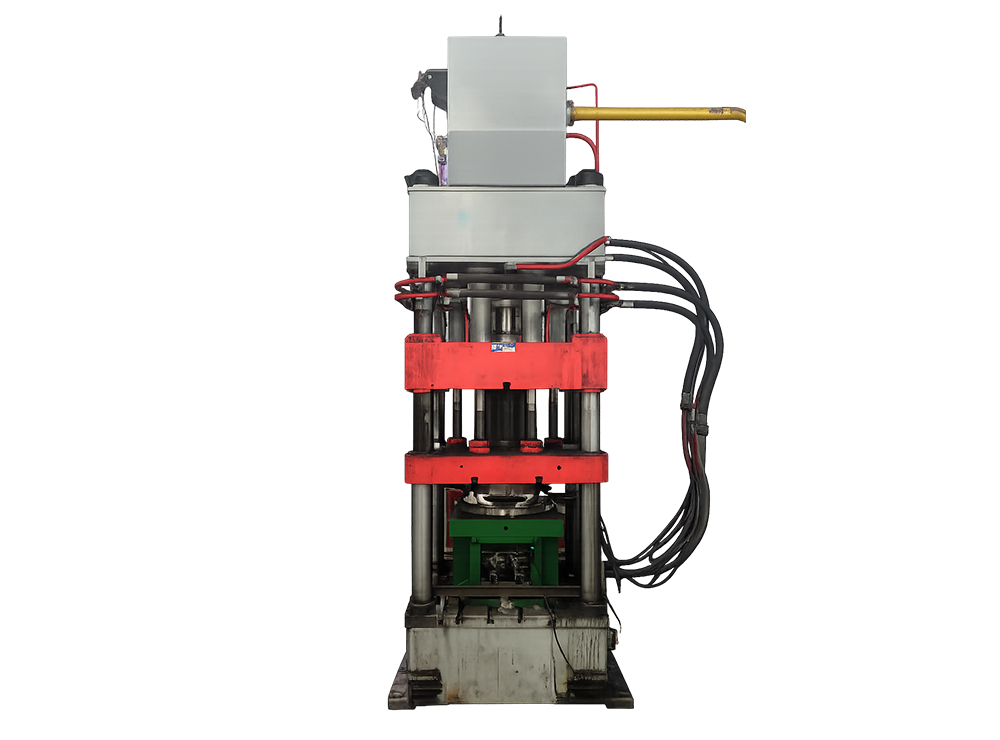
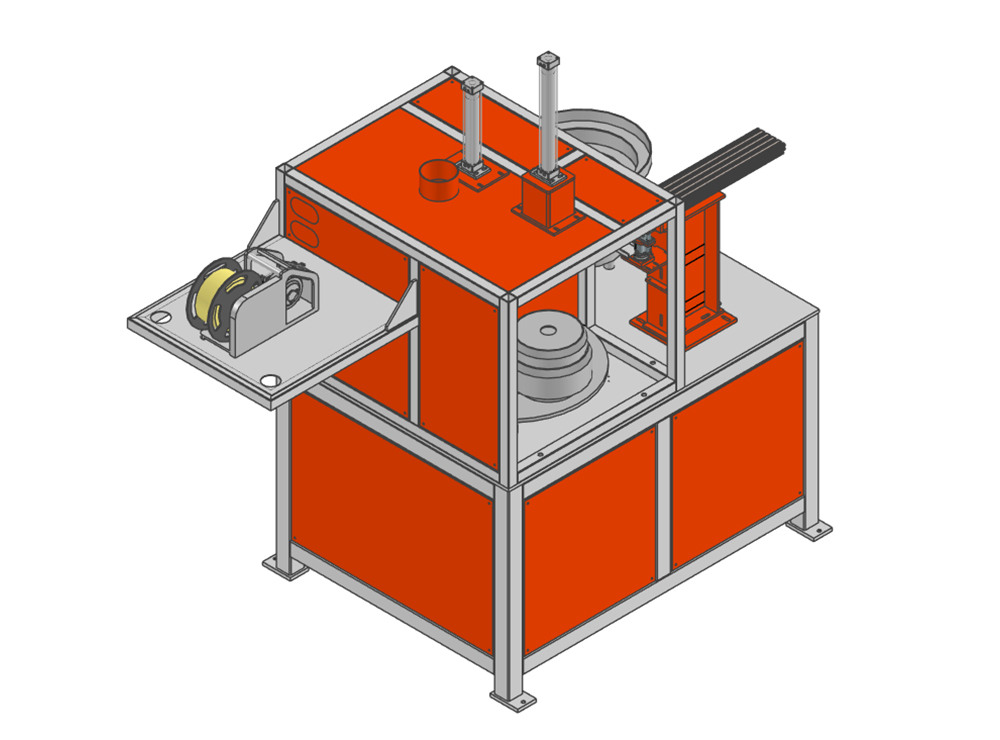
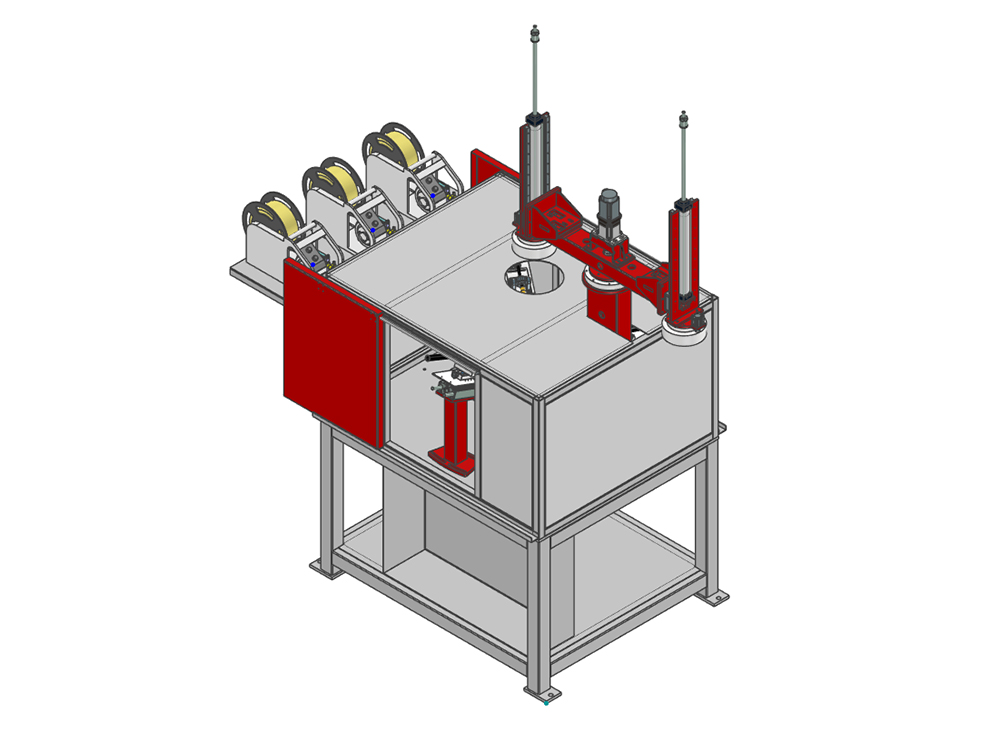
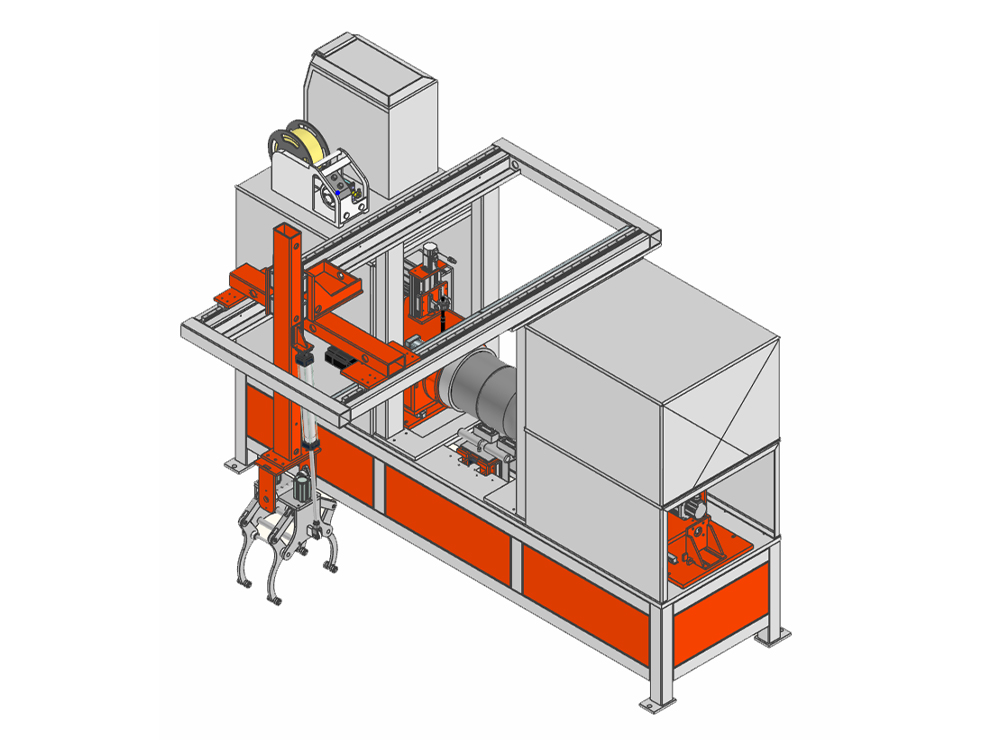
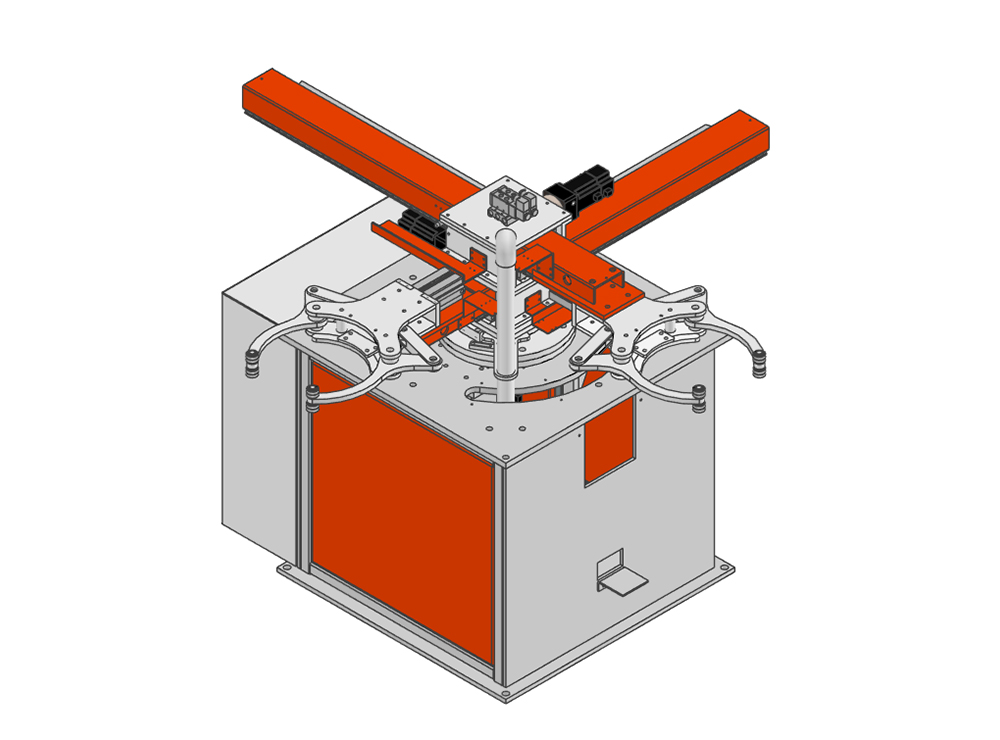
An LPG Cylinder Edge Trimming Machine typically includes a shell fixture, clamping system, rotary or traveling motion, cutting head, drive system, control panel, guarding, chip collection, and operator interface. The correct configuration depends on cylinder diameter, wall thickness, shell shape, production quantity, and whether the line is manual, semi-automatic, or automatic.
Hydraulic equipment can provide controlled clamping and repeatable movement for heavier shells. Servo-driven or CNC trimming systems can store product recipes, control tool position, and support faster changeover between cylinder sizes. Automatic loading and unloading can reduce operator handling, but the machine still requires inspection access, tool maintenance, and safe rejection procedures.
Shuofang is presented as Henan Shuofang Intelligent Equipment Co., Ltd., a supplier of LPG cylinder production-line equipment and customized automated or semi-automatic solutions. Its published equipment range includes trimming, joggling, and polishing machinery, along with deep drawing, welding, heat treatment, testing, and coating equipment. The company states that it operates a production base exceeding 20,000 square meters, reports more than 10 years of industry history, and provides a one-year equipment warranty with continued technical support.
How to Choose an Automatic LPG Cylinder Edge Trimming Machine
When I compare an automatic LPG cylinder edge trimming machine, I begin with the production requirements rather than the machine label. The first question is the required output per shift or year, followed by the cylinder size range, shell material, wall thickness, edge profile, and available floor space.
| Selection factor | What to verify before purchase |
|---|---|
| Throughput | Required pieces per hour, shift length, and planned growth |
| Product range | Minimum and maximum shell diameter, height, and wall thickness |
| Changeover | Tool replacement time, fixture adjustment, and recipe management |
| Operator needs | Loading method, control interface, inspection access, and training |
| Maintenance | Cutter life, spare parts, lubrication points, and service access |
| Quality control | Measurement points, traceability, alarms, and reject handling |
| Safety | Guarding, interlocks, chip control, emergency stops, and isolation |
| Total cost | Purchase price, tooling, energy, labor, maintenance, and downtime |
A low purchase price can become expensive if the machine requires frequent manual correction, long changeovers, or specialist maintenance. I therefore evaluate total cost of ownership over the planned service period. The calculation should include operators, cutter replacement, compressed air or hydraulic consumption, electricity, planned maintenance, rejected shells, and production losses during unplanned stoppages.
For smaller manufacturers, a semi-automatic machine may be practical when product variety is high and output is moderate. For plants supplying large annual volumes, automation can provide more consistent handling and data collection, provided the machine is correctly integrated with forming, welding, inspection, and material-flow systems.
Safety Requirements for Edge Trimming
Machine guarding should prevent access to the cutter, rotating shell, pinch points, and ejected chips during operation. Guards should include suitable interlocks where required by the risk assessment, and emergency-stop controls should be accessible from the operator position and loading area.
Operators also need protection from sharp steel edges, metal particles, noise, hydraulic pressure, and compressed air. Compressed air should not be directed at skin, clothing, or unprotected eyes, and chip removal should use suitable extraction or collection methods rather than uncontrolled blowing.
Hot-work hazards require special attention when oxyfuel cutting, heating, or repair cutting is involved. LPG cylinders must never be cut, heated, or welded unless they have been professionally emptied, isolated, cleaned, and verified gas-free under an approved procedure. New shell trimming is a different operation, but the production area should still control ignition sources, combustible materials, and metal dust.
Quality-Control Checklist Before Welding
Before releasing trimmed cylinder halves to welding, I would verify the following:
- The shell identity and material batch match the production record.
- The trimmed edge follows the approved circumference without visible steps.
- No section shows excessive material removal, tearing, cracking, or deep tool marks.
- Burrs and loose chips have been removed.
- The shell remains within the specified shape and dimensional limits.
- Fixture marks, dents, and clamp damage are absent or within approved limits.
- The two halves achieve the required fit-up during trial assembly.
- The trimming tool, fixture, and machine settings are recorded.
- Rejected shells are physically separated from accepted production.
- Any repair is approved and documented before welding.
This checklist should be combined with later weld inspection, hydrostatic testing, air-leakage testing, and final dimensional inspection. Edge trimming cannot prove the complete safety of a finished LPG cylinder, but it establishes one of the conditions required for a stable manufacturing process.
Conclusion
The Importance of Edge Trimming in LPG Cylinder Manufacturing lies in its direct effect on edge geometry, weld preparation, dimensional accuracy, defect control, and operator safety. A controlled trimming operation gives formed shell halves a consistent circumference, reduces fit-up variation, and supports more predictable circumferential welding.
My recommended approach is to define the required edge profile first, then select tooling, fixtures, automation, inspection points, and maintenance procedures around that specification. Manufacturers should compare manual, semi-automatic, hydraulic, and CNC options according to throughput, cylinder range, changeover time, operator requirements, and total cost of ownership.
For companies evaluating an LPG Cylinder Edge Trimming Machine, Shuofang provides equipment within a broader LPG cylinder production-line portfolio that includes forming, welding, testing, and finishing systems. The final decision should be based on verified sample results, documented dimensional checks, safety features, service coverage, and the machine’s ability to maintain the required edge condition throughout the planned production volume.