Reducing Operating Costs Through Production Line Automation
Oct.08, 2026
Production line automation reduces operating costs by replacing repetitive manual work, increasing throughput, limiting waste and rework, reducing unplanned stoppages, improving quality control, and optimizing material and energy use. The most reliable approach is to identify cost-heavy operations first, measure their baseline performance, select appropriately scaled equipment, calculate total ownership cost, and introduce automation in controlled stages.
Key Takeaways
- Automation lowers labor, overtime, defect, rework, downtime, and cost-per-unit expenses when applied to measured bottlenecks.
- The best automation candidates combine repetitive tasks, stable production volumes, measurable cycle times, and avoidable quality losses.
- A complete production line automation ROI model includes integration, training, maintenance, energy, downtime, and payback period.
- Shuofang supports LPG cylinder production lines through equipment design, installation, commissioning, training, and after-sales service.
- Over-automation, weak system integration, limited changeover flexibility, and poor operator adoption can reduce expected savings.
How Reducing Operating Costs Through Production Line Automation Works
I evaluate automation as a cost-control system rather than a simple labor replacement project. A production line creates operating expenses through direct labor, overtime, scrap, rework, equipment downtime, maintenance, energy consumption, material movement, inspection, and production delays. Automation can reduce several of these expenses at the same time, but only when the equipment is matched to the process and supported by accurate production data.
The effect is usually strongest in operations with repetitive movements, fixed work sequences, frequent quality variation, or high exposure to bottlenecks. For example, an automated welding station can control torch movement, positioning, timing, and inspection conditions more consistently than a process that depends entirely on manual handling. However, the business case must include equipment integration, programming, operator training, spare parts, maintenance, energy, and planned downtime.
Identify the Cost Baseline
Before selecting equipment, I establish a baseline for the production line. The baseline should cover at least four to eight weeks of normal production so that seasonal demand, shift differences, and changeover patterns are visible. Useful measurements include:
| Measurement | Baseline question |
|---|---|
| Labor hours per unit | How many direct labor minutes are required for each product? |
| Cycle time | What is the actual time from one completed unit to the next? |
| First-pass yield | What percentage passes inspection without rework? |
| Scrap rate | How much material becomes unusable? |
| Unplanned downtime | How many hours are lost to failures, jams, or adjustments? |
| Overtime | How many paid hours are required beyond scheduled shifts? |
| Energy per unit | How much electricity, gas, compressed air, or cooling is consumed? |
| Changeover time | How long does the line remain unavailable between products? |
This information prevents a common purchasing mistake: choosing equipment because it appears technically advanced without proving that it addresses the largest operating expense. A process that consumes 30% of direct labor but causes only 1% of total downtime may deserve earlier attention than a machine with a higher purchase price.
Manufacturing Cost Reduction Strategies Enabled by Automation
The most effective manufacturing cost reduction strategies connect equipment performance to measurable financial results. I normally divide the business case into labor, quality, throughput, maintenance, material handling, and energy categories. This makes it easier to identify savings that are recurring and savings that depend on production volume.
Labor savings do not necessarily mean removing every operator from the line. In many facilities, automation allows one operator to supervise multiple stations, reduces lifting and positioning work, and moves employees from repetitive tasks to setup, inspection, maintenance, and process control. The financial calculation should include wages, overtime, payroll burden, recruitment, training time, and injury-related absence rather than wages alone.
Automation also reduces the cost of inconsistent production. Sensors, fixtures, programmed motion, and automated inspection can reduce variation in dimensions, weld placement, pressure testing, filling, coating, or assembly. When first-pass yield improves, the factory spends less on additional material, labor hours, inspection, storage, and customer returns.
Automation Technologies That Reduce Production Costs
Production line automation includes several equipment groups, and each group addresses a different source of expense. I recommend choosing technologies according to the production constraint rather than attempting to automate every process at once.
- Automated material handling reduces manual loading, unloading, transfer, and staging time. Conveyors, manipulators, robotic arms, pallet systems, and guided transfer units can reduce waiting between operations and limit product damage caused by repeated handling.
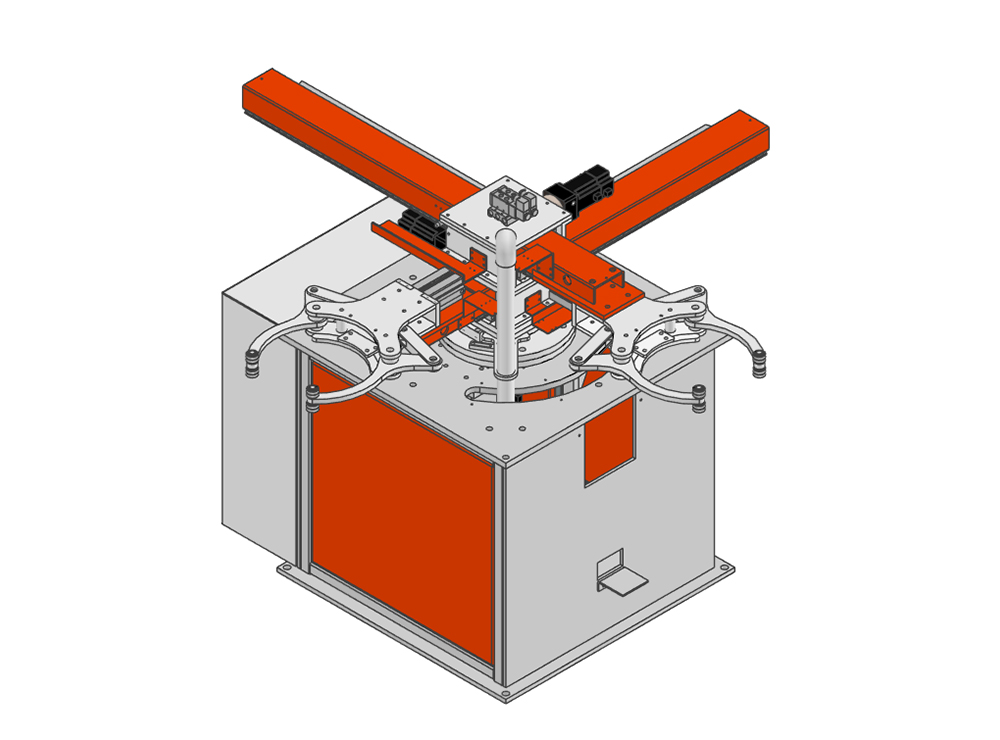
- Industrial robotics are suitable for fixed-position welding, pick-and-place work, palletizing, loading, unloading, and repetitive assembly. Their value increases when the task involves long operating hours, difficult access, or exposure to heat, fumes, sparks, or heavy components.
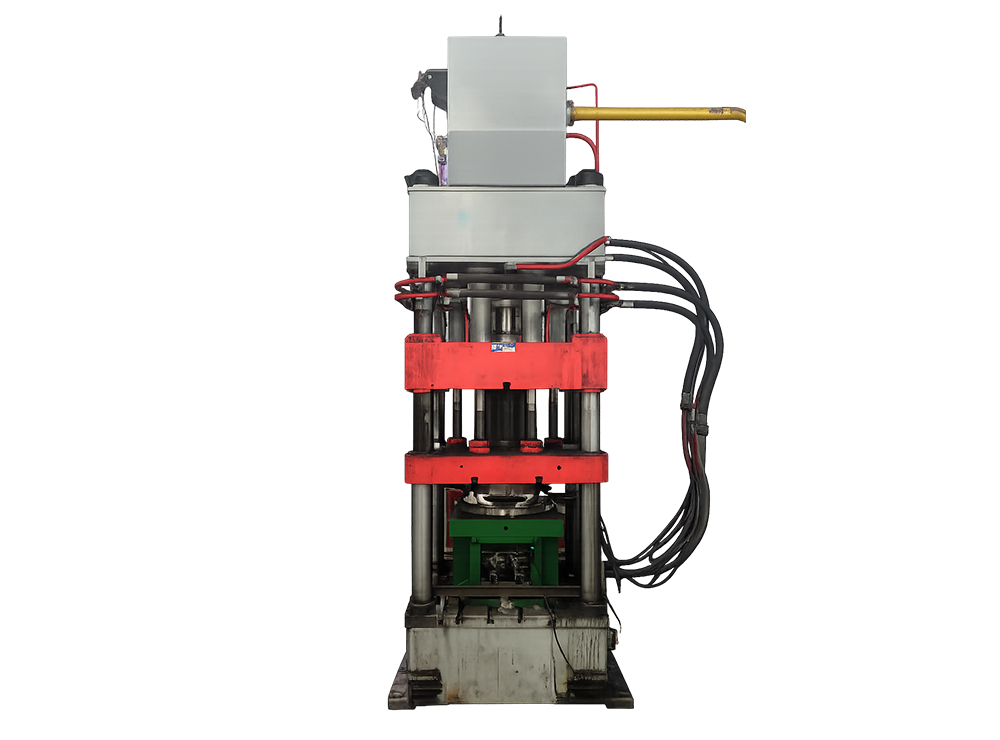
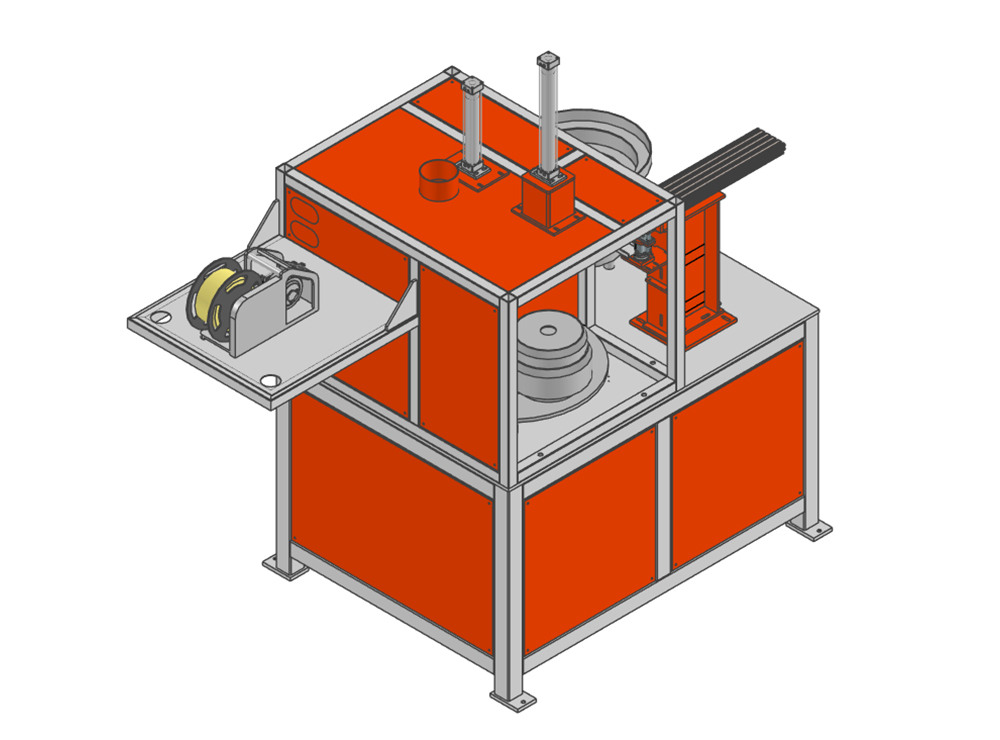
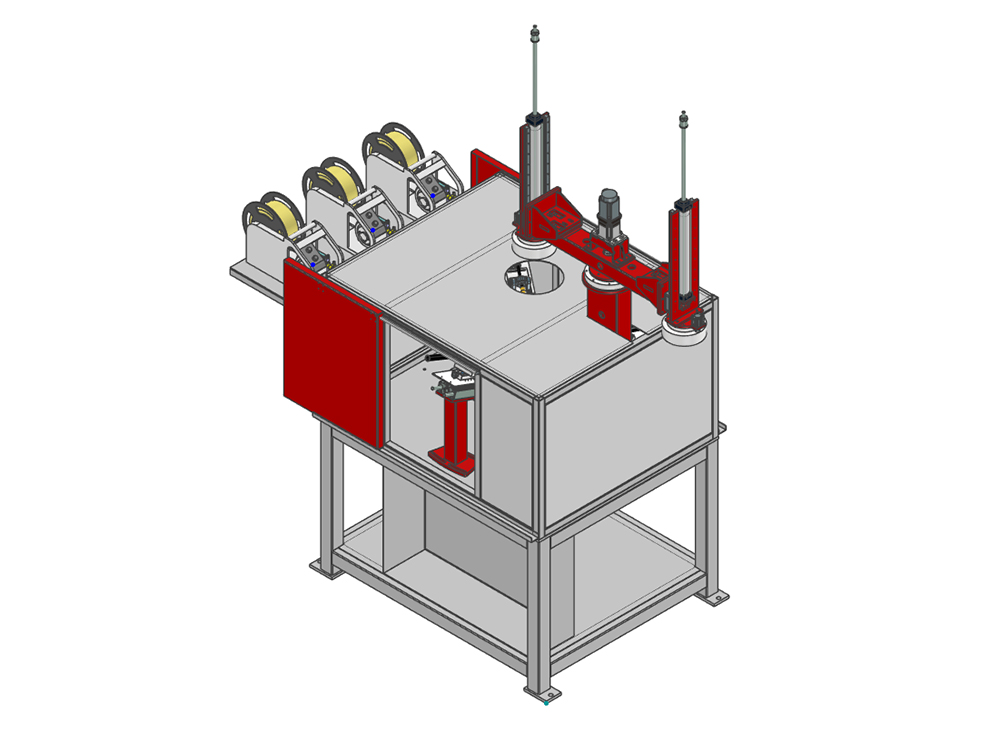
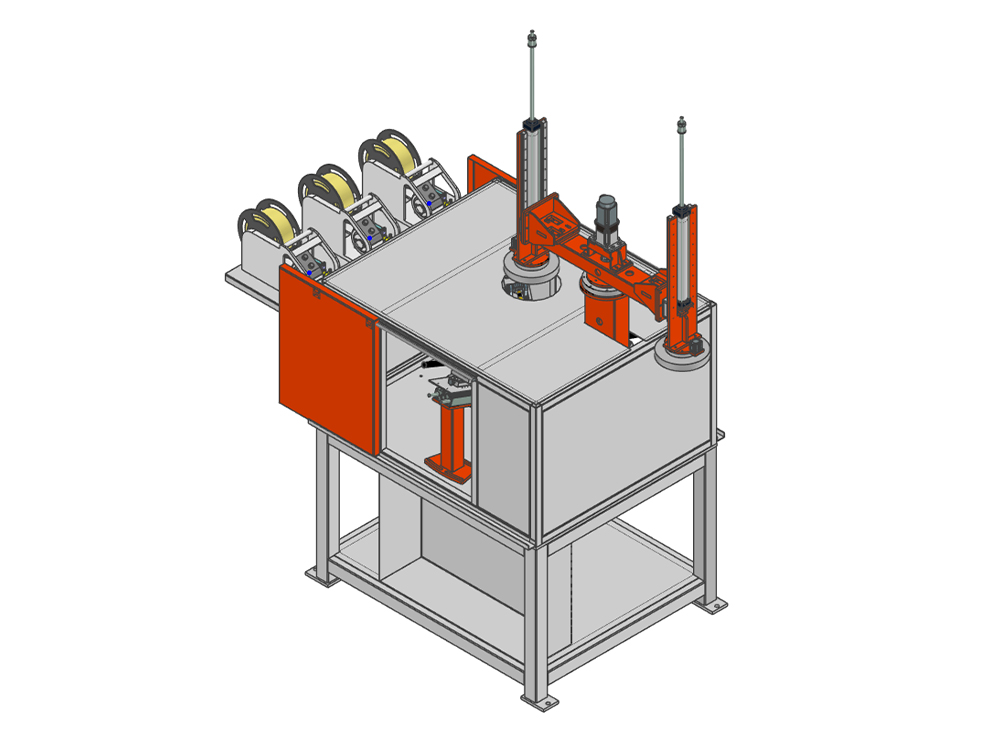
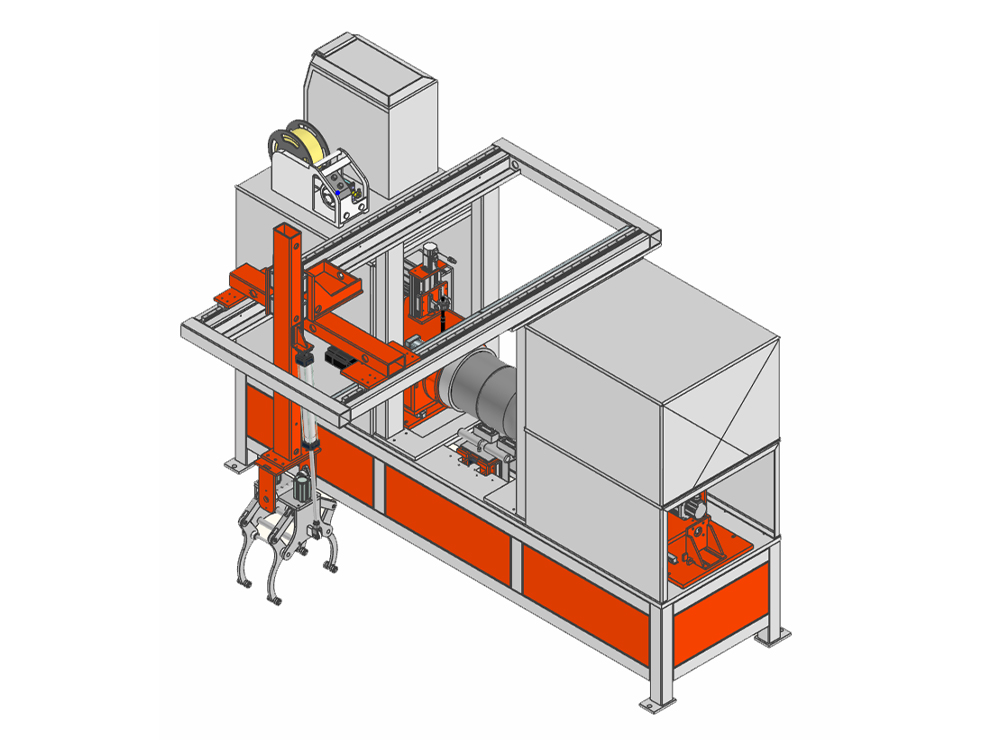
- Automatic welding Line equipment can standardize workpiece positioning, welding sequence, travel speed, and fixture alignment. For LPG cylinder manufacturing, circumferential welding and related joining processes require stable positioning and repeatable operating conditions.
- Quality control automation uses sensors, cameras, pressure testing, dimensional checks, and leak testing to identify defects earlier. Early detection reduces the number of defective units that continue through coating, packaging, or shipment.
- Predictive maintenance systems monitor vibration, temperature, current, pressure, or cycle behavior. This allows maintenance teams to plan interventions before a failure stops the line, although the system must be connected to a clear maintenance response process.
- Manufacturing execution systems connect production orders, machine status, output, downtime, quality results, and material usage. This creates a more reliable basis for production cost control than manual spreadsheets alone.
The right combination depends on product variety and volume. High-volume manufacturers may justify integrated robotic cells and automatic transfer systems, while small manufacturers may gain more from one automated bottleneck, a programmable fixture, or automated inspection.
!
A Practical Method for Selecting Automation Candidates
I use a staged evaluation process before recommending equipment. This reduces the risk of investing in a machine that solves a visible symptom while leaving the main cost driver untouched.
1. Map the complete production flow
Document every operation from raw-material entry to finished-goods shipment. Include material movement, waiting, inspection, rework, cleaning, setup, packaging, and storage because indirect activities often create hidden operating costs. A simple process map should show cycle time, labor assignment, equipment utilization, defect points, and queue length for each operation.
2. Rank tasks using objective criteria
I score each task according to repetition, labor intensity, quality variation, safety exposure, downtime impact, production volume, and technical stability. A task receives a stronger automation priority when it is repeated across several shifts, has a predictable sequence, and produces measurable losses under manual operation.
A useful screening table is:
| Candidate characteristic | Automation priority |
|---|---|
| Repeated every cycle | High |
| More than one shift per day | High |
| Frequent ergonomic or safety exposure | High |
| Stable product geometry | High |
| High defect or rework cost | High |
| Product changes several times per hour | Lower |
| Unstable or poorly defined process | Lower |
| Low annual production volume | Requires detailed ROI review |
3. Confirm process readiness
Automation cannot compensate for uncontrolled inputs. I verify material tolerances, fixture accuracy, electrical supply, compressed-air quality, floor loading, ventilation, safety guarding, data connections, and upstream and downstream capacity. If the preceding process delivers inconsistent parts, the automated station may create jams and increase maintenance instead of lowering costs.
4. Test the business case
The selected process should be tested using realistic production conditions, including normal materials, planned changeovers, operator interaction, inspection requirements, and fault recovery. A demonstration based only on ideal cycle time can overstate throughput and understate training, maintenance, and downtime requirements.
How Production Line Automation Reduces Labor, Waste, and Downtime
Labor and overtime savings are usually the easiest benefits to identify, but they should be calculated by task rather than by headcount. If an operator spends 40% of a shift loading parts, 25% checking alignment, and 15% moving finished units, automation may reduce manual minutes without eliminating the entire position. The resulting saving can appear as fewer overtime hours, more output per employee, or reassignment of workers to higher-value activities.
Waste reduction comes from controlling the variables that operators cannot maintain consistently over long periods. Automated dosing, positioning, welding, cutting, fastening, coating, and inspection can reduce variation in material use and finished-product quality. The calculation should include raw-material scrap, consumables, rework labor, reinspection, packaging, warranty exposure, and disposal costs.
Throughput improvement is not simply a faster machine cycle. I measure the entire line, including feeder capacity, transfer time, buffer size, inspection time, changeover, minor stops, and downstream availability. If one automated station operates at 20 units per minute while the following station can process only 12, the additional speed creates inventory and waiting rather than a proportional reduction in cost per unit.
How Automation Improves Production Efficiency
Automation improves production efficiency when it increases the percentage of scheduled time spent producing acceptable units. I track this through overall equipment effectiveness, which combines availability, performance, and quality. A line operating at a high theoretical speed can still have weak financial performance if it stops frequently, produces defects, or requires long recovery periods after minor faults.
Bottleneck control is therefore essential. The first automation target should often be the constraint that limits total output, not necessarily the operation with the highest individual labor cost. Once the bottleneck changes, the next improvement may involve automated material handling, buffer control, inspection, or maintenance data rather than another high-speed machine.
Energy savings also require measurement. Motors, welding systems, compressors, heating equipment, ventilation, and standby systems may consume energy during production and idle periods. Automated shutdown logic, variable-speed drives, optimized heating cycles, leak detection in compressed-air systems, and production scheduling can reduce energy per unit when the equipment is specified and monitored correctly.
How to Calculate Production Line Automation ROI
I calculate production line automation ROI using annual net benefit divided by the total installed investment. The calculation should not rely only on the equipment quotation because installation, programming, building work, safety systems, training, spare parts, validation, and commissioning may materially affect the final cost.
Total installed investment = equipment price + integration + installation + infrastructure + training + initial spare parts + commissioning downtime
Annual net benefit = labor savings + overtime reduction + scrap reduction + rework reduction + downtime savings + energy savings − added maintenance − added energy − software and service costs
Payback period = total installed investment ÷ annual net benefit
For example, if a project requires $480,000 in total installed investment and produces an estimated annual net benefit of $160,000, the simple payback period is three years. I would then test the result under lower-volume, higher-maintenance, and delayed-implementation scenarios to determine whether the investment remains acceptable.
| ROI item | Include in the model |
|---|---|
| Integration | PLC programming, robot programming, MES connection, data mapping |
| Downtime | Installation, testing, commissioning, product validation |
| Maintenance | Preventive service, spare parts, technicians, calibration |
| Training | Operator instruction, maintenance training, safety certification |
| Energy | Electricity, compressed air, gas, cooling, heating |
| Changeover | Tooling, fixtures, recipes, setup labor, lost production |
| Output benefit | Additional saleable units, not theoretical machine capacity |
| Quality benefit | Reduced scrap, rework, inspection, returns, and warranty cost |
Implementation Risks That Affect Cost Reduction
Over-automation is a common risk when the production process has frequent product changes, unstable demand, or limited technical support. A fully integrated line may create a large fixed cost while delivering low utilization if the factory runs many product types in small batches. In those conditions, modular equipment, quick-change fixtures, or a semi-automated production line may produce a better financial result.
Poor integration can create new bottlenecks. The feeder, welding cell, inspection system, material-handling equipment, and packaging station must share compatible cycle times, controls, safety logic, and maintenance access. I also review cybersecurity controls for connected systems, including user permissions, network separation, backup procedures, software updates, and recovery plans.
Operator adoption is another measurable project requirement. Operators should participate in risk assessments, trial runs, fault-recovery tests, and standard operating procedure development. A line may achieve its programmed cycle time during acceptance testing but fail to deliver expected savings if employees cannot clear faults, perform changeovers, or complete preventive maintenance correctly.
Shuofang’s Role in Automated LPG Cylinder Production
For LPG cylinder manufacturers, Shuofang presents a production-line approach that covers equipment selection, customization, installation, commissioning, training, and operational support. The company describes experience focused on automated and semi-automated LPG cylinder production lines and reports more than 10 years in the sector, an annual output value above 70 million yuan, and a production base exceeding 20,000 square meters.
Its listed equipment scope includes deep drawing, trimming, joggle and polishing, valve-seat welding, handle and base welding, circumferential welding, heat treatment, powder coating, hydraulic testing, airtightness testing, and related inspection operations. The company also identifies an Automatic Welding Line with laser tracking for circumferential welding applications. These functions are relevant to cost reduction because they connect labor reduction with repeatable joining, inspection, material movement, and process control.
Shuofang also reports project examples that include an automated line with an annual output of 1.68 million LPG cylinders. I would treat such figures as project-specific capacity information rather than a guaranteed result for every factory. Before purchasing, I would request cycle-time data, acceptance criteria, changeover assumptions, utility requirements, spare-parts lists, operator requirements, and a written production simulation based on the buyer’s cylinder specifications.
The company states that its equipment includes a one-year warranty, free replacement of parts during the warranty period, lifetime technical support, factory-price consumables, overseas installation support, and training. These terms can affect total cost of ownership, but they should be reviewed alongside response times, exclusions, travel costs, remote-support capability, and the availability of local technicians.
A Controlled Implementation Sequence
I recommend beginning with a measured pilot rather than automating the entire factory immediately. Select one process with a documented bottleneck, stable product requirements, and a clear quality or labor-cost problem. Establish baseline values for cycle time, first-pass yield, labor minutes, downtime, scrap, energy, and maintenance before installation.
After installation, compare actual results against the baseline for at least one complete production cycle pattern, including normal shifts and changeovers. Correct fixture, software, training, and material-flow problems before expanding the system. The final decision should be based on saleable output and net operating cost per unit, not on nameplate speed alone.
Conclusion
Reducing Operating Costs Through Production Line Automation works when the project targets verified sources of expense and measures results across the complete production system. I would begin by mapping the line, ranking automation candidates, documenting labor and quality losses, and identifying the true bottleneck. I would then compare automated material handling, robotic stations, Automatic Welding Line equipment, inspection systems, predictive maintenance, and production monitoring according to their effect on cost per saleable unit.
The financial model should include integration, commissioning downtime, training, maintenance, energy, changeovers, cybersecurity, and operator adoption. For LPG cylinder manufacturers evaluating Shuofang, the company’s equipment range, production-line integration, installation support, training, and stated service terms provide a basis for further technical due diligence. The next practical step is to request a process-specific proposal containing capacity assumptions, utility requirements, acceptance tests, staffing levels, maintenance intervals, warranty conditions, and a conservative payback calculation.