Labor Cost Comparison Between Automatic and Manual LPG Cylinder Production
Nov.02, 2026
When I compare the labor cost comparison between automatic and manual LPG cylinder production, I look beyond hourly wages. Staffing levels, shift patterns, annual output, overtime, inspection work, rework, safety exposure, and maintenance all influence the final LPG cylinder production cost per unit. Manual production usually requires less initial equipment investment, while automated production reduces recurring labor requirements and becomes more economical as output and wage rates increase.
This comparison focuses specifically on LPG cylinder manufacturing, including sheet forming, trimming, welding, handle and foot-ring assembly, heat treatment, pressure testing, leak testing, coating, inspection, and material movement. I also separate full automation from semi-automation because many small and medium manufacturers do not need to automate every operation at the same time.
Key Takeaways
- Manual LPG cylinder production normally requires more direct operators, inspectors, welders, material handlers, and rework labor.
- Automatic production reduces recurring labor cost most effectively when annual output exceeds approximately 300,000 cylinders.
- Welding, forming, inspection, pressure testing, and material transfer create the largest workforce differences between both methods.
- A transparent labor model must include wages, shifts, overtime, output, absenteeism, rework, maintenance, and equipment utilization.
- Full automation suits high-volume plants, while semi-automation and targeted welding automation often fit smaller manufacturers better.
How to Evaluate Automatic vs Manual LPG Cylinder Manufacturing
I evaluate both production methods across five measurable areas: direct labor, productive capacity, safety exposure, quality consistency, and total cost of ownership. Comparing only the number of operators can produce an incomplete result because an automated line may require fewer workers but higher maintenance, technical training, and capital expenditure. Conversely, a manual plant may appear inexpensive until overtime, rejected cylinders, production interruptions, and repeated inspection are included.
The most useful comparison begins with the production route. A typical LPG cylinder plant may include blanking, deep drawing, trimming, valve-seat welding, handle and base welding, circumferential welding, heat treatment, surface preparation, powder coating, hydrostatic testing, air-leak testing, valve mounting, and final inspection. Automation does not remove every labor requirement; it changes which tasks workers perform and how many cylinders each worker can support.
Labor Cost Comparison Between Automatic and Manual LPG Cylinder Production
Manual production usually has lower initial equipment and labor costs at very low output, while automatic production reduces recurring labor cost and becomes more economical at higher volume. In a representative two-shift model, a manual plant may need 20–30 production workers compared with 6–12 operators and technicians for an automated line. The table below uses planning assumptions rather than a supplier quotation.
| Factor | Manual LPG Cylinder Production | Automatic LPG Cylinder Production |
|---|---|---|
| Direct production workers per shift | 20–30 | 6–12 |
| Typical two-shift workforce | 40–60 | 12–24 |
| Example loaded wage assumption | $8–$20/hour | $8–$20/hour |
| Example annual output | 150,000–400,000 cylinders | 500,000–1,680,000 cylinders |
| Main labor exposure | Welding, handling, inspection, testing | Line operation, quality checks, maintenance |
| Overtime sensitivity | High during demand peaks | Moderate, depending on bottleneck |
| Output consistency | Operator-dependent | Cycle- and process-dependent |
| Initial capital requirement | Lower | Higher |
| Labor cost per cylinder | Higher at scale | Lower at scale |
The most important point is that automatic production does not mean zero labor. Operators still load materials, monitor equipment, remove nonconforming products, record inspection data, perform adjustments, and respond to alarms. The financial difference comes from the number of cylinders handled by each employee and the reduction in repetitive manual operations.
A Transparent Labor-Cost Model
I calculate annual direct labor cost using this formula:
Annual direct labor cost = workers per shift × shifts × paid hours per shift × operating days × loaded hourly wage
The loaded hourly wage should include base pay, legally required benefits, paid leave, employer contributions, training time, and normal absenteeism. If overtime is common, I add a separate overtime factor instead of hiding it inside the standard wage assumption.
For example, assume a manual plant uses 24 workers per shift, operates two 8-hour shifts for 300 days, and pays a loaded wage of $8 per hour. Annual direct labor equals $921,600 before overtime. If an automatic line uses eight workers per shift under the same schedule, annual direct labor falls to $307,200, producing a modeled difference of $614,400 per year.
| Loaded Wage | Manual Labor, 24 Workers/Shift | Automatic Labor, 8 Workers/Shift | Annual Difference |
|---|---|---|---|
| $5/hour | $576,000 | $192,000 | $384,000 |
| $8/hour | $921,600 | $307,200 | $614,400 |
| $12/hour | $1,382,400 | $460,800 | $921,600 |
| $20/hour | $2,304,000 | $768,000 | $1,536,000 |
This model excludes indirect labor such as supervisors, maintenance technicians, warehouse personnel, and quality managers. I recommend adding 10–20% for those roles when comparing complete factory staffing rather than direct production staffing alone.
!
Stage-by-Stage Workforce Differences
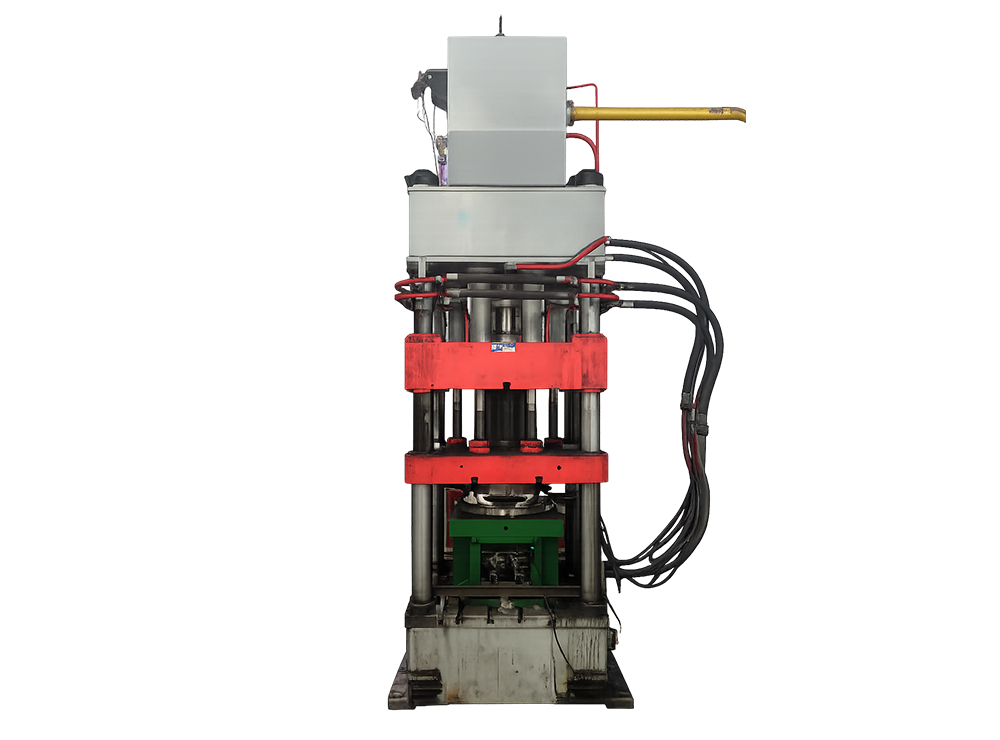
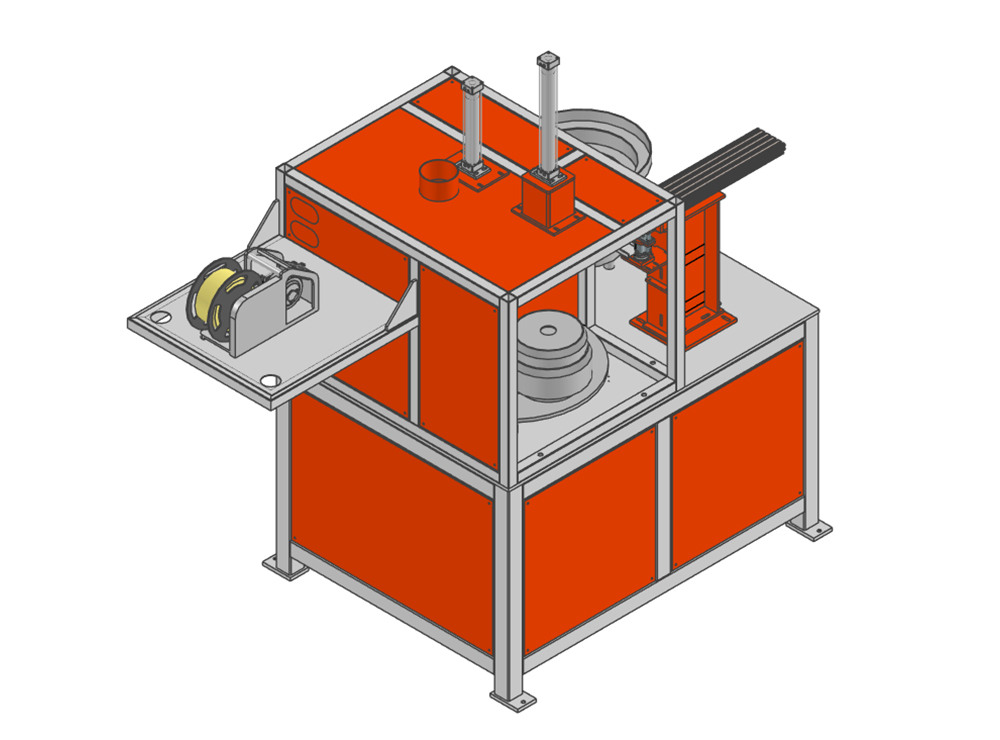
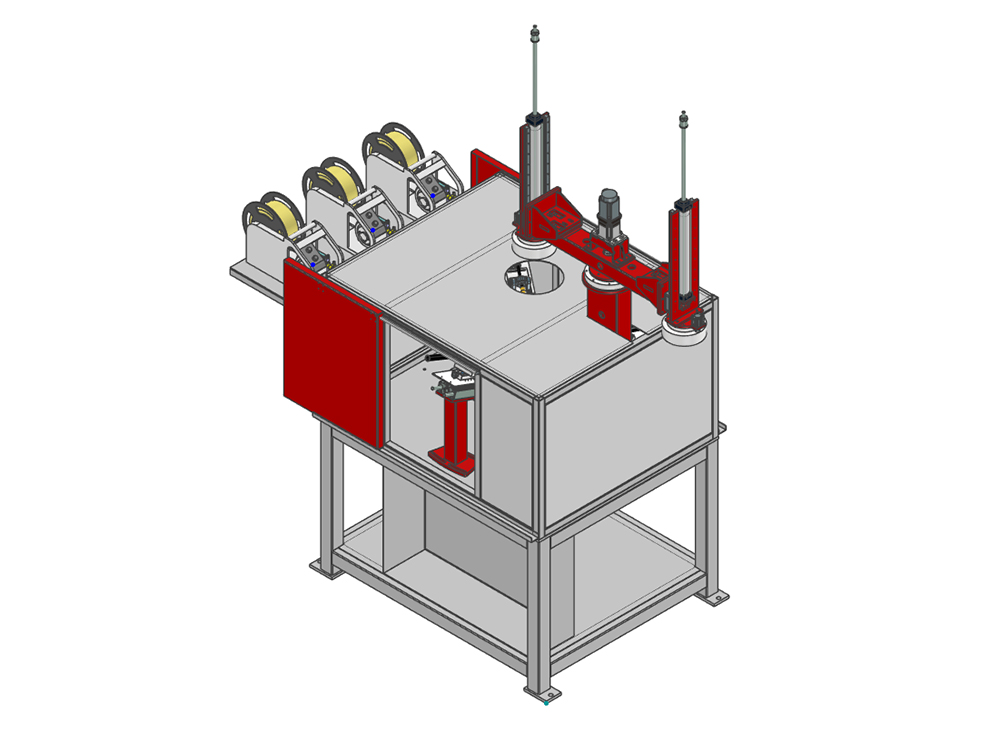
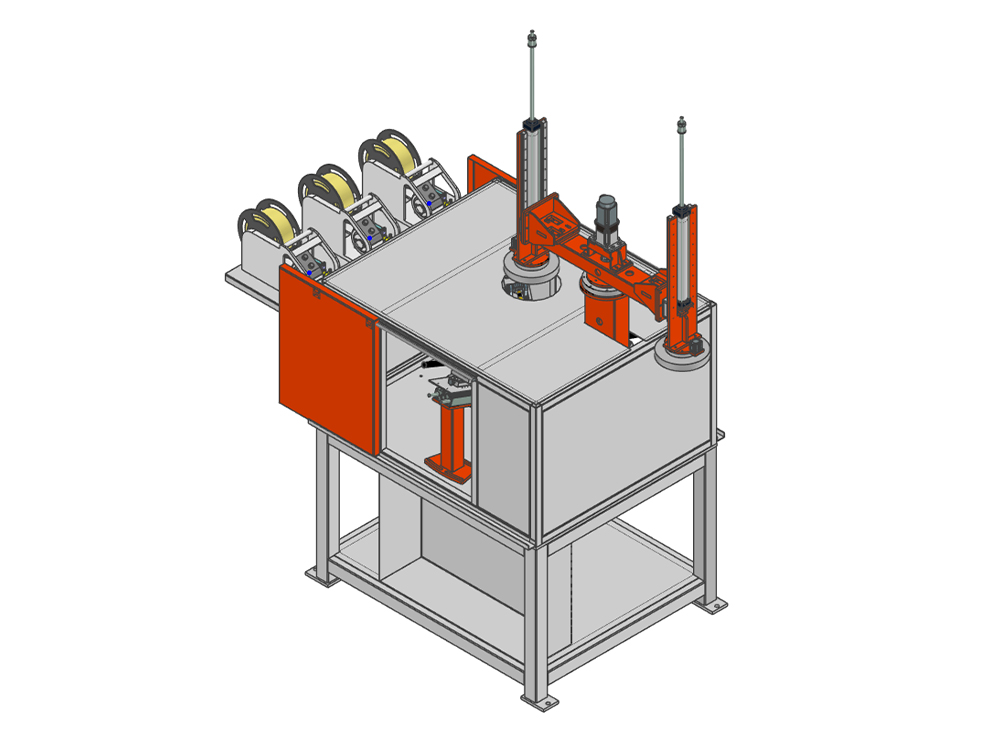
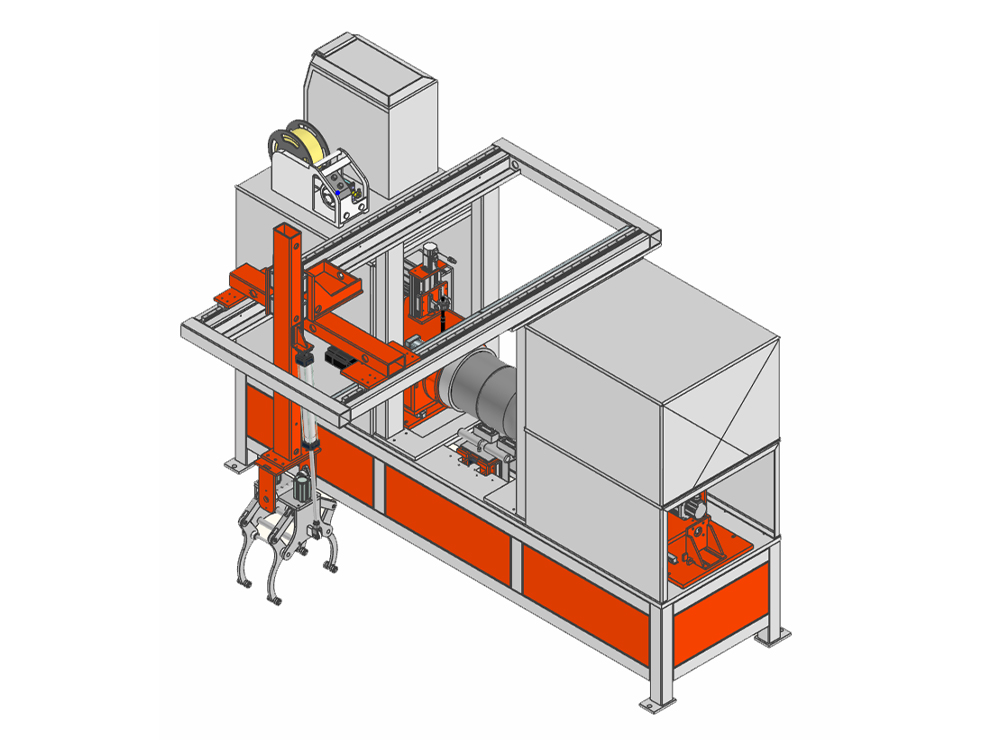
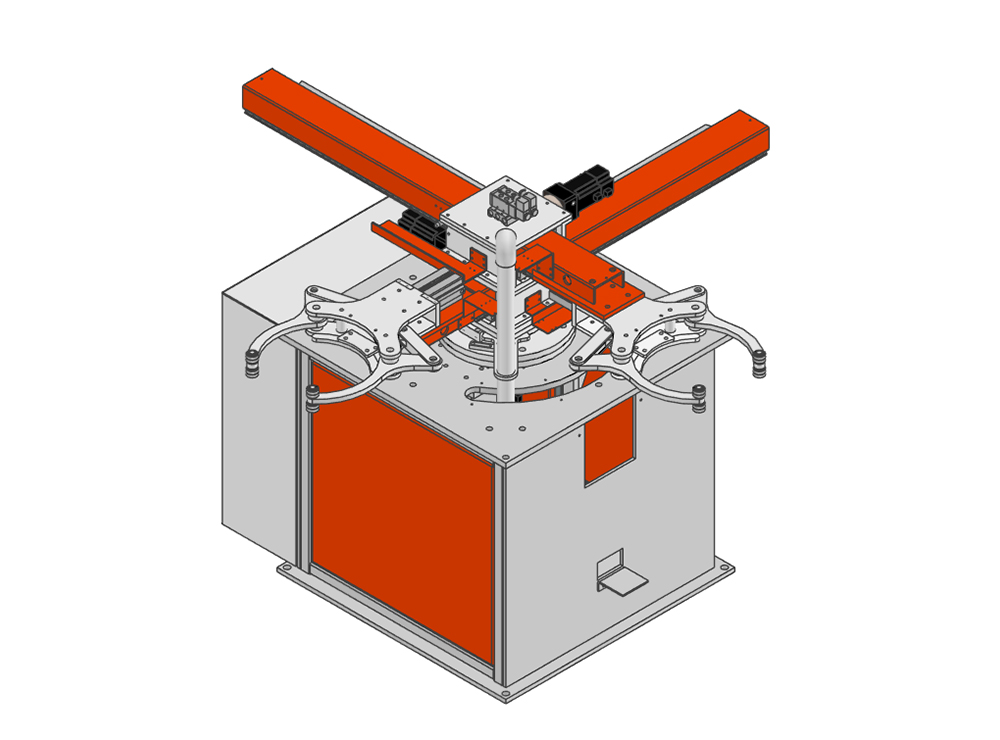
The largest staffing difference usually appears in welding and material handling. In a manual plant, workers may position cylinder halves, tack-weld components, control welding torches, rotate workpieces, inspect weld appearance, and move parts between stations. An Automatic welding Line can combine positioning, clamping, welding, tracking, and controlled movement, leaving workers to supervise the process and manage exceptions.
Forming operations also create a significant difference. Manual or lightly mechanized deep drawing often requires workers to load blanks, unload formed sections, check dimensions, lubricate tooling, and transfer parts between presses. An automated forming system reduces repetitive handling but still requires die changes, lubrication checks, tooling maintenance, and dimensional verification.
Inspection and testing labor is reduced but not eliminated. Hydrostatic pressure testing, air-leak testing, weld inspection, and final dimensional checks remain essential because LPG cylinders are pressure vessels. Automation can standardize test sequences and record results, but qualified personnel are still needed to verify test parameters, isolate failures, and maintain traceability.
| Production Stage | Manual Workforce Pattern | Automated Workforce Pattern |
|---|---|---|
| Blank preparation | Operators load, position, and transfer material | One operator may oversee feeding and material flow |
| Deep drawing | Press operator and material handlers | Press-line operator with automated transfer |
| Trimming and shaping | Separate loading and unloading labor | Integrated or linked stations reduce handling |
| Valve-seat welding | Manual welder and positioning assistant | Operator monitors fixtures, welding cycle, and alarms |
| Handle and base welding | Multiple welders and part handlers | One operator may supervise several welding stations |
| Circumferential welding | Skilled welder controls rotation and alignment | Automatic welding system controls motion and parameters |
| Heat treatment | Loading, unloading, and furnace monitoring | Fewer handlers, with technician oversight |
| Hydro and leak testing | Test operator records results manually | Test operator monitors programmed sequences and records |
| Coating and finishing | Manual transfer and spray support | Conveyor-based movement reduces handling |
| Final inspection | More inspectors because variation is higher | Fewer inspectors, but traceability controls remain |
Production Capacity, Operating Hours, and Productivity
Labor savings only become meaningful when the line produces enough cylinders to use its available capacity. A manual plant may operate effectively at 150,000–400,000 cylinders per year, depending on product size, labor availability, process layout, and shift discipline. An automated line may support 500,000 to more than 1 million cylinders annually, but actual output depends on cycle time, changeover, uptime, scrap, maintenance, and downstream bottlenecks.
I calculate labor productivity as annual accepted cylinders divided by annual direct labor hours. In the example above, the manual plant uses 24 workers × 2 shifts × 8 hours × 300 days, or 115,200 labor hours annually. At 300,000 accepted cylinders, productivity equals 2.6 accepted cylinders per labor hour.
The automated plant uses eight workers per shift under the same schedule, or 38,400 labor hours annually. At 900,000 accepted cylinders, productivity equals 23.4 accepted cylinders per labor hour. This does not mean every automated line achieves that result, but it shows why production capacity and staffing must be analyzed together.
Safety, Quality, and Traceability
Manual welding creates more direct exposure to heat, fumes, arc radiation, repetitive posture, and handling risks. Manual pressure testing and gas-related operations also require controlled procedures because an incorrect test setup, defective weld, or unnoticed leak can create serious consequences. Automation can reduce the number of workers close to welding and testing operations, but it does not remove the need for guarding, ventilation, lockout procedures, operator training, and inspection controls.
Quality consistency is another major difference between automatic and manual LPG cylinder manufacturing. Manual welding depends heavily on operator skill, fatigue, fixture positioning, torch movement, and parameter control. Automatic welding can repeat programmed travel speed, current, voltage, clamping, and sequence settings, which generally reduces variation when the equipment is correctly set up and maintained.
However, automation does not automatically guarantee a lower defect rate. Poor tooling alignment, incorrect welding parameters, sensor failure, worn fixtures, or inadequate preventive maintenance can create repeated defects across many cylinders. I therefore compare not only first-pass yield but also weld repairs, rejected cylinders, inspection hours, retesting, and traceability records.
A practical quality-cost model includes these items:
- Direct labor used for repair and rework.
- Material consumed by rejected cylinders.
- Additional welding, grinding, testing, and coating time.
- Production delay caused by quarantine or investigation.
- Customer claims, replacement cost, and field-service response.
- Inspection records linked to batch, operator, machine, and test result.
Upfront Investment and Total Cost of Ownership
Manual production requires less initial capital because it relies on labor, general-purpose machines, fixtures, and standalone testing equipment. The trade-off is higher variable labor cost and greater dependence on skilled workers. Automatic production requires more capital for integrated forming, welding, handling, control, inspection, and safety systems, while also creating maintenance and technical-support obligations.
For planning purposes, I would compare an automated project using a capital range of $250,000–$1,200,000 against the existing manual process. The actual figure depends on whether the project includes only an Automatic Welding Line or a complete LPG cylinder production line with forming, heat treatment, coating, hydro testing, leak testing, and material handling.
A simple payback calculation is:
Payback period = additional automation investment ÷ annual operating savings
Suppose the additional investment is $600,000 and the modeled annual direct labor saving is $614,400. Labor-only payback is approximately 0.98 years. If maintenance, energy, consumables, financing, training, and depreciation add $250,000 annually, the adjusted operating saving becomes $364,400, extending payback to approximately 1.65 years.
| Annual Accepted Output | Automation Investment | Annual Labor Saving | Additional Annual Operating Cost | Approximate Payback |
|---|---|---|---|---|
| 200,000 cylinders | $600,000 | $614,400 | $250,000 | 1.65 years |
| 500,000 cylinders | $600,000 | $614,400 | $250,000 | 1.65 years |
| 900,000 cylinders | $600,000 | $614,400 | $250,000 | 1.65 years |
| 1,200,000 cylinders | $900,000 | $921,600 | $330,000 | 1.52 years |
The table shows a limitation of labor-only analysis: the same staffing difference can appear financially attractive even when the plant does not have enough orders to use the equipment. At 200,000 cylinders per year, fixed depreciation and underused capacity may weaken the business case. At 900,000 or more accepted cylinders, the reduction in labor cost per unit becomes more significant.
LPG Cylinder Production Automation Labor Savings
The most reliable LPG cylinder production automation labor savings usually come from combining several improvements rather than removing one job. Reduced manual welding, fewer internal transfers, lower inspection repetition, less rework, and improved line balancing can produce a larger effect than operator reduction alone.
At a manual output of 300,000 cylinders and annual direct labor of $921,600, labor cost equals $3.07 per cylinder. At an automated output of 900,000 cylinders and annual direct labor of $307,200, labor cost equals $0.34 per cylinder. The difference is $2.73 per cylinder before adding automation-related depreciation, maintenance, energy, and financing.
I would also test lower-volume scenarios. If the automated line produces only 300,000 cylinders, its labor cost remains $1.02 per cylinder under the same staffing model, so the labor advantage narrows. This is why production volume, wage rate, available shifts, and equipment utilization must be evaluated together.
How Shuofang Fits the Comparison
Shuofang, identified as Henan Shuofang Intelligent Equipment Co., Ltd., presents automated, semi-automated, and segmented LPG cylinder production solutions. Its equipment range includes forming machinery, an Automatic Welding Line, circumferential welding equipment, powder coating systems, hydro testing machines, air-leak testing machines, valve mounting equipment, and related production-line machinery.
From my comparison perspective, the useful point is not simply the supplier name but the range of implementation levels. A manufacturer can evaluate a complete automated line, a semi-automated line, or targeted equipment for the bottleneck process. Shuofang also describes installation, commissioning, operator training, production guidance, a one-year equipment warranty, and continuing technical support as part of its service structure.
I would still request a plant-specific proposal before making a purchase decision. The proposal should state rated output, accepted output, staffing assumptions, cycle time, changeover time, energy consumption, spare-parts requirements, warranty exclusions, training duration, and the testing method used for welds and pressure vessels.
Which Production Method Should You Choose?
| If your priority is... | More suitable option | Reason |
|---|---|---|
| Output below 150,000 cylinders annually | Manual or targeted automation | Lower capital exposure and easier capacity matching |
| Output between 150,000 and 500,000 cylinders | Semi-automation | Reduces welding and handling labor without full-line investment |
| Output above 500,000 cylinders | Full or extensive automation | Better labor productivity and lower cost per unit |
| High local wage rates | Automatic production | Recurring labor savings become more valuable |
| Limited technical workforce | Semi-automation with training | Less control complexity than a complete automated system |
| Major welding bottleneck | Automatic Welding Line | Targets a labor-intensive and safety-sensitive stage |
| Frequent quality inconsistency | Automated welding and testing | Improves parameter repeatability and production records |
| Uncertain future demand | Segmented automation | Allows investment to follow confirmed production volume |
Final Thoughts
The Labor Cost Comparison Between Automatic and Manual LPG Cylinder Production depends on output, wages, shifts, equipment utilization, rework, safety requirements, and capital cost rather than on labor count alone. Manual production can remain practical for low-volume manufacturers with inexpensive labor and limited capital, but its cost per cylinder usually rises as production volume, overtime, and quality-control requirements increase.
Automatic production becomes more financially attractive when the plant can sustain multiple shifts and use the equipment near its planned capacity. In my view, the first investment should often target welding, material handling, pressure testing, or another measurable bottleneck instead of attempting full automation immediately. Manufacturers should calculate direct labor, indirect labor, maintenance, energy, depreciation, financing, defect cost, and annual accepted output over at least five years before approving the project.