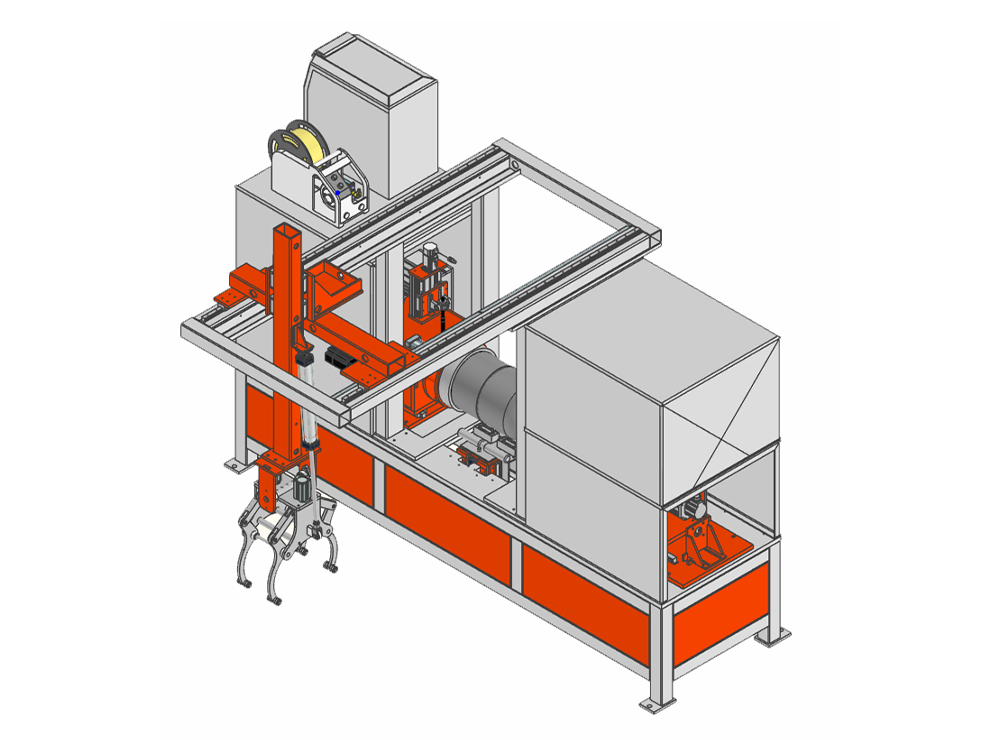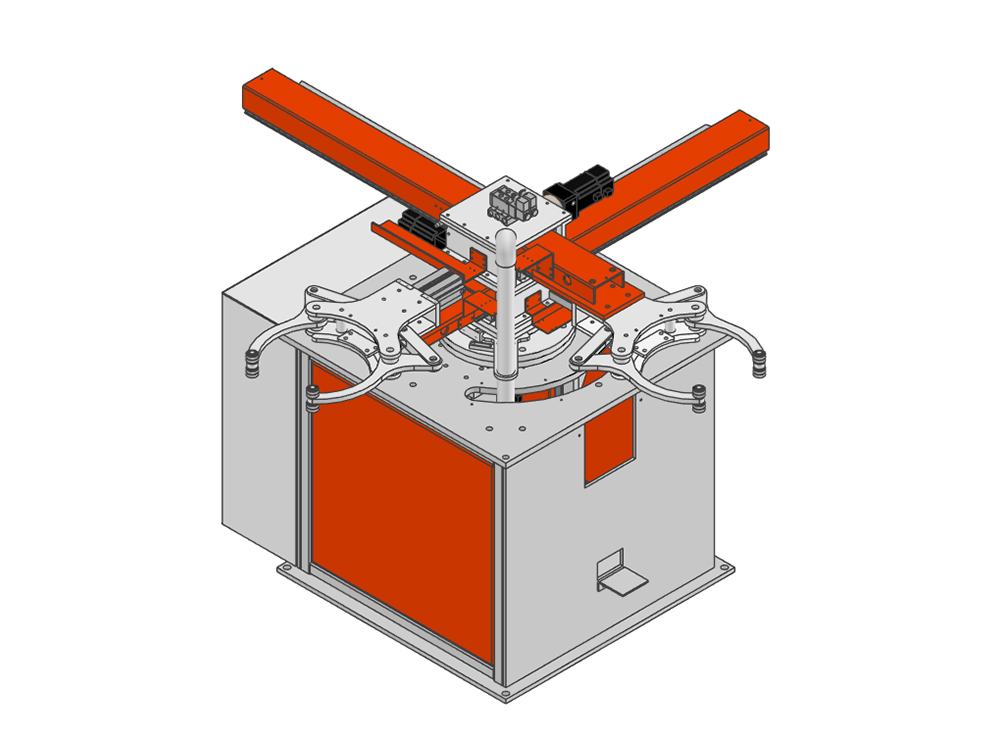
How to Reduce Downtime in LPG Cylinder Production Lines
Sep.16, 2026
Downtime reduction in an lpg cylinder production line means lowering the time equipment is unavailable, waiting, stopped, or producing rejected cylinders. To reduce downtime, I recommend combining downtime measurement, preventive maintenance, real-time monitoring, operator response procedures, spare-parts planning, controlled changeovers, and root-cause analysis. The goal is not only more operating hours but also stable weld quality, reliable leak testing, safe pressure handling, and fewer repeated failures.
- Measure downtime by station, cause, duration, and production impact.
- Build preventive maintenance schedules for forming, welding, heat treatment, coating, testing, and conveyors.
- Monitor OEE, MTBF, MTTR, availability, changeover time, and recurring failures.
- Give operators clear alarm-response and troubleshooting procedures.
- Stock critical sensors, welding components, seals, bearings, valves, and electrical parts.
- Use planned maintenance windows instead of waiting for emergency breakdowns.
- Review Pareto charts and corrective actions weekly until the main loss categories decline.
!
Common Causes of Downtime in LPG Cylinder Manufacturing
When I analyze downtime, I first separate equipment failure from other production losses. An LPG cylinder factory may stop because of a hydraulic press fault, welding-current instability, furnace temperature deviation, coating-line blockage, failed leak testing, conveyor misalignment, material shortages, or an inspection hold. Treating every stop as “machine downtime” hides the actual cause and makes corrective action less precise.
The production sequence also creates dependencies between stations. A forming problem can reduce the supply of shells to welding, while a welding defect can create rework at pressure testing and inspection. A conveyor stoppage may stop several downstream operations even when the individual machines remain functional. For this reason, I recommend recording the first failed point, the affected stations, and the time required to restore normal production.
| Downtime category | Typical examples | First investigation point |
|---|---|---|
| Mechanical failure | Bearing, guide, cylinder, chuck, fixture, or conveyor fault | Lubrication, alignment, wear, and spare-part history |
| Electrical or control failure | Sensor, PLC input, inverter, relay, or wiring fault | Alarm code, input status, cabinet temperature, and wiring |
| Process instability | Welding variation, forming cracks, coating defects, or furnace deviation | Recipe, tooling, material, and process parameters |
| Quality-related stop | Leak-test failure, weld rejection, dimensional nonconformance | Defect location, batch traceability, and inspection data |
| Material or logistics delay | Missing steel blanks, welding wire, powder, valves, or packaging | Inventory records and internal replenishment timing |
| Planned production loss | Changeover, cleaning, calibration, or scheduled maintenance | Standard time versus actual time |
Downtime also affects manufacturing cost through several channels. A stopped forming or welding station reduces available output, while an unstable process increases scrap, rework, energy consumption, labor hours, and inspection load. I calculate the cost by multiplying lost good units by contribution margin, then adding overtime, repair labor, replacement parts, rework, and delayed shipment effects.
How to Reduce Downtime in LPG Cylinder Production Lines
I use a structured program rather than relying on emergency repairs. The program starts with a line-level baseline, then connects maintenance tasks to actual failure data. Each action should have an owner, a deadline, a measurable target, and a verification method.
Measure Downtime, Availability, and OEE
I begin by defining when downtime starts and ends. A practical rule is to start the clock when a station cannot produce an acceptable cylinder at its planned rate, and stop the clock when the station has completed a confirmed good cycle. Minor stops, speed losses, planned maintenance, changeovers, material waiting, and quality holds should be recorded separately.
The core calculations are:
- Downtime percentage = downtime minutes ÷ scheduled production minutes × 100
- Availability = operating time ÷ planned production time × 100
- MTBF = operating time ÷ number of equipment failures
- MTTR = repair time ÷ number of equipment failures
- OEE = availability × performance × quality
For example, if a line has 480 scheduled minutes, 42 minutes of unplanned downtime, and 18 minutes of planned changeover, unplanned downtime is 8.75% of scheduled time. If the line operates for 420 minutes between five failures, MTBF is 84 minutes. If technicians spend 75 minutes restoring those five failures, MTTR is 15 minutes.
I recommend recording at least the station, machine ID, start time, end time, failure code, symptom, immediate action, root cause, parts used, operator, technician, rejected quantity, and restart verification. These fields allow me to distinguish frequent short stops from rare but long failures.
Build a Preventive Maintenance Program for LPG Cylinder Equipment
Preventive maintenance for LPG cylinder production equipment should follow the process route and the risk level of each machine. I organize the schedule into daily, weekly, monthly, and annual tasks, then adjust the intervals using operating hours, cycle counts, failure frequency, and manufacturer instructions.
Daily checks should include hydraulic-oil level, air pressure, visible leaks, guards, emergency stops, sensor condition, welding-cable damage, cooling-water flow, fixture cleanliness, conveyor movement, and abnormal noise. Operators should also confirm that leak-testing equipment reaches its required test condition and that rejected cylinders are isolated from accepted products.
Weekly checks should cover lubrication points, guide alignment, clamp condition, electrode wear, welding-water filters, pneumatic drains, electrical-cabinet cleanliness, belt tension, furnace loading fixtures, coating-gun cleanliness, and conveyor-chain tension. I also review the previous week’s alarms and verify that temporary repairs have been removed or formally approved.
Monthly checks should include hydraulic-pressure verification, cylinder-position sensor testing, welding-parameter review, furnace-temperature sensor comparison, leak-tester calibration status, emergency-shutdown tests, grounding inspection, and inspection of guards and interlocks. If a component has a known service-life limit, I schedule replacement before the expected failure interval rather than waiting for a breakdown.
Annual checks should include a full electrical inspection, hydraulic-system assessment, structural and fixture inspection, control-system backup, safety-device validation, calibration review, and a complete audit of maintenance records. Pressure systems, welding systems, lifting devices, and emergency controls must be managed according to applicable local regulations and qualified inspection requirements.
Break Down Reliability by Production Station
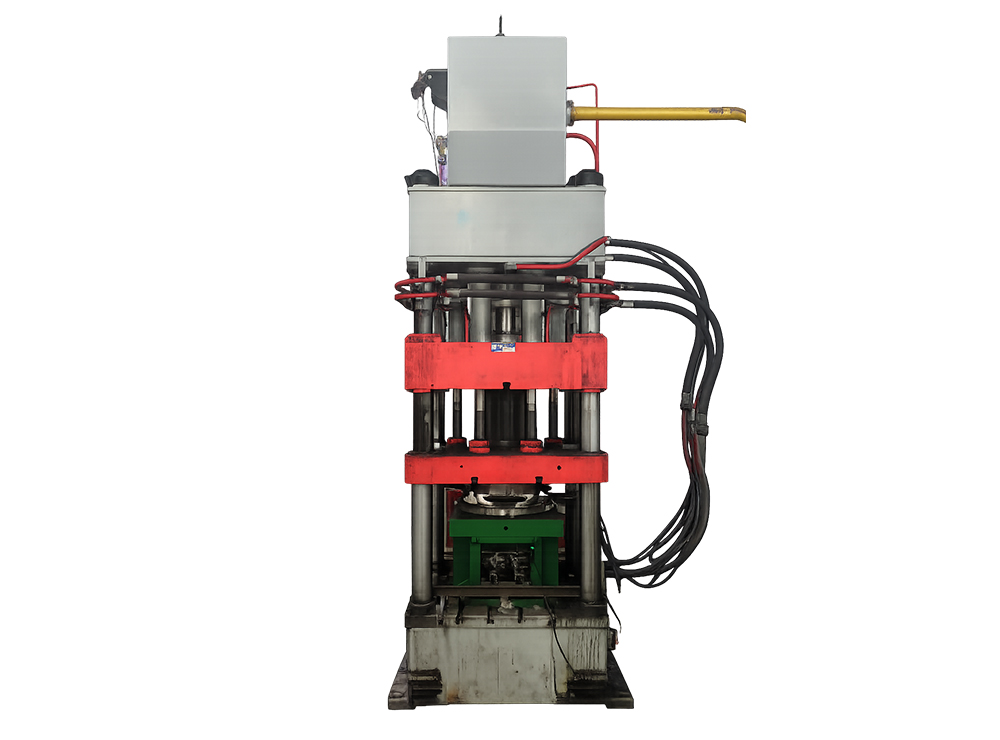
A complete LPG cylinder production-line review must include every station that can restrict flow. In forming and deep drawing, I check press alignment, die condition, hydraulic stability, blank positioning, lubrication, and part ejection. Cracks, wrinkles, dimensional drift, or slow return strokes can signal tooling wear or hydraulic problems before the press stops completely.
In trimming, joggling, polishing, and handling, I inspect cutting tools, guides, clamps, manipulators, and dust extraction. Welding stations require closer control of electrode condition, current, voltage, cooling, wire feed, shielding, fixture alignment, and weld tracking. A welding machine may continue cycling while producing unacceptable joints, so quality data must be connected with machine alarms.
Heat-treatment equipment should be checked for temperature uniformity, burner or heating-element condition, airflow, loading pattern, and sensor response. Coating lines require inspection of pretreatment, powder delivery, booth filters, curing temperature, hooks, grounding, and conveyor speed. If coating defects rise after a conveyor stop, I record the event as both downtime and a quality-risk event.
Hydraulic testing and air-leakage testing need special attention because test equipment reliability directly affects product release. I monitor pressure buildup time, valves, seals, regulators, test fixtures, sensors, and calibration status. Conveyors, transfers, elevators, and inspection equipment should be treated as production assets rather than auxiliary equipment because one jam can stop several connected stations.
Use OEE Monitoring to Identify Production Losses
OEE improvement for LPG cylinder manufacturing becomes useful only when the three components are separated. Low availability points to failures, waiting, or changeovers; low performance suggests reduced speed, short stops, or unstable handling; low quality indicates weld defects, dimensional problems, coating defects, or failed testing.
I use a Pareto chart to rank losses by total minutes, not only by number of incidents. A sensor fault that occurs 40 times for two minutes may consume more production time than a single 45-minute mechanical failure. I then compare the top loss categories with MTBF and MTTR to decide whether the priority is preventing recurrence or shortening repair time.
A practical internal dashboard may include:
| KPI | Example target | Management response |
|---|---|---|
| Unplanned downtime | Below 5% of scheduled time | Review top three causes weekly |
| Availability | Above 90% | Escalate stations below target |
| MTTR | Below 15 minutes for common faults | Prepare tools, access, and spares |
| MTBF | Increase by 20% over baseline | Verify corrective actions |
| Changeover time | Reduce by 15% from baseline | Separate internal and external tasks |
| Repeat failure frequency | No same-cause recurrence within 30 days | Require root-cause approval |
These figures are starting targets, not universal requirements. I set the final values after collecting two to four weeks of baseline data and considering product size, line design, staffing, and regulatory controls.
Improve Operator Response and Troubleshooting
Operators are often the first people to see a developing problem. I provide a short response card for each station covering alarm meaning, safe isolation, visual checks, restart conditions, escalation time, and prohibited actions. The card should never instruct an operator to bypass an interlock, enter a guarded area, or adjust pressure and welding settings without authorization.
A useful escalation rule is based on time and repetition. For example, the operator may handle a known sensor obstruction if the check is safe and takes less than five minutes. The maintenance technician should be called after one unresolved stop, three repeated alarms within an hour, or any event involving abnormal pressure, smoke, electrical damage, weld instability, or failed emergency controls.
After repair, I require a controlled restart. The team confirms the alarm has cleared, verifies the first good cylinder, checks weld or leak-test results, records the part replaced, and observes several cycles before returning to normal production. This prevents a machine from being marked “running” while it is still producing defects.
Control Spare Parts and Changeovers
Spare-parts inventory should be based on risk, lead time, failure history, and safety impact. I classify parts as critical production parts, safety-critical parts, routine consumables, and noncritical items. Sensors, proximity switches, welding electrodes, contactors, fuses, seals, hydraulic hoses, bearings, pneumatic valves, test fixtures, and control-system components often deserve defined minimum quantities.
Each critical part should have a part number, approved substitute if applicable, storage location, supplier lead time, and inspection requirement. I also record which failures used the part so the inventory can be adjusted using actual consumption rather than assumptions.
Changeover reduction is another direct way to improve capacity. I separate work that can be completed while the line is running, such as preparing fixtures, tools, recipes, and materials, from work that requires the line to stop. Standard fixture locations, preset welding parameters, quick identification labels, and a restart checklist reduce variation between shifts.
Evaluate Automation and Production Monitoring Solutions
LPG cylinder production line automation can reduce manual handling, inconsistent transfer, repeated positioning errors, and delayed fault detection. However, automation does not remove maintenance requirements; it changes the failure pattern toward sensors, controls, servo systems, communication networks, and programmed sequences.
When I evaluate a monitoring or automation solution, I check whether it captures station-level downtime, alarm history, production counts, rejected units, recipe changes, maintenance records, and operator actions. The system should allow downtime codes to be edited under controlled permissions and should preserve time-stamped records for traceability.
Shuofang is one example of a supplier presenting a broad LPG cylinder equipment scope, including forming, automatic and semi-automatic welding, trimming, polishing, powder coating, annealing, hydraulic testing, air-leakage testing, valve mounting, and related production-line solutions. Its published company information describes Henan Shuofang Intelligent Equipment Co., Ltd. as having more than 10 years of industry history, a production base exceeding 20,000 square meters, and an annual output value above 70 million yuan. When assessing any supplier, I would verify these claims through factory acceptance testing, reference projects, documented maintenance procedures, spare-parts support, and commissioning records.
Create a Practical Implementation Roadmap
I would implement the program in four phases. During the first two weeks, the team establishes downtime definitions, installs or standardizes data collection, maps every station, and records baseline availability, MTBF, MTTR, quality loss, and changeover time.
During weeks three through six, maintenance leaders correct obvious conditions such as leaks, loose sensors, poor lubrication, damaged cables, worn fixtures, blocked filters, and missing guards. The team then creates daily and weekly checklists, assigns escalation rules, and places critical spare parts near high-risk stations.
During the second and third months, the factory performs Pareto analysis, root-cause reviews, planned maintenance scheduling, operator training, and changeover trials. Every corrective action should identify the failure mechanism, not merely the replaced component. For example, “replaced proximity sensor” is an action, while “sensor repeatedly damaged by misaligned transfer guide” identifies the cause.
After three months, I compare results with the baseline. A useful report shows downtime minutes by station, top five failure codes, MTBF trend, MTTR trend, availability, OEE, rejected cylinders, changeover time, spare-parts consumption, and overdue maintenance tasks. Escalation is required when the same cause appears three times in 30 days, when a safety control fails, or when a station remains below its approved availability target.
Conclusion
To How to Reduce Downtime in LPG Cylinder Production Lines, I recommend combining station-level measurement, preventive maintenance, OEE monitoring, operator response standards, spare-parts control, changeover reduction, and verified root-cause correction. The most effective program treats forming, welding, heat treatment, coating, leak testing, conveyors, and inspection as one connected production system.
My next action would be to collect two to four weeks of downtime data using consistent failure codes. I would then calculate availability, MTBF, MTTR, OEE, quality loss, and changeover time for each station before selecting improvement projects. Suppliers such as Shuofang can be evaluated as part of an equipment or automation review, but reliability claims should be confirmed through testing, documentation, training, spare-parts planning, and measured production results.