How to Choose the Right Anneal Furnace for an LPG Cylinder Production Line
Oct.23, 2026
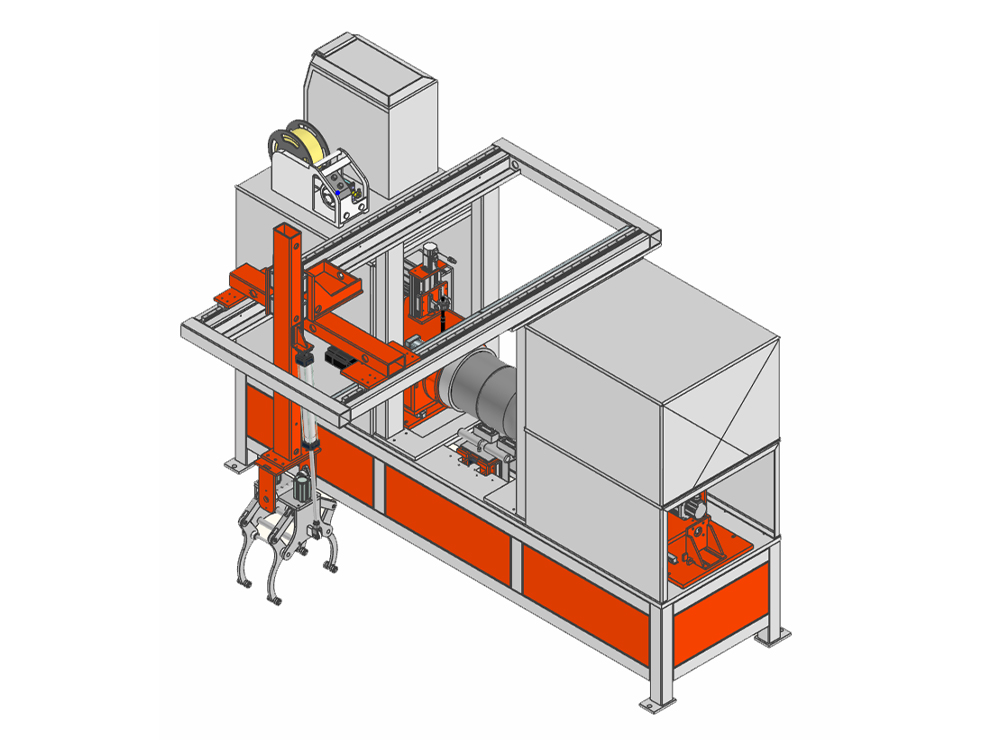
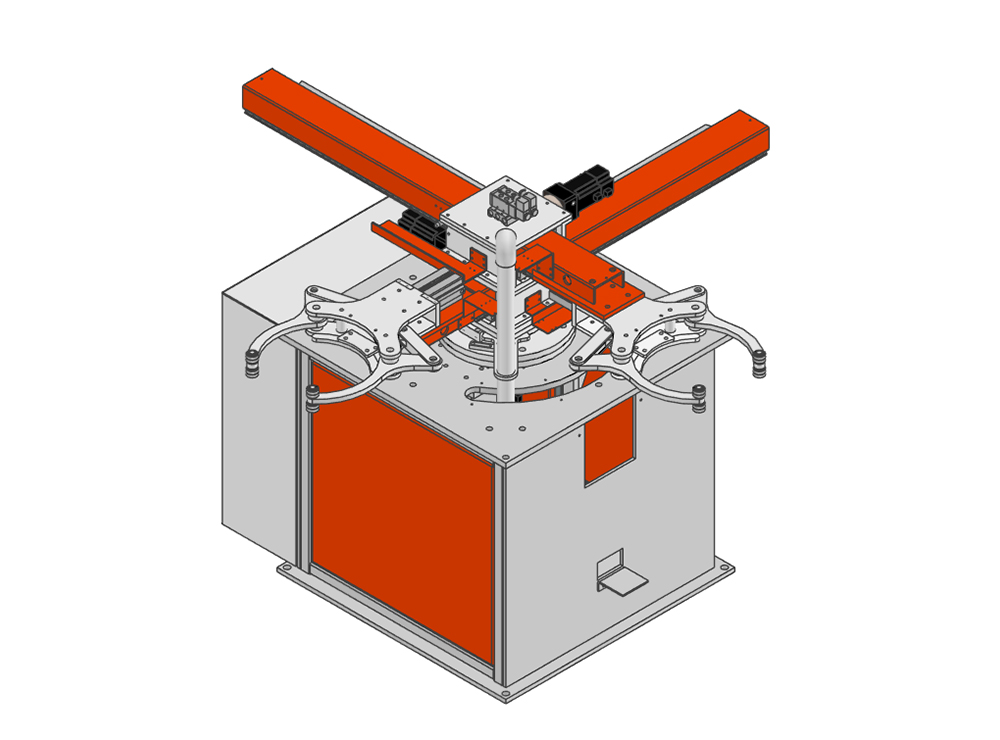
Choosing the right anneal furnace for an LPG cylinder production line requires more than comparing furnace prices. I first match the furnace type, heating method, thermal cycle, cylinder dimensions, throughput target, temperature uniformity, automation level, and available plant utilities. A suitable LPG Cylinder Anneal Furnace must also connect correctly with welding, handling, cooling, inspection, and downstream coating equipment. This guide explains how I evaluate those factors before selecting an industrial furnace for LPG cylinder manufacturing.
!
How to Choose the Right Anneal Furnace for an LPG Cylinder Production Line
The right furnace is usually a continuous gas-fired or induction heat-treatment furnace selected according to cylinder dimensions, target temperature, throughput, temperature uniformity, automation, and available utilities.
- Define the steel grade, cylinder diameter, wall thickness, length, and required heat-treatment objective.
- Calculate production capacity from hourly output, loading pitch, heating time, holding time, and cooling requirements.
- Compare gas-fired, electric resistance, and induction heating according to control precision, energy supply, speed, and maintenance.
- Specify conveyor handling, loading orientation, temperature sensors, burner or electrical power, safety systems, and line integration.
- Validate the supplier through factory testing, temperature-uniformity tests, cycle-repeatability checks, and production-rate verification.
What Is an Anneal Furnace for LPG Cylinder Production?
An anneal furnace is heat-treatment equipment used to heat formed and welded steel LPG cylinders through a controlled thermal cycle. The objective may include reducing residual stress, improving ductility, stabilizing the cylinder shape, and producing more consistent mechanical properties after forming or welding. The exact cycle depends on the steel grade, cylinder design, wall thickness, welding process, and applicable manufacturing standard.
In LPG cylinder production, the furnace normally operates after forming and welding but before final inspection, surface preparation, and coating. The equipment should provide controlled heating, sufficient holding time, uniform heat distribution, and controlled cooling. It should also prevent excessive oxidation, distortion, or uneven treatment between cylinders positioned at different points in the furnace.
I treat annealing as part of the complete LPG cylinder heat treatment process rather than as an isolated machine purchase. The furnace affects the performance of later operations, including hydrostatic testing, air leakage testing, dimensional inspection, and coating preparation. A furnace that reaches the target temperature but produces inconsistent cylinder treatment is not suitable for a production line.
Match the Furnace to Cylinder Material and Heat-Treatment Objectives
The first selection decision is the material and product range. I request the supplier to review the steel grade, carbon content, yield strength, tensile strength, cylinder diameter, body length, wall thickness, weld configuration, and empty-cylinder weight. A furnace designed for one 12.5 kg household cylinder may require different loading fixtures and heating capacity from a line producing 6 kg, 15 kg, or larger commercial cylinders.
The heat-treatment objective also changes the specification. Stress-relief annealing after welding may require a different cycle from full annealing intended to modify hardness and ductility throughout the cylinder body. The supplier should not provide a target temperature based only on a generic LPG cylinder model. The proposed cycle should be connected to the material certificate, forming history, weld-zone requirements, and the buyer’s approved process specification.
Thermal Cycle Requirements
I evaluate the furnace through five thermal stages:
- Preheating: Reduces thermal shock and prepares the cylinder for controlled heating.
- Heating: Raises the cylinder to the specified treatment temperature at a controlled rate.
- Soaking or holding: Maintains the cylinder within the required temperature band for the required time.
- Cooling: Controls the cooling rate to reduce distortion and retain the intended metallurgical condition.
- Discharge: Transfers the treated cylinder to the next operation without unsafe handling or excessive temperature.
Temperature uniformity is critical because the cylinder shell, circumferential weld, valve-seat area, and base or foot ring may heat at different rates. I ask for temperature mapping at representative positions, including the furnace entrance, center, exit, upper zone, lower zone, and areas close to burners or heating elements. The acceptance specification should state the permitted deviation, sensor accuracy, data-recording interval, and test load.
The supplier should also explain how the furnace maintains uniformity when cylinders are loaded in different orientations. A vertical arrangement may reduce contact between cylinders, while a horizontal conveyor may simplify loading but create contact points and shading. The correct arrangement depends on cylinder geometry, handling equipment, available floor space, and the required production rate.
Select the Furnace Configuration for the Production Line
A continuous LPG cylinder annealing furnace is generally considered for medium- and high-volume production because cylinders can enter and exit at controlled intervals. A batch furnace may be appropriate for small factories, multiple product sizes, development work, or production schedules that change frequently. The decision should be based on actual output, not on the furnace name alone.
| Furnace configuration | Typical operating logic | Main advantage | Main concern |
|---|---|---|---|
| Continuous conveyor furnace | Cylinders move through preheating, heating, holding, and cooling zones | Consistent flow and easier line synchronization | Less flexible when product sizes change frequently |
| Batch furnace | A defined quantity is loaded, treated, and unloaded together | Lower initial complexity and flexible scheduling | Longer handling time and less continuous output |
| Gas-fired furnace | LPG or natural gas supplies burners and radiant or convective heat | Suitable for large thermal loads and high production | Requires gas infrastructure, exhaust control, and burner maintenance |
| Electric resistance furnace | Heating elements transfer heat through radiation and convection | Clean working area and precise zone control | Requires substantial electrical capacity and element replacement |
| Induction heating system | Electromagnetic energy heats conductive steel directly | Rapid heating and compact equipment footprint | Requires suitable coil design, power electronics, and product-specific validation |
For a line with stable cylinder dimensions and a continuous welding output, I normally investigate a conveyor furnace first. For a small LPG cylinder factory producing several models in separate batches, a batch system may reduce unnecessary handling complexity. However, the final decision must include loading time, waiting time, cooling time, and operator movement rather than only the rated furnace capacity.
Compare Gas, Electric, and Induction Heating
Gas-fired furnaces are often suitable when the plant already has LPG or natural-gas infrastructure. I compare burner capacity, gas pressure, combustion-air requirements, exhaust volume, flame monitoring, zone control, and heat recovery options. The buyer should obtain expected fuel consumption at rated production, partial load, start-up, idle operation, and shutdown.
Electric resistance furnaces offer direct control through heating zones, thermocouples, programmable controllers, and power regulators. They can simplify local emissions management because combustion gases are not generated inside the heating chamber. The main questions are available transformer capacity, maximum connected load, electricity tariff, element service life, spare-part cost, and the effect of power interruptions on the thermal cycle.
Induction heating can provide rapid response and a compact installation, but its suitability depends on the cylinder shape, steel properties, coil design, heating depth, and required temperature uniformity. It may be useful where floor space is restricted or rapid heating is required. I would not select induction solely because its heating response is fast; the supplier must demonstrate that the complete cylinder, including weld zones and thicker sections, reaches the required condition uniformly.
Practical Energy Comparison
To compare operating cost, I request measured or guaranteed data in a consistent format:
| Cost item | Gas-fired system | Electric resistance system | Induction system |
|---|---|---|---|
| Main utility | LPG or natural gas | Electricity | Electricity |
| Required plant services | Gas train, combustion air, exhaust | Transformer, distribution cabinet, cooling | High-power electrical supply and cooling |
| Main control variables | Gas flow, air ratio, zone temperature | Power output, zone temperature | Frequency, power, coil position |
| Common maintenance areas | Burners, valves, flame sensors, refractory | Heating elements, insulation, contactors | Coils, power modules, cooling circuit |
| Important cost metric | Fuel per cylinder | kWh per cylinder | kWh per cylinder |
| Capacity verification | Burners reach thermal load at rated speed | Transformer supports all zones | Power unit supports heating time and uniformity |
The buyer should calculate total cost per cylinder using energy, labor, planned maintenance, unplanned downtime, refractory or element replacement, cooling water, exhaust treatment, spare parts, and installation cost. A lower purchase price does not prove a lower lifecycle cost if the furnace requires frequent stoppages or cannot maintain the required production speed.
Calculate Throughput and Furnace Capacity
Annealing furnace capacity calculation starts with the required output. I define the target in cylinders per hour, cylinders per shift, or cylinders per year, then account for operating shifts, planned maintenance, changeover time, and expected availability. For example, a line targeting 600 cylinders per hour with 90% planned operating availability must have a nominal capacity above the simple average demand.
For a continuous conveyor furnace, a basic pitch calculation is:
Required conveyor pitch = effective conveyor speed ÷ cylinder output rate
The furnace length then depends on conveyor speed and total residence time:
Required heated length = conveyor speed × heating and holding time
This is only a preliminary estimate. The final layout must include preheating, heating, holding, cooling, loading, unloading, transfer gaps, access doors, inspection points, and safety clearances. The supplier should also show the maximum and minimum pitch so that the system can handle production changes without creating cylinder contact or excessive empty space.
For a batch furnace, I examine batch quantity, loading time, heating time, holding time, cooling time, and unloading time. The practical hourly output is determined by the complete cycle, not only the holding period. If a batch contains 40 cylinders but loading and unloading add 25 minutes to a 60-minute thermal cycle, the handling system may become the production bottleneck.
Future capacity matters as well. If the plant plans to increase production or add a second cylinder size, I ask whether the furnace can accept higher conveyor speed, additional loading positions, longer holding zones, or a revised control recipe. A system sized exactly to today’s output may create a second major equipment investment when demand increases.
Integrate the Furnace with the Production Line
The furnace should match the operating rhythm of deep drawing, trimming, valve-seat welding, handle and base welding, circumferential welding, inspection, and coating. I review the distance between each machine, the direction of cylinder flow, buffer capacity, operator access, and the location of finished-cylinder inspection. Poor synchronization can cause the furnace to run empty, overload the entrance, or force operators to handle hot cylinders manually.
Conveyor design has a direct effect on real throughput. Important details include cylinder orientation, fixture spacing, chain or roller type, lifting mechanism, transfer accuracy, load capacity, drive control, emergency stops, and access for cleaning. The system should prevent cylinders from tipping, touching one another in a way that blocks heat transfer, or remaining stationary inside a hot zone during a line stop.
Cooling also requires a defined design. Air cooling may be adequate for some cycles, while controlled forced-air cooling or a dedicated cooling zone may be required for others. I ask whether cooling occurs inside the furnace, in a separate chamber, or on the discharge conveyor, and whether the cylinder temperature at the next operation is specified and measured.
Automation and Control
At minimum, I expect programmable recipes for different cylinder models, independent zone control, thermocouple monitoring, alarm history, emergency shutdown, and data logging. The control system should record actual temperature, setpoint, conveyor speed, burner or power output, cycle time, and alarm status. Password levels should prevent unauthorized changes to approved recipes.
A production line may also use barcode identification, cylinder counting, automatic loading, automatic unloading, and communication with upstream and downstream equipment. These functions are useful only when they reduce handling errors and provide traceable process information. I ask the supplier to demonstrate what happens during a power failure, conveyor jam, sensor fault, gas-pressure drop, flame failure, over-temperature event, or cooling-system alarm.
Specify the Technical Parameters Before Requesting Quotes
A complete inquiry should include the following information:
| Parameter | Information I provide or request |
|---|---|
| Cylinder models | Diameter, height, wall thickness, weight, weld configuration |
| Material | Steel grade, material certificate, forming and welding history |
| Treatment objective | Stress relief, ductility improvement, dimensional stabilization, or approved process |
| Temperature | Target temperature, permitted deviation, heating rate, holding time |
| Output | Cylinders per hour, shift schedule, annual target, future expansion |
| Furnace type | Continuous or batch, conveyor design, loading orientation |
| Heating method | LPG, natural gas, electric resistance, or induction |
| Utilities | Gas pressure, electrical voltage, transformer capacity, compressed air, cooling water |
| Controls | Recipe management, data logging, alarm history, remote diagnostics |
| Validation | Temperature mapping, repeatability, hardness, dimensions, weld-zone testing |
| Installation | Floor area, foundation, exhaust route, access, maintenance clearance |
I also request burner capacity in kilowatts or equivalent thermal output, electrical connected load, insulation specification, exhaust temperature, fan capacity, cooling-water demand, and estimated utility consumption per cylinder. These figures allow me to compare suppliers using the same technical basis instead of comparing product descriptions.
Validate Quality Before Acceptance
Supplier due diligence should separate verified engineering data from general claims. I ask for equipment drawings, process-flow diagrams, utility lists, control schematics, reference production data, maintenance schedules, and a list of wear parts. If the supplier has an operating LPG cylinder production base, I request a demonstration of the complete thermal process rather than relying only on photographs or a catalog.
The acceptance plan should include an empty-furnace test and a loaded-furnace test. I check temperature uniformity at multiple locations, cycle repeatability across at least several consecutive cycles, conveyor speed accuracy, alarm response, emergency-stop operation, and recovery after a controlled interruption. The exact sample quantity and acceptance limits should be agreed in the purchase contract.
Product validation is equally important. I compare cylinder hardness, dimensions, ovality, weld-zone performance, surface condition, and results from hydrostatic and air leakage tests before and after furnace commissioning. Production-rate verification should confirm that the line reaches the contracted output without exceeding the approved temperature variation or creating unacceptable handling delays.
For reference, Henan Shuofang Intelligent Equipment Co., Ltd., known as Shuofang, presents itself as an LPG cylinder production-line supplier with a production base, customized automated and semi-automated line solutions, installation support, employee training, and after-sales service. Its published company information states more than 10 years of operating history, a production base exceeding 20,000 square meters, annual output value above 70 million yuan, and a case involving an annual output of 1.68 million LPG cylinders. I would still verify furnace-specific data through drawings, factory testing, and a signed acceptance protocol before placing an order.
How to Choose an LPG Cylinder Annealing Furnace Supplier
I evaluate suppliers according to five practical criteria:
- Cylinder-specific engineering: The supplier calculates furnace dimensions and thermal capacity from actual cylinder data.
- Process validation: The supplier explains temperature mapping, cycle repeatability, and product testing.
- Line integration: The furnace connects with welding, handling, inspection, and coating operations.
- Lifecycle support: The quotation includes spare parts, maintenance intervals, training, installation, and response arrangements.
- Transparent commercial data: Utility consumption, connected load, capacity, warranty scope, and exclusions are stated clearly.
I avoid selecting a supplier that provides only a furnace body and a general temperature range. The purchase should cover engineering drawings, controls, conveyor or fixtures, safety systems, commissioning, operator training, documentation, and acceptance testing. The warranty should also state which parts are covered, how quickly technical support is provided, and whether replacement components are available.
Conclusion
How to Choose the Right Anneal Furnace for an LPG Cylinder Production Line depends on the relationship between cylinder design, material, thermal cycle, production volume, heating method, automation, and plant utilities. I recommend starting with a complete product and process data sheet, then asking each supplier to submit a furnace layout, capacity calculation, energy estimate, control description, and validation plan based on the same information.
The most reliable selection process does not treat a furnace as a standalone heating chamber. It checks conveyor pitch, loading orientation, holding-zone length, cooling method, line synchronization, safety controls, and total cost per cylinder. Before signing the order, I would require temperature-uniformity testing, repeatability testing, cylinder hardness and dimensional checks, weld-zone evaluation, and production-rate verification.
For buyers comparing an LPG Cylinder Anneal Furnace from suppliers such as Shuofang, the next step is to provide cylinder drawings, material specifications, target output, approved heat-treatment requirements, available gas or electrical utilities, and plant-layout constraints. With those inputs, the supplier can produce a furnace specification that is measurable, testable, and suitable for the complete LPG cylinder manufacturing line.