How Anneal Furnaces Improve Strength and Safety in LPG Cylinder Manufacturing
Aug.04, 2026
LPG cylinder shells and heads undergo significant plastic deformation during stamping, deep drawing, flanging, and other forming operations. These processes help create the required cylinder shape, but they also cause work hardening, residual stress, elongated grains, and uneven mechanical properties in the steel.
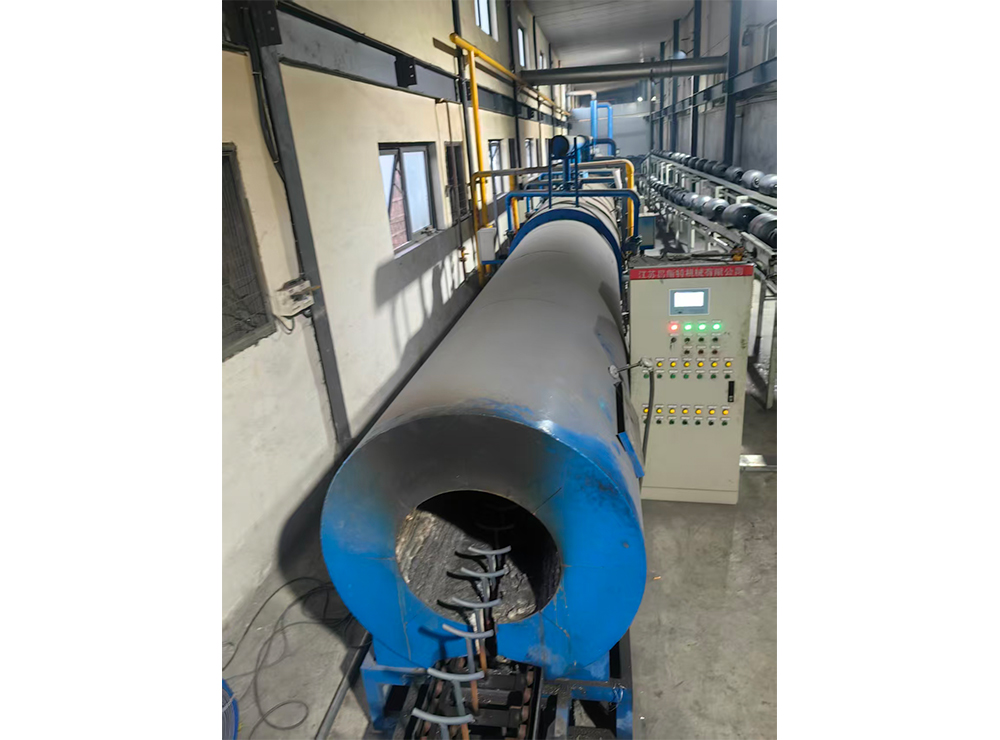
An anneal furnace is used after the forming stage to heat the cylinder components under controlled conditions and then cool them according to the specified process. The purpose is not simply to make the steel harder or increase its tensile strength. Instead, annealing restores a suitable balance of ductility, toughness, dimensional stability, and strength, helping the finished LPG cylinder withstand welding, pressure testing, transportation, and long-term service.
Why LPG Cylinder Components Need Annealing
1. Eliminating Work Hardening After Deep Drawing
Work hardening is one of the most important reasons for annealing LPG cylinder components.
During stamping and deep drawing, the steel sheet is subjected to severe plastic deformation. The material gradually becomes harder and less ductile, while internal stress accumulates in heavily formed areas.
Without proper annealing, the cylinder shell or head may experience:
- Cracking during subsequent forming or welding
- Localized brittleness around highly deformed areas
- Shell rupture during hydrostatic pressure testing
- Reduced resistance to impact and cyclic pressure
- Cracks developing near welded joints during later service
The anneal furnace heats the formed steel to the temperature required by the material and production specification. Controlled heating, holding, and cooling reduce the effects of work hardening and restore the material’s ability to deform without cracking.
This improved ductility and toughness are essential for LPG cylinders that must safely contain pressurized gas.
2. Refining and Equalizing the Grain Structure
Deep drawing and other cold-forming processes stretch and deform the original grain structure of the steel. In some areas, grains become elongated, while other areas may experience different levels of deformation.
This uneven structure can produce inconsistent mechanical properties across the cylinder body.
During annealing, recrystallization can occur under suitable process conditions. New and more uniform grains replace the heavily deformed structure, helping to improve consistency throughout the cylinder shell and head.
A more uniform metallographic structure supports stable mechanical properties, including:
- Yield performance
- Tensile performance
- Elongation
- Toughness
- Forming reliability
The required values must be determined by the cylinder design, steel grade, wall thickness, and applicable manufacturing standard. They should not be represented by one universal percentage or a single temperature range.
3. Reducing Residual Stress and Dimensional Deformation
LPG cylinder components can contain considerable residual stress after deep drawing, trimming, flanging, neck forming, and spinning.
If this stress is not properly reduced, the cylinder may deform during later production stages. Possible problems include:
- Cylinder body distortion
- Neck or opening misalignment
- Out-of-roundness
- Unstable dimensions during welding
- Deformation during shot blasting or surface treatment
- Shape changes during storage
Annealing helps release and redistribute residual stress before the cylinder enters later manufacturing processes. This improves dimensional stability and makes it easier to control cylinder roundness, alignment, welding position, and overall appearance.
Stable dimensions are also important for valve installation, pressure testing, automated handling, and production-line consistency.
4. Supporting More Reliable Welding
Cylinder shells that remain highly work-hardened or internally stressed can behave unpredictably during welding. The combination of forming stress and welding heat may increase the risk of cracking, distortion, and dimensional deviation around the welded joint.
Proper annealing before downstream welding operations can provide a more stable material condition. This helps manufacturers achieve:
- More consistent weld preparation
- Better alignment of cylinder components
- Reduced welding deformation
- Lower risk of stress-related cracking
- More repeatable welding quality
However, annealing does not replace welding parameter control, weld inspection, or pressure testing. It is one part of the complete LPG cylinder quality-control process.
How Annealing Improves LPG Cylinder Safety
The safety contribution of an anneal furnace comes mainly from restoring stable material properties after severe forming.
Improved Performance During Hydrostatic Testing
During hydrostatic testing, the completed cylinder is filled with water and pressurized to verify its structural integrity.
A cylinder body with excessive work hardening, low ductility, or concentrated residual stress may be more likely to crack, deform abnormally, or fail during pressure testing.
Annealing reduces these risks by improving the uniformity and ductility of the formed steel. Nevertheless, every cylinder must still undergo the required pressure test. Heat treatment should never be treated as a replacement for inspection.
Better Resistance to Pressure Cycles
LPG cylinders experience repeated filling, transportation, storage, and discharge cycles. The cylinder wall must withstand internal pressure without developing fatigue-related damage around formed or welded areas.
By reducing residual stress and improving structural uniformity, annealing helps create a more stable cylinder body for repeated service conditions.
Lower Risk of Brittle Cracking
Cold forming can reduce ductility in severely deformed sections. If these areas remain untreated, they may be more sensitive to cracking during impact, welding, testing, or service.
Annealing restores the material’s ability to absorb deformation and reduces the likelihood of brittle behavior in critical areas.
Position of the Anneal Furnace in an LPG Cylinder Production Line
For the manufacturing route discussed here, the cylinder shell and head are annealed after stamping or deep drawing. The exact location of the furnace may vary according to cylinder design, steel grade, production technology, and applicable standards.
A typical production sequence may include:
- Steel sheet blanking
- Stamping and deep drawing of the shell or head
- Trimming, flanging, neck forming, or related forming operations
- Annealing of the formed components
- Cylinder assembly and welding
- Weld and dimensional inspection
- Hydrostatic pressure testing
- Shot blasting and surface preparation
- Powder coating or painting
- Valve installation
- Pressurization and air-leak testing
During the final air-leak test, the cylinder is pressurized and immersed in water. After the water becomes completely still, operators observe the cylinder body and valve area for bubbles that may indicate leakage.
Annealing therefore supports the mechanical condition of the cylinder, while hydrostatic testing and air-leak testing verify the finished cylinder at different stages.
Secondary Surface-Cleaning Effects
Cylinder components may carry forming oil, lubricant, and other surface residues after stamping and deep drawing.
High-temperature treatment can burn off or carbonize some of these residues and may loosen certain surface oxides. However, this is only a secondary effect of annealing.
An anneal furnace should not be considered a substitute for surface preparation. After heat treatment, cylinders normally require appropriate cleaning processes such as shot blasting before coating.
Proper surface treatment is necessary to:
- Remove oxide scale
- Eliminate loose contamination
- Create a suitable surface profile
- Improve coating adhesion
- Reduce the risk of premature coating failure
Key Annealing Process Controls
The effectiveness of annealing depends on process stability rather than simply reaching a high temperature.
Temperature Selection
Annealing temperature must be selected according to:
- Steel grade
- Cylinder wall thickness
- Degree of forming deformation
- Cylinder design
- Production standard
- Required mechanical properties
Using one fixed temperature range for every LPG cylinder is not technically accurate.
Heating Uniformity
All cylinder components should receive consistent heat treatment. Uneven furnace temperature may cause different areas or different batches to develop inconsistent properties.
The furnace design should provide stable heat circulation and minimize temperature differences within the working zone.
Loading Arrangement
Overloading the furnace or placing components too closely together can restrict heat circulation. This may lead to uneven heating and incomplete treatment.
Loading quantity, component spacing, conveyor speed, and furnace capacity should be coordinated.
Holding Time
Holding time must be sufficient for the cylinder component to reach the required condition throughout its thickness. It should be determined by the actual process rather than using a general time for all cylinders.
Controlled Cooling
Cooling conditions affect the final microstructure and residual stress of the steel. Excessively rapid or uneven cooling may introduce new stress or deformation.
The cooling method should follow the approved heat-treatment procedure for the cylinder material and production standard.
Process Records
A reliable production line should record important furnace parameters, such as:
- Furnace-zone temperatures
- Conveyor speed
- Heating and holding time
- Batch information
- Alarm records
- Inspection results
These records improve traceability and help manufacturers identify the cause of quality variations.
Common Annealing Problems in LPG Cylinder Production
Treating Annealing as a Strength-Increasing Process
Annealing does not necessarily increase tensile strength. In many cold-worked steels, it reduces excessive hardness while restoring ductility and toughness.
The objective is to obtain balanced and compliant mechanical properties, not the highest possible strength value.
Using the Same Parameters for Every Cylinder
Different cylinder sizes, wall thicknesses, steel grades, and forming depths may require different heat-treatment parameters.
The furnace settings should be based on the approved production process.
Overloading the Furnace
Excessive loading can create uneven temperature distribution and inconsistent treatment between components.
Production capacity should be calculated together with the required heating cycle.
Ignoring Surface Residues
Heavy quantities of oil or lubricant can generate smoke, deposits, and unstable furnace conditions. Components should receive suitable pre-cleaning when necessary.
Relying Only on Visual Inspection
A cylinder may look normal after annealing while still having inadequate mechanical properties or residual stress.
Manufacturers should combine furnace-process monitoring with dimensional inspection, mechanical-property verification, welding inspection, hydrostatic testing, and air-leak testing.
Selecting an Anneal Furnace for LPG Cylinder Manufacturing
When choosing an anneal furnace, manufacturers should consider more than the maximum furnace temperature.
Important factors include:
- Applicable cylinder diameter and height
- Cylinder or component production capacity
- Furnace temperature uniformity
- Heating-zone configuration
- Conveyor speed and loading method
- Automatic temperature control
- Process-data recording
- Energy consumption
- Exhaust and ventilation design
- Integration with upstream and downstream equipment
- Maintenance and spare-parts support
The furnace should be configured according to the cylinder material, production output, plant layout, and required heat-treatment process.
Annealing as Part of a Complete Cylinder Safety System
An anneal furnace plays an important role in LPG cylinder manufacturing by eliminating work hardening, refining the material structure, reducing residual stress, and stabilizing cylinder dimensions.
Its value is not based on unsupported claims of a fixed strength or service-life increase. The real benefit is that properly controlled annealing creates a more uniform and reliable material condition for welding, pressure testing, surface treatment, and long-term cylinder use.
Cylinder safety still depends on the complete manufacturing system, including material control, forming accuracy, welding quality, dimensional inspection, hydrostatic testing, surface coating, valve installation, and final air-leak testing.
Shuofang can configure annealing equipment according to cylinder dimensions, steel materials, production capacity, heating requirements, and factory layout. Contact our team to discuss an anneal furnace or complete LPG cylinder production-line solution.