Extending the Service Life of Automatic Welding Lines
Sep.17, 2026
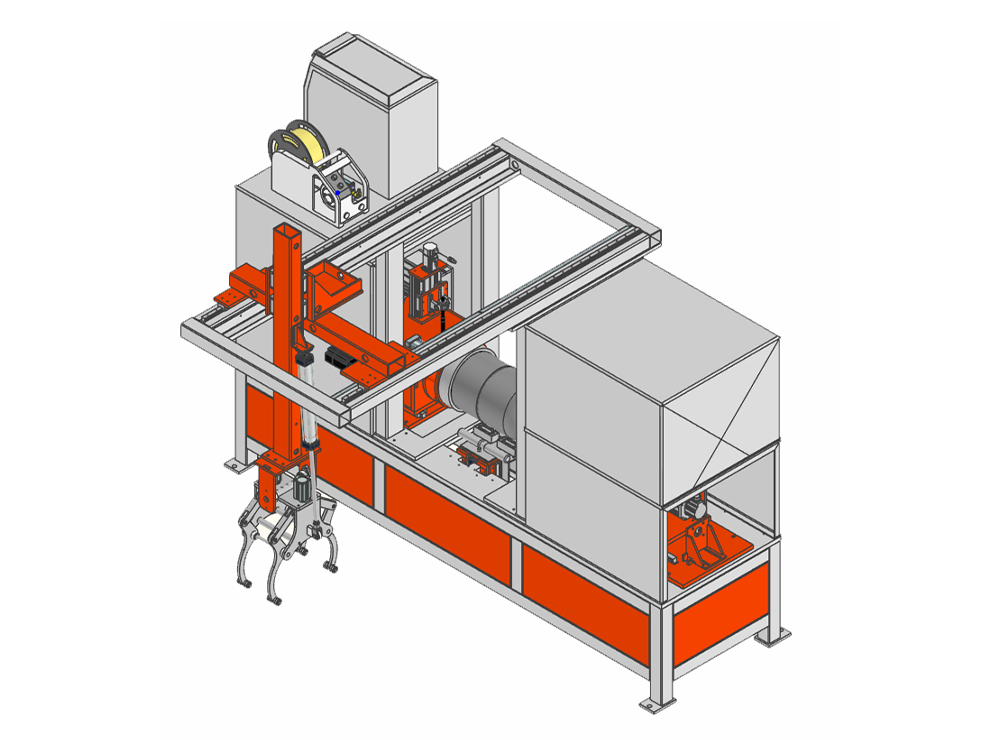
Automatic welding Line service-life extension means maintaining, restoring, and modernizing an existing production system so it continues meeting its required output, weld-quality, safety, and availability targets. In my experience, the most effective approach combines scheduled inspections, wear-part replacement, calibration, condition monitoring, and selective retrofit work. This guide explains how to extend automatic welding line life across welding heads, robots, fixtures, positioners, conveyors, sensors, PLCs, safety systems, and material-handling equipment.
Key Takeaways
- A daily, weekly, monthly, quarterly, and annual maintenance schedule prevents small defects from becoming line-level failures.
- Consumables, liners, cables, hoses, torches, gas components, and fixtures require condition-based replacement rather than visual inspection alone.
- Predictive maintenance combines runtime, alarms, vibration, temperature, current, weld-quality, and consumable-life data.
- A retrofit is usually justified when the mechanical structure remains serviceable but controls, drives, sensors, or safety systems are obsolete.
- Shuofang supports automatic welding line projects with equipment manufacturing, installation, commissioning, training, and technical service.
!
Why Automatic Welding Line Service Life Extension Matters
An automatic welding line rarely fails because of one component alone. Downtime often begins with a worn torch liner, unstable gas flow, loose fixture, contaminated sensor, misaligned conveyor, or deteriorating cable. If these issues remain unresolved, they can create arc faults, dimensional variation, excessive spatter, weld rework, and unplanned stoppages across the entire line.
I treat service-life extension as a line-level management task rather than a simple repair program. The welding robot, welding power source, positioner, fixtures, conveyor, PLC, sensors, safety circuits, cooling unit, and material-handling equipment all influence production performance. A maintenance plan that only covers the torch and robot will not protect the complete Automatic Welding Line.
A practical program should track at least five operating outcomes: planned versus unplanned downtime, first-pass weld acceptance, rework hours, mean time between failures, and mean time to repair. These measurements allow a factory to compare maintenance spending with avoided downtime and determine whether maintenance, refurbishment, or replacement is the most rational option.
How to Extend the Service Life of Automatic Welding Lines
I recommend the following maintenance sequence when building an automatic welding line life-cycle management program:
- Inspect the welding cell, fixtures, conveyors, cables, hoses, sensors, guards, and safety devices.
- Clean weld spatter, dust, oil, metallic debris, and cooling-system contamination from operating surfaces.
- Replace worn liners, contact tips, nozzles, torch parts, cables, hoses, filters, and gas components.
- Calibrate the robot, welding torch, positioners, fixtures, sensors, and production reference points.
- Lubricate approved bearings, gearboxes, slides, linear guides, and robot joints according to manufacturer requirements.
- Check cooling flow, coolant condition, pump operation, heat exchangers, and welding power-source ventilation.
- Review PLC alarms, servo-drive status, safety circuits, network connections, and backup files.
- Record runtime, current, temperature, vibration, alarms, weld-quality trends, and consumable usage.
- Escalate repeated failures into corrective-action projects, retrofit work, or replacement planning.
This sequence works because it addresses both immediate wear and the causes of repeated failure. I would also require lockout/tagout before any physical inspection, electrical work, guard removal, or intervention inside the welding cell.
Build a Preventive Maintenance Program for Automatic Welding Lines
Preventive maintenance for automatic welding equipment should use fixed intervals, clear role ownership, and written acceptance criteria. Operators should handle routine cleaning and visual checks, maintenance technicians should perform mechanical and electrical inspections, and controls specialists should manage PLC, robot, servo, and safety-system changes. Production supervisors should review downtime and quality trends every week.
| Interval | Main tasks | Responsible role | Required record |
|---|---|---|---|
| Daily | Clean torch and fixtures, inspect cables and hoses, check gas pressure, remove spatter, review alarms | Operator | Shift checklist |
| Weekly | Inspect liners, contact tips, nozzles, clamps, sensors, conveyors, and cooling units | Operator and technician | Weekly condition report |
| Monthly | Check grounding, fixture alignment, lubrication points, servo alarms, PLC backups, and safety devices | Maintenance technician | Monthly service record |
| Quarterly | Calibrate welding torch and robot references, inspect positioners, inspect gearboxes, test safety circuits | Technician and controls specialist | Calibration and safety report |
| Annually | Complete line audit, inspect structural components, review spare parts, assess retrofit needs, update risk controls | Engineering and management | Annual life-cycle review |
Daily checks should take place at the beginning and end of each shift. The operator should confirm that the torch follows the programmed path, the wire feeds without hesitation, the gas hose has no visible damage, and the fixture clamps fully close. Any abnormal sound, arc instability, excessive spatter, or repeated alarm should be recorded rather than corrected informally and forgotten.
Weekly maintenance should focus on wear parts and contamination. I recommend checking contact-tip bore condition, nozzle blockage, liner drag, wire-feed roller wear, cable bend radius, coolant leakage, gas-hose connections, and fixture locating pins. A simple replacement rule can be based on measured wear, weld-quality deterioration, or repeated alarms instead of waiting for complete failure.
Monthly work should include electrical and mechanical checks. Technicians can inspect terminal tightness, grounding continuity, cabinet filters, cooling fans, servo connectors, sensor brackets, conveyor chains, gearbox oil levels, and lubrication points. Robot and positioner backlash should be compared with previous records, because gradual movement error may appear first as dimensional variation rather than a clear machine fault.
Quarterly service should include calibration and safety verification. The robot tool center point, work-object frame, positioner reference, fixture datum, and welding path should be checked after collisions, fixture changes, major repairs, or unexplained weld deviation. Safety doors, interlocks, light curtains, emergency stops, safety relays, and guarded access points should be tested under controlled conditions.
The annual review should examine the complete service history. I would compare the last 12 months of planned downtime, emergency repairs, spare-parts consumption, weld rework, and production losses against the previous year. If repair frequency is rising while quality and availability are declining, the line may require modernization rather than another cycle of isolated component replacement.
Maintain Wear Parts, Consumables, and Gas Systems
Welding torch maintenance for automated systems has a direct effect on arc stability and weld consistency. Contact tips, nozzles, diffusers, liners, wire guides, torch necks, cable assemblies, and anti-spatter components should be inspected according to actual production conditions. High-spatter applications may require more frequent cleaning than low-spatter applications, so I recommend recording usage hours and weld-length data for each consumable.
Liners and contact tips are particularly important because restricted wire movement can create irregular feeding, burnback, arc interruption, and inconsistent deposition. The maintenance team should inspect the liner after wire changes, abnormal feeding sounds, or repeated wire-feed alarms. Contact-tip replacement should be based on bore wear, electrical instability, and weld-quality trends rather than a generic calendar interval alone.
Gas components require equal attention. Inspect regulators, solenoid valves, hoses, flowmeters, filters, connectors, and shielding-gas outlets for leakage or restriction. Incorrect flow can cause porosity, oxidation, and unstable arc behavior, while excessive flow can create turbulence and draw surrounding air into the shielding zone.
Cables and hoses should be checked for abrasion, crushed sections, heat damage, sharp bending, loose connectors, and excessive movement. Cable dress packs on robots and moving axes deserve special attention because repeated flexing can damage internal conductors before external damage becomes obvious. I recommend keeping replacement cable assemblies and hose kits in stock when a failure would stop the complete line.
Cleaning, Lubrication, Cooling, and Calibration
Cleaning is not a cosmetic task. Weld spatter can obstruct nozzles, interfere with proximity sensors, restrict fixture movement, damage cable jackets, and change the position of locating surfaces. Dust and metallic particles can also block electrical cabinet filters and reduce cooling efficiency. Each cleaning task should identify the component cleaned, the method used, and any defect discovered.
Lubrication must follow the equipment manufacturer’s lubricant type, quantity, and interval. Over-lubrication can contaminate sensors, attract abrasive dust, or damage seals, while under-lubrication increases friction and heat. Robot joints, positioner bearings, conveyor drives, linear slides, fixture mechanisms, and gearbox assemblies should each have a defined lubrication point and responsible technician.
Cooling-system maintenance is essential for welding power sources, torches, high-duty-cycle equipment, and control cabinets. Check coolant level, flow, temperature, pump operation, hoses, filters, and heat-exchanger cleanliness. A rising coolant temperature or declining flow rate should trigger investigation before the power source or torch reaches a thermal shutdown condition.
Calibration protects both weld quality and equipment reliability. Robot TCP calibration, positioner zero reference, fixture datum verification, seam-tracking sensor alignment, wire-feed calibration, and welding-current verification should be documented. When calibration values change repeatedly, I would inspect mechanical looseness, fixture wear, collision damage, encoder performance, or structural movement instead of repeatedly entering new software offsets.
Use Predictive Maintenance to Prevent Unexpected Welding Line Failures
Predictive maintenance for robotic welding systems uses operating data to identify deterioration before a failure stops production. The useful data sources include robot runtime, servo alarms, motor temperature, gearbox temperature, vibration, welding current, voltage, wire-feed speed, gas-flow alarms, cooling temperature, cycle time, and consumable replacement history.
A factory does not need a complex system to begin. I recommend creating a baseline during stable production and recording normal values for each major subsystem. Later readings can be compared with that baseline, with escalation triggered by a sustained trend rather than one isolated value.
| Data signal | Possible developing problem | Recommended response |
|---|---|---|
| Rising servo temperature | Excessive friction, overload, or lubrication issue | Inspect joint, gearbox, load, and lubrication |
| Increasing vibration | Bearing, gearbox, alignment, or mounting problem | Schedule inspection before mechanical failure |
| Repeated arc faults | Torch, cable, grounding, wire-feed, or power-source issue | Inspect consumables and electrical path |
| Longer cycle time | Conveyor, fixture, robot, or sensor delay | Review sequence timing and motion alarms |
| Rising rework rate | Calibration drift, fixture wear, gas issue, or weld parameter change | Check quality trend and process references |
| Increased gas consumption | Leak, regulator fault, or incorrect flow setting | Test hoses, valves, regulators, and flow |
Condition-based maintenance should also track consumable life by weld length, arc-on time, production cycles, or kilograms of wire used. This is more useful than replacing every component at the same calendar interval. For example, two torches may operate in different applications and experience different thermal loads, so they should not automatically receive identical replacement schedules.
Maintain Fixtures, Positioners, Conveyors, and Controls
Fixtures determine whether parts arrive at the torch in the correct location. Inspect locating pins, clamps, bushings, cylinders, guides, stops, support surfaces, and sensors for wear or looseness. A fixture that shifts by a small amount can cause torch reach errors, inconsistent joint gaps, and repeated dimensional defects.
Positioners and conveyors require mechanical as well as software checks. Verify table runout, clamping force, gear backlash, encoder reference, chain tension, roller condition, transfer timing, and mechanical stops. Material-handling faults often appear as missed parts, collision alarms, or increased cycle time before they cause a complete line stoppage.
PLC and controls upgrades can extend service life when the mechanical platform remains suitable but the control system is obsolete. I would first secure current PLC programs, robot backups, parameter files, electrical drawings, safety logic, and network configurations. The upgrade plan should define compatibility, downtime duration, test procedures, spare modules, operator training, and rollback controls.
Safety systems must be maintained as production equipment, not treated as a separate compliance item. Emergency stops, door switches, light curtains, safety scanners, guarding, pressure controls, and reset functions should be tested according to the site’s approved procedure. Any bypass, intermittent fault, or undocumented change requires immediate escalation.
When an Automatic Welding Line Retrofit Is Better Than Replacement
An automatic welding line retrofit is usually considered when the frame, fixtures, robot structure, or production layout remain usable but one or more subsystems limit performance. Typical retrofit candidates include PLCs, servo drives, robot controllers, power sources, wire feeders, sensors, human-machine interfaces, safety circuits, cooling units, and data-collection equipment.
I compare retrofit and replacement using five factors: mechanical condition, control-system availability, annual downtime cost, required capacity, and future product requirements. If the existing structure requires repeated repairs, has poor access for maintenance, or cannot meet current safety and quality requirements, a full replacement may be more practical. If the mechanical foundation is stable and the primary issue is obsolete controls or unreliable drives, retrofit work can reduce disruption.
A simple downtime calculation helps make the decision. If one hour of line stoppage causes $2,500 in lost contribution margin and a retrofit prevents 120 hours of annual downtime, the avoided loss is $300,000 per year. If the retrofit costs $450,000 and adds $40,000 in annual maintenance expense, the simple payback is approximately 1.7 years before financing and tax effects.
The calculation should also include rework, emergency freight, overtime, rejected material, safety incidents, and lost delivery capacity. I would not approve a retrofit based only on equipment age; I would use recorded failure data and a documented condition assessment.
Create a Line-Level Maintenance Management System
Every maintenance task should have an owner, due date, acceptance criterion, and escalation rule. Operators should be able to report abnormal noise, arc instability, sensor failure, fixture movement, or repeated alarms without waiting for a major breakdown. Technicians should classify each event as inspection, adjustment, planned replacement, corrective repair, or engineering change.
A practical system should include the following controls:
- Lockout/tagout control: Define energy isolation points before maintenance begins.
- Spare-parts planning: Stock critical tips, liners, cables, hoses, sensors, relays, fuses, drives, and approved connectors.
- Escalation rules: Escalate repeated failures, safety faults, or quality deviations after a defined number of occurrences.
- Backup control: Maintain current PLC, robot, HMI, servo, and parameter backups in a controlled location.
- KPI review: Track availability, unplanned downtime, first-pass acceptance, rework hours, MTBF, and MTTR.
- Change control: Record every software, calibration, wiring, fixture, and process-parameter change.
For example, a reasonable internal rule may require engineering review after three repeated faults on the same subsystem within 30 days. The exact threshold should reflect production risk, but the principle is important: repeated repairs should trigger root-cause analysis rather than indefinite repair repetition.
Shuofang presents itself as a supplier of LPG cylinder production-line equipment, including Automatic Welding Line systems and related manufacturing equipment. Its stated support scope includes solution design, equipment manufacturing, installation, commissioning, training, operation guidance, production tracking, a one-year equipment guarantee, parts replacement during the warranty period, and continuing technical support. These services are relevant when a factory is assessing a new line, a refurbishment project, or a modernization plan.
Conclusion
Extending the Service Life of Automatic Welding Lines requires more than replacing broken welding tips or repairing robots after failure. I recommend starting with a documented daily, weekly, monthly, quarterly, and annual schedule covering welding heads, fixtures, positioners, conveyors, sensors, PLCs, safety systems, cooling equipment, and material handling. The program should combine preventive maintenance with runtime, alarm, vibration, temperature, current, weld-quality, and consumable-life monitoring.
The next practical step is to complete a line condition audit and calculate the cost of unplanned downtime over the previous 12 months. Then classify each subsystem as serviceable, repairable, retrofit-ready, or replacement-critical. For each decision, compare maintenance cost, downtime exposure, quality losses, spare-parts availability, and expected production requirements. With disciplined records, controlled calibration, planned component replacement, and selective modernization, an aging line can remain productive without treating every performance problem as a reason for complete replacement.