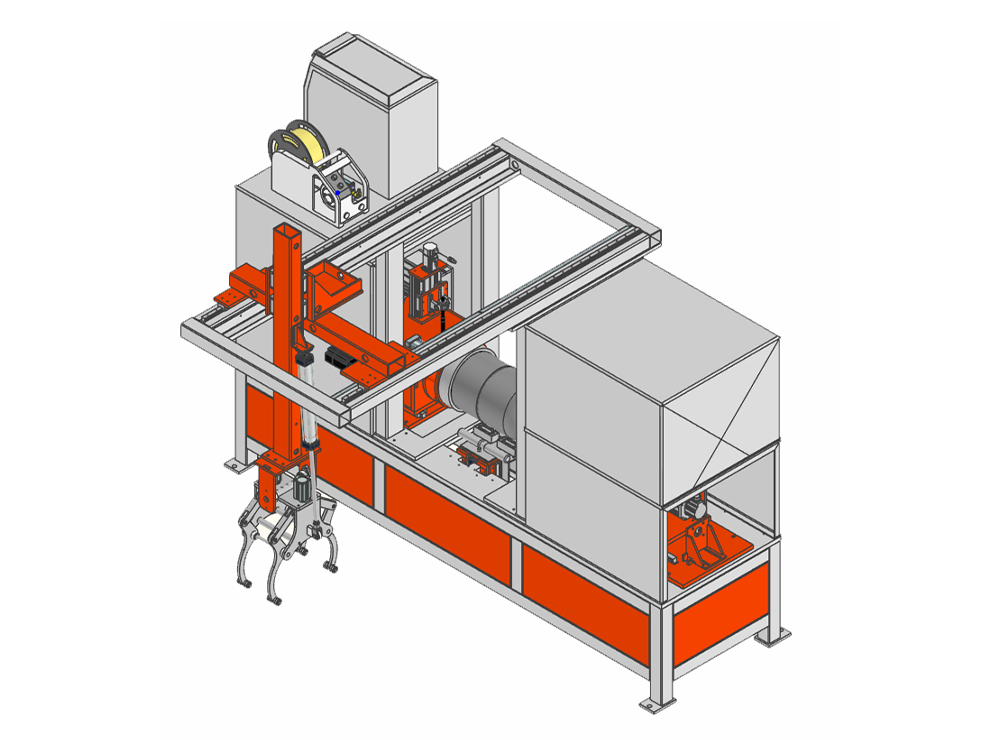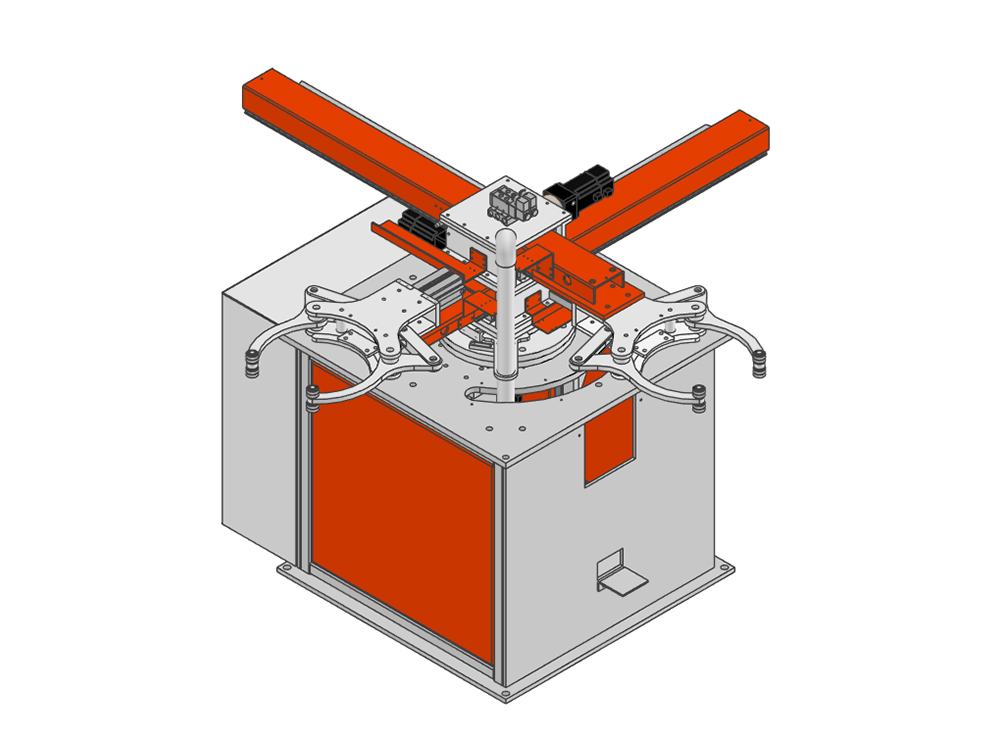
Complete Surface Treatment Workflow for LPG Cylinder Production Lines
Sep.15, 2026
The Complete Surface Treatment Workflow for LPG Cylinder Production Lines combines post-weld preparation, degreasing, rust removal, shot blasting, dust control, chemical treatment, powder coating, curing, inspection, and production records. I use this sequence to control coating adhesion, corrosion resistance, appearance, worker safety, and line efficiency from the finished welded cylinder through final release.
Why Surface Treatment Matters in LPG Cylinder Manufacturing
An LPG cylinder surface is exposed to handling damage, humidity, outdoor storage, road transport, and repeated contact with metal fixtures. Weld scale, oil, mill residue, rust, abrasive dust, and moisture can prevent a coating from bonding to steel. If these contaminants remain, coating defects may appear as blistering, peeling, pinholes, uneven color, or premature corrosion.
Manual surface preparation can support low-volume production, but it often creates variation between operators. The result depends on hand-tool pressure, cleaning time, abrasive condition, drying discipline, and inspection frequency. A controlled production line uses defined process inputs and decision gates so that each cylinder receives comparable preparation before painting.
Shuofang presents LPG cylinder production solutions that include surface coating lines, shot blasting equipment, testing equipment, installation support, and process training. Its reported production base exceeds 20,000 square meters, and the company states that it has more than 10 years of experience in LPG cylinder production equipment, with automated, semi-automated, and segmented line options.
!
What You Need Before Starting
Before selecting equipment, I first define the cylinder size range, body diameter, height, production capacity, coating type, color-change frequency, available floor area, and local environmental requirements. These parameters determine the conveyor design, shot blasting chamber dimensions, spray booth capacity, curing oven length, exhaust system, and material-handling method.
A surface treatment line also requires a documented coating specification. The specification should identify the powder type, target dry-film thickness, approved surface cleanliness level, curing temperature and time, adhesion requirement, acceptable visual defects, and rework procedure. For LPG cylinders, the coating system must be selected for corrosion protection and the actual service environment rather than appearance alone.
A practical preparation checklist includes:
- Cylinder surface free from visible oil, grease, slag, sharp welding projections, and loose rust.
- Welded components fully inspected before coating.
- Shot blasting abrasive within the supplier’s usable size and contamination limits.
- Compressed air, ventilation, dust collection, and grounding systems checked.
- Powder batch, color, application settings, and curing conditions recorded.
- Coating gauges, adhesion testers, thermometers, and surface inspection lights calibrated.
Complete Surface Treatment Workflow for LPG Cylinder Production Lines: Step-by-Step Process
The complete sequence normally includes the following stages:
- Post-weld preparation and dimensional checking.
- Degreasing and contamination removal.
- LPG cylinder shot blasting and rust removal.
- Abrasive recovery and dust removal.
- Chemical treatment or phosphating, where specified.
- Powder coating application.
- Oven curing and thermal verification.
- Coating thickness, adhesion, appearance, and corrosion checks.
- Documentation, repair, reinspection, and release.
Each stage requires an acceptance decision before the cylinder moves forward. If oil remains after cleaning, the cylinder should return to degreasing. If the blasted surface is uneven or visibly contaminated, it should return to blasting or cleaning. If the cured coating fails thickness or adhesion checks, the product should enter a controlled rework process instead of being mixed with accepted cylinders.
Post-Weld Preparation and Pre-Cleaning
The workflow begins after circumferential welding, valve-seat welding, handle welding, and base-ring welding have been completed. I inspect the cylinder for weld spatter, sharp projections, incomplete cleaning around weld zones, dents, handling marks, and foreign material trapped near the valve seat or base ring. Surface treatment should not be used to hide weld defects or dimensional problems.
Grinding and trimming must be controlled carefully. Excessive grinding can reduce local wall thickness or create sharp transitions, while insufficient grinding can leave projections that interfere with coating coverage and cylinder handling. The operator should use dedicated tools and record recurring defects so that upstream welding and forming processes can be corrected.
Pre-cleaning removes loose scale, chips, oil, and heavy deposits before mechanical preparation. For oil contamination, an alkaline or approved industrial degreasing solution may be used, followed by rinsing and complete drying. The cylinder should not enter shot blasting with wet or oily surfaces because contaminants can shorten abrasive life, increase dust adhesion, and reduce the consistency of the blasted profile.
LPG Cylinder Shot Blasting and Rust Removal
Shot blasting is the main mechanical preparation stage for removing mill scale, oxidation, weld discoloration, and tightly bonded rust. It also creates a controlled surface profile that gives the coating greater mechanical anchoring. Shot blasting is different from general surface treatment: blasting is one operation within the full workflow, while surface treatment includes cleaning, chemical preparation, coating, curing, and inspection.
The critical operating inputs include abrasive type, abrasive size, wheel or nozzle condition, blast pressure or wheel speed, cylinder rotation speed, exposure time, and chamber loading. These settings must match the cylinder geometry. The shoulder, bottom ring, weld zones, and recessed areas often receive different impact patterns, so fixture rotation and part spacing are important.
A controlled blasting stage should verify:
- Surface cleanliness against the selected visual preparation standard.
- Consistent surface profile using a suitable profile comparator or measurement method.
- No remaining oil, loose scale, heavy rust, or embedded foreign material.
- No excessive metal removal, distortion, or damage to threaded and machined areas.
- Abrasive recovery system operating without excessive fines or dust leakage.
The decision gate is simple: the cylinder proceeds only when the entire coating area has a clean, uniform surface suitable for the selected coating system. Partial blasting is a common cause of edge peeling and corrosion marks because the coating bonds differently to blasted steel and untreated steel.
Dust Removal, Cleaning, and Chemical Treatment
After blasting, abrasive particles and dust must be removed before coating. I normally treat dust control as a separate process rather than assuming the blasting chamber has removed all residue. Rotary brushes, controlled air blow-off, vacuum collection, and clean transfer conveyors can be combined according to the line design.
Compressed air must be clean and dry. Oil or water from the air system can create fisheyes, craters, and adhesion failures in the powder coating. Drain points, filters, separators, and air-quality checks should form part of preventive maintenance.
Some coating systems use a chemical conversion stage, such as phosphating, to improve corrosion resistance and coating adhesion. The chemical process requires control of bath concentration, temperature, pH, contact time, rinse quality, and drying conditions. If these values drift, the conversion layer may become incomplete, powdery, excessive, or contaminated.
Wastewater from cleaning, rinsing, and phosphating must be collected and treated according to local environmental requirements. The plant should define chemical storage, spill response, personal protective equipment, ventilation, sludge handling, and discharge controls before commissioning the line.
Powder Coating and Curing Equipment for LPG Cylinders
The LPG cylinder Powder coating line normally includes a loading or hanging system, conveyor, electrostatic powder guns, spray booth, powder recovery equipment, filters, curing oven, cooling zone, and unloading station. The equipment arrangement depends on cylinder dimensions, target output, powder type, color changes, and the required level of automation.
Electrostatic application charges powder particles so they are attracted to the grounded cylinder. Good grounding is essential because poor grounding can reduce transfer efficiency, create uneven deposition, increase powder waste, and cause powder accumulation on fixtures. Hangers and contact points must be cleaned regularly so that electrical continuity remains stable.
The spray booth requires balanced airflow and suitable filtration. Excessive airflow can disturb powder deposition, while insufficient airflow can increase overspray accumulation and worker exposure. Powder recovery should prevent contamination between colors and materials, particularly when the factory produces multiple cylinder specifications.
The curing oven must provide a stable metal temperature, not only a stable air temperature. I recommend using temperature recorders or data loggers during commissioning and periodic validation to confirm that the cylinder reaches the powder supplier’s specified curing window. Under-curing may reduce adhesion and corrosion resistance, while over-curing can affect color, gloss, and coating properties.
Shuofang lists a Powder Coating Line within its LPG cylinder manufacturing machinery range and offers automated, semi-automated, and customized production-line solutions. For a buyer, the important evaluation points are not only the equipment list but also conveyor speed control, oven uniformity, booth recovery design, fixture grounding, maintenance access, and factory acceptance criteria.
Quality Control Checks After Surface Treatment
LPG cylinder coating quality control should combine process checks and finished-product checks. Waiting until the end of the line to discover defects increases rework because the original cause may be several stations upstream.
| Control point | Typical inspection focus | Release condition |
|---|---|---|
| Pre-cleaning | Oil, grease, weld spatter, loose scale | Surface visibly free from contaminants |
| Blasting | Cleanliness, surface profile, rust removal | Uniform preparation across all coating zones |
| Dust removal | Abrasive residue and loose particles | No visible dust under inspection lighting |
| Powder application | Coverage, grounding, overspray, color | Continuous and uniform deposited film |
| Curing | Metal temperature and time | Powder supplier’s curing window achieved |
| Final coating | Thickness, adhesion, appearance | Meets approved specification |
| Documentation | Batch and inspection records | Traceability complete before release |
Dry-film thickness should be measured at representative locations, including the cylinder body, shoulder, bottom ring, weld areas, and regions near fixtures. The target value must come from the approved coating specification; a thicker film is not automatically better because excessive thickness can trap defects, reduce flexibility, or create curing problems.
Adhesion testing may use a cross-cut or pull-off method selected for the coating system and substrate. The test location should be defined in advance so that sampling is consistent and does not compromise every finished cylinder. Visual inspection should check for pinholes, runs, bare areas, craters, orange peel beyond the accepted limit, color mismatch, trapped powder, and damage around contact points.
Corrosion resistance testing should be performed during coating-system approval and at planned intervals rather than on every cylinder. Salt spray or other environmental tests can compare coating systems, but laboratory exposure time should not be treated as a direct prediction of field service life. Production release still depends on surface preparation, coating thickness, curing, and traceable process control.
Ventilation, Dust, Overspray, and Worker Safety
A surface treatment line contains several distinct exposure risks: blasting dust, powder overspray, chemical mist, hot surfaces, moving conveyors, and compressed air. The plant layout should separate dirty blasting operations from clean coating operations to reduce cross-contamination. Airflow should move from cleaner areas toward controlled exhaust zones where practical.
Abrasive recovery systems reduce manual sweeping and help maintain consistent blasting conditions. Dust collectors require scheduled inspection of filters, seals, ducts, fan performance, and discharge systems. Powder booth filters and recovery units also need cleaning and replacement intervals based on pressure loss, powder volume, and coating defects.
Worker protection should include guarding, interlocks, emergency stops, respiratory protection where required, eye and skin protection, hearing protection near blasting equipment, lockout procedures, and training for chemical handling. The safety program should be based on the actual equipment risk assessment, local occupational rules, and the chemical supplier’s safety data.
Factory Optimization and Line Performance
I evaluate a surface treatment line by measuring more than nominal conveyor speed. Useful performance indicators include first-pass yield, rework percentage, coating material consumption per cylinder, abrasive consumption per cylinder, unplanned downtime, changeover time, oven energy use, inspection rejection rate, and mean time between maintenance events.
Bottlenecks usually appear in one of four places: blasting exposure time, powder application, oven dwell time, or inspection and unloading. Line balancing requires comparing the cycle time of each station with the required production rate. If the oven requires a longer dwell time than the upstream stations, adding operators will not increase output; the oven or conveyor configuration must be reviewed.
Automation levels should match production volume and product variation. A small manufacturer may begin with a semi-automatic blasting and coating arrangement, while a high-volume factory may require automatic loading, rotation, powder recovery, recipe control, oven data logging, and automatic inspection support. Shuofang describes automated, semi-automated, and segmented solutions, allowing the line scope to be matched with capacity, budget, and plant conditions.
Preventive maintenance should cover blasting wheels or nozzles, abrasive separators, conveyor chains, hangers, grounding points, booth filters, powder guns, oven burners or heating elements, temperature sensors, and dust-collection fans. Rework causes should be coded rather than recorded only as general “paint defects.” Useful categories include oil contamination, poor blasting, dust inclusion, low thickness, over-thickness, under-curing, grounding failure, color change contamination, and handling damage.
How to Choose Surface Treatment Equipment for LPG Cylinders
When I compare suppliers, I request a process flow diagram, equipment list, layout drawing, utility schedule, production assumptions, acceptance criteria, spare-parts list, and training plan. The supplier should explain how each cylinder size will be supported, rotated, grounded, blasted, coated, cured, and inspected.
The quotation should also clarify whether dust collectors, abrasive recovery, powder recovery, exhaust ducts, electrical cabinets, PLC controls, fixtures, testing instruments, installation, commissioning, and operator training are included. A low equipment price may exclude systems that are necessary for safe and stable operation.
Factory acceptance testing should use representative cylinder sizes and actual coating materials where possible. I would verify cycle time, surface cleanliness, powder coverage, oven temperature uniformity, coating thickness, adhesion, emergency functions, and documentation before approving shipment. Shuofang states that its project process includes solution design, CAD layouts, cost and quotation, manufacturing, integration, commissioning, installation, acceptance, and training, which are useful checkpoints for any equipment purchase.
Conclusion
The Complete Surface Treatment Workflow for LPG Cylinder Production Lines begins with post-weld preparation and degreasing, continues through LPG cylinder shot blasting, dust removal, optional phosphating, powder application, curing, and inspection, and ends only when the coating and records meet the approved release conditions. The main production goal is not simply a smooth painted surface; it is repeatable preparation, controlled coating adhesion, verified thickness, corrosion protection, and traceability.
For small manufacturers, a staged semi-automatic line can reduce manual variation without requiring a fully integrated system. For high-volume production, automated loading, blasting, powder recovery, curing control, and inspection data can improve line balance and reduce recurring rework. When evaluating a Powder Coating Line from Shuofang or another supplier, I recommend comparing documented process inputs, acceptance criteria, safety systems, environmental controls, maintenance access, and measured production results rather than comparing equipment names alone.