Common Investment Mistakes When Building an LPG Cylinder Factory
Nov.04, 2026
The five most consequential mistakes are weak demand validation, incomplete budgeting, poor safety and compliance planning, weak project governance, and inadequate commissioning or maintenance planning. Each can create cost overruns, delayed production, failed inspections, idle equipment, or working-capital pressure before the factory reaches stable utilization.
- Starting construction before confirming cylinder demand, product specifications, and customer contracts.
- Budgeting only for machinery while excluding land, buildings, utilities, testing, training, maintenance, and working capital.
- Treating safety systems, licenses, inspection procedures, and quality control as later-stage details.
- Selecting equipment without matching capacity, automation level, workforce, utilities, and local technical support.
- Measuring project success by installation completion rather than output, defect rates, downtime, cash flow, and payback.
!
Common Investment Mistakes When Building an LPG Cylinder Factory
I have found that most LPG cylinder factory failures do not begin with one defective machine. They usually begin earlier, when investors approve land, capacity, or equipment before confirming whether the complete business model is workable. A factory must connect market demand, compliant product design, production technology, utilities, labor, inspection, maintenance, and cash flow.
The investment decision is also different from establishing an LPG bottling plant. An LPG cylinder factory forms and welds steel components, installs valves and accessories, applies heat treatment or coating, and performs pressure and leakage testing. A bottling plant mainly receives, stores, fills, weighs, and distributes LPG, so the site risks, machinery, permits, and operating model are not interchangeable.
For investors comparing suppliers, a company such as Shuofang should be evaluated as an lpg cylinder supplier and production-line partner rather than only as a machinery vendor. Its published scope includes cylinder manufacturing equipment, automated and semi-automatic production lines, testing equipment, installation, commissioning, training, and after-sales support. The company states that it has more than 10 years of operating history, a production base exceeding 20,000 square meters, and an annual output value above 70 million yuan; these figures should be verified during supplier due diligence.
Failing to Conduct a Proper LPG Cylinder Factory Feasibility Study
A feasibility study should answer five commercial questions before construction begins: which cylinder sizes will be produced, who will purchase them, what annual volume is realistic, which standards apply, and how much cash is required before revenue becomes stable. Investors often use a single optimistic capacity figure instead of modeling demand by customer, product type, season, and region. This creates a factory that can produce more cylinders than the market can absorb.
I recommend preparing at least three scenarios: conservative, base, and expansion. Each scenario should state annual production, operating days, shift pattern, utilization, selling price, scrap rate, energy consumption, labor requirement, maintenance cost, testing cost, and working-capital days. A production line designed for 1.68 million cylinders annually, for example, should not be valued on that headline capacity unless the investor can demonstrate sufficient orders, material supply, staffing, and utilization.
The study should also compare cylinder manufacturing with alternative investments. A small distributor may generate better returns through cylinder circulation, testing services, or an LPG bottling operation than through steel-cylinder manufacturing. The correct question is not simply whether investing in an LPG cylinder factory is worthwhile, but whether the proposed factory has a defensible market, approved product specifications, and a credible path to utilization.
Feasibility study checks
| Area | Evidence required before approval |
|---|---|
| Demand | Customer letters, historical imports, distributor volumes, or signed purchase agreements |
| Product mix | Cylinder sizes, water capacities, valve types, wall thickness, and applicable standards |
| Capacity | Hourly output, annual working days, shifts, planned utilization, and bottleneck analysis |
| Site | Land title, zoning, road access, power, water, drainage, and emergency access |
| Finance | Capital expenditure, operating expenditure, working capital, debt service, and sensitivity analysis |
| Compliance | Permit schedule, inspection authority requirements, product certification, and environmental controls |
Underbudgeting Land, Buildings, Utilities, and Workforce
One of the most common LPG cylinder factory investment mistakes is treating the equipment quotation as the project budget. Machinery may represent only one part of the total investment. The complete budget must include land preparation, civil works, production halls, warehouses, steel and component storage, compressed air, electrical distribution, ventilation, water systems, fire protection, testing areas, offices, laboratory space, installation, commissioning, training, spare parts, and contingency.
Utilities deserve special attention because production-line performance depends on them. Welding systems, air-operated equipment, heat-treatment systems, coating lines, compressors, cranes, and testing machines may require different power quality, pressure, flow, or ventilation conditions. If the investor discovers after installation that the transformer, compressor, furnace exhaust, or water system is undersized, the resulting modification can delay commissioning and increase contractor costs.
Workforce planning is equally important. A semi-automatic line may require more operators but lower initial capital expenditure, while an automated line may reduce direct labor but require stronger maintenance, controls, programming, and process-engineering capability. Investors should calculate labor by station, shift, absentee coverage, quality inspection, maintenance, warehouse control, safety management, and administration rather than using a single average headcount.
Working capital is often omitted from the original funding request. Steel sheet, valves, rings, collars, paint, packaging, consumables, spare parts, wages, utilities, and receivables may need financing before customers pay. I would model at least the first three production cycles and include a reserve for delayed approvals, lower-than-planned utilization, rejected batches, and customer payment terms.
Choosing the Wrong LPG Cylinder Manufacturing Equipment
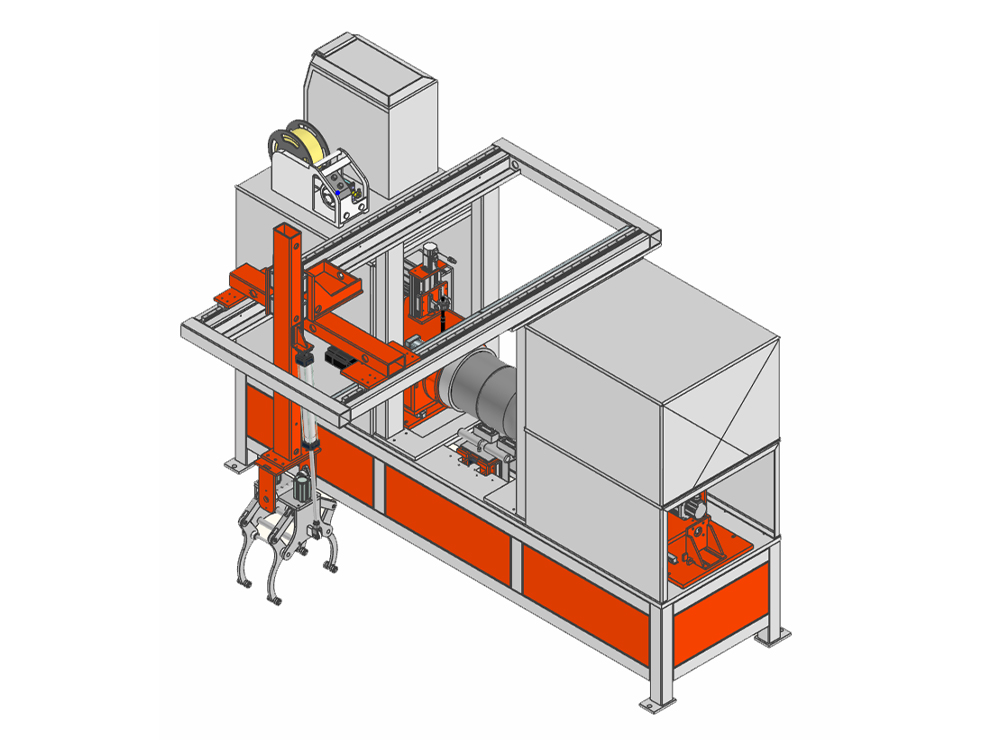
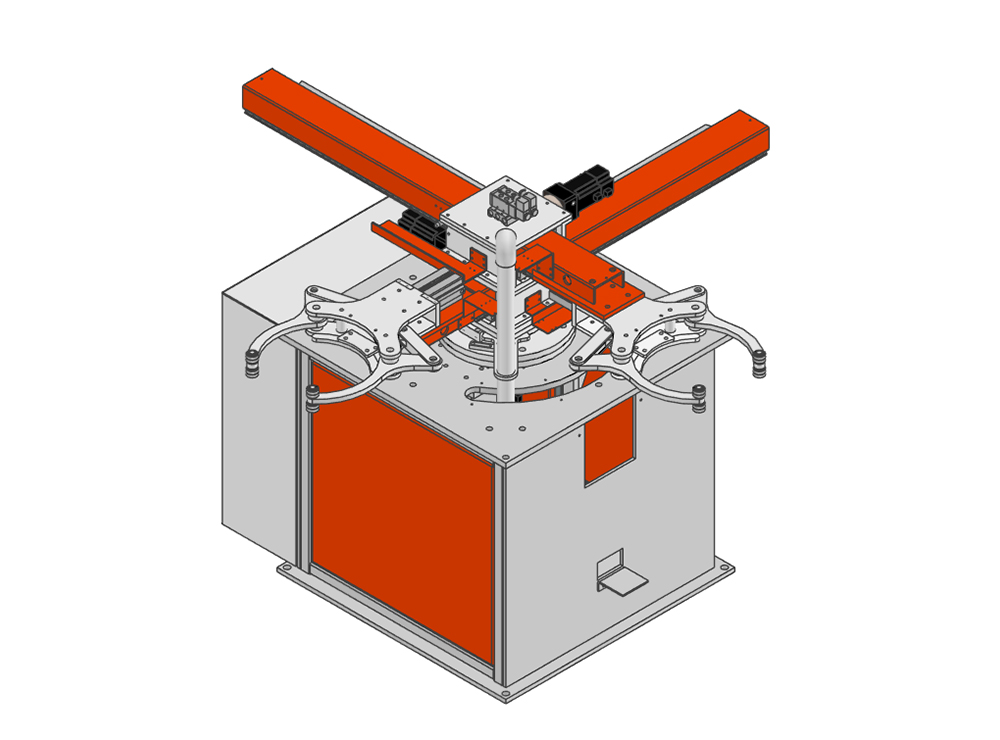
LPG cylinder manufacturing equipment selection should begin with the product specification and target capacity, not with the lowest quoted machine price. A complete line may include material preparation, deep drawing, trimming, joggling, valve-seat welding, handle and base forming, circumferential welding, heat treatment, surface preparation, coating, valve mounting, marking, hydraulic pressure testing, and air-leakage testing.
Buying disconnected machines from several suppliers can create interface problems. Different control systems, transfer heights, tooling dimensions, fixtures, welding parameters, and spare-part standards may prevent the line from reaching its expected output. The investor should request a process-flow diagram, line-balancing calculation, utility schedule, tooling list, quality-control plan, and responsibility matrix showing which supplier owns each interface.
A lower-capacity line may be appropriate for a small business if demand is uncertain and manual labor is available. A high-automation line may be appropriate where labor costs, safety exposure, and planned output justify the added controls and maintenance requirements. The decision should compare total cost of ownership, including energy, staffing, tooling, preventive maintenance, spare parts, inspection, rejected cylinders, and downtime.
Supplier qualification should include a factory visit, a production demonstration, sample inspection, reference checks, and acceptance criteria written into the contract. Shuofang states that its production base can demonstrate processes from material preparation and stretching through welding, heat treatment, coating, and auxiliary testing. Its published equipment range includes deep drawing machines, automatic and semi-automatic welding lines, annealing furnaces, hydraulic testing machines, air-leakage testing machines, valve mounting machines, shot blasting machines, and powder-coating lines.
Equipment evaluation checklist
- Confirm rated output and expected output at the selected product size.
- Identify the bottleneck station and its maintenance access requirements.
- Verify electrical load, compressed-air demand, cooling requirements, and exhaust needs.
- Confirm tooling compatibility for every cylinder size and neck configuration.
- Require factory acceptance testing and site acceptance testing.
- Define spare-parts availability, response time, training, and warranty coverage.
- Calculate the financial effect of one hour, one shift, and one day of downtime.
Ignoring LPG Cylinder Factory Regulatory Compliance and Safety Standards
LPG cylinder factory regulatory compliance cannot be postponed until the first production batch. The applicable requirements may cover pressure-vessel design, material traceability, welding procedures, heat treatment, dimensional inspection, hydrostatic testing, air-leakage testing, labeling, coating, transportation, fire protection, worker safety, environmental controls, and product certification.
The investor should create a permit register with the authority, submission documents, responsible person, approval date, and dependency for each license. Construction approval, environmental review, fire-safety approval, electrical inspection, pressure-equipment certification, occupational-safety review, and product registration may follow different timelines. If one approval depends on a drawing or test report that has not been completed, the project schedule should show that dependency rather than assuming all permits will arrive together.
Quality control must be built into the line. Typical control points include incoming steel inspection, plate thickness verification, blank dimensions, forming quality, weld appearance, weld parameters, heat-treatment records, valve-seat alignment, coating thickness, dimensional checks, hydrostatic pressure testing, and air-leakage testing. Every cylinder should have a traceable link to material batches, production dates, operators, equipment settings, inspection results, and nonconformance actions.
I would also require a formal emergency-response plan before commissioning. It should define welding-fire response, gas exposure, compressed-air incidents, electrical faults, furnace hazards, lifting accidents, chemical spills, evacuation routes, first aid, emergency contacts, drills, and incident reporting. Safety is not limited to the finished cylinder; it includes the factory layout, storage distances, forklift routes, hot-work controls, ventilation, and maintenance isolation procedures.
Poor Project Governance and Construction Planning
A technically suitable line can still fail when the project lacks one accountable manager. Investors often divide responsibility between the civil contractor, machinery supplier, local consultant, and plant operator without defining who controls the integrated schedule. This creates disputes when the building is not ready for equipment delivery, utilities are incomplete, or the production line cannot be tested because another contractor has not finished its work.
The schedule should use clear gates: feasibility approval, site approval, basic engineering, permit submission, civil construction, equipment manufacturing, factory acceptance testing, delivery, installation, dry commissioning, trial production, performance acceptance, operator training, and commercial production. Each gate needs objective evidence, not verbal confirmation. For example, “installation complete” should require alignment records, electrical test reports, safety guards, control-system checks, and approved punch-list closure.
Contract terms should define output, acceptance tolerances, training hours, documentation, spare parts, warranty duration, response procedures, and remedies for missed milestones. Shuofang’s published service information includes installation and training support, a one-year equipment guarantee, replacement of parts during the warranty period, and lifetime technical support. These terms are useful evaluation points, but the investor should obtain project-specific obligations in a signed contract.
Inadequate Commissioning, Maintenance, and Performance Monitoring
Commissioning is not the same as switching on the machine. A proper commissioning plan tests each station independently, verifies safety devices, confirms utilities, checks tooling, validates process parameters, and then runs integrated production with approved raw materials. Trial output should be inspected for dimensional accuracy, weld consistency, coating condition, pressure performance, leakage, and traceability.
Maintenance planning must begin before production. Investors should classify components by criticality, establish preventive-maintenance intervals, stock essential spares, train technicians, and record mean time between failures and mean time to repair. Equipment that appears inexpensive at purchase may become costly if a control board, welding torch, furnace component, sensor, or hydraulic seal requires long import lead times.
I recommend tracking a monthly performance dashboard with at least these indicators:
| Metric | Why it matters |
|---|---|
| Utilization | Shows whether installed capacity is being converted into production |
| First-pass yield | Identifies defects before rework and retesting costs increase |
| Scrap and rework rate | Measures material loss and process instability |
| Unplanned downtime | Connects maintenance performance with lost output |
| Energy per cylinder | Shows the effect of furnaces, compressors, welding, and coating |
| Testing rejection rate | Indicates forming, welding, valve, or leak-control problems |
| Maintenance cost per cylinder | Supports lifecycle financial analysis |
| Receivable days | Shows whether sales growth is creating cash pressure |
A Lifecycle Financial Model for LPG Cylinder Factory Investment
A reliable model should connect capacity to cash generation rather than presenting payback as a single optimistic number. I use a structure that calculates annual contribution from saleable cylinders, then subtracts steel, components, labor, energy, testing, coating, maintenance, logistics, administration, financing, and compliance costs. The model must use saleable output, not theoretical machine capacity.
The central variables are utilization, selling price, raw-material cost, labor productivity, energy consumption, rejection rate, maintenance expense, and payment terms. I would test the result at 30%, 50%, 70%, and 85% utilization, because a factory can remain cash-negative when fixed costs are spread across too few cylinders. The model should also show the effect of a 10% material-cost increase, a 20% energy-cost increase, a three-month commissioning delay, and a higher-than-planned testing rejection rate.
Payback period should include the complete investment base: land, buildings, machinery, utilities, installation, permits, training, initial inventory, spare parts, and working capital. Maintenance and replacement costs should be assigned to the year in which they occur rather than ignored until equipment fails. Stranded-asset risk should also be tested: if demand shifts to another cylinder size, standards change, or the line cannot be adapted, some tooling and equipment may have limited resale or reuse value.
How to Avoid Mistakes When Building an LPG Cylinder Factory
I would use the following decision sequence before signing a construction or machinery contract:
- Validate demand and product requirements. Confirm cylinder sizes, standards, customers, annual volume, and selling conditions.
- Complete the feasibility study. Model capacity, utilization, operating costs, working capital, payback, and downside cases.
- Approve the site only after technical review. Check zoning, transport, utilities, fire access, drainage, expansion space, and emergency response.
- Select the production concept. Compare manual, semi-automatic, and automatic configurations against labor, output, maintenance, and budget.
- Qualify the LPG Cylinder Supplier. Review production demonstrations, references, quality systems, drawings, acceptance tests, training, warranty, and spare parts.
- Freeze the compliance plan. Assign licenses, inspections, product certification, safety systems, and documentation to named owners.
- Commission by measurable performance. Accept the line only after trial production, inspection, testing, training, and performance records meet contract requirements.
- Monitor the factory after launch. Review utilization, yield, downtime, energy, testing, maintenance, receivables, and cash flow every month.
Conclusion
The Common Investment Mistakes When Building an LPG Cylinder Factory are preventable when investors treat the project as an integrated manufacturing business rather than a machinery purchase. The most important safeguards are a demand-based feasibility study, a complete capital and working-capital budget, documented regulatory requirements, correctly matched equipment, and measurable commissioning criteria.
Before construction, I would require a site and utility assessment, a three-scenario financial model, a process-flow and capacity review, a supplier qualification report, and a permit register. I would also require written acceptance standards for welding, forming, coating, pressure testing, leakage testing, traceability, operator training, and post-commissioning support.
A supplier such as Shuofang may be considered when its production-line scope, factory demonstrations, equipment specifications, installation support, warranty terms, and technical service obligations match the project requirements. The final investment decision should depend on verified demand, realistic utilization, total lifecycle cost, compliance readiness, and the factory’s ability to produce saleable cylinders consistently—not on the equipment quotation alone.