Budget Planning for a Complete LPG Cylinder Production Line
Nov.05, 2026
A practical budget for a complete LPG cylinder production line must include machinery, land and civil works, utilities, installation, quality-control systems, labor, permits, working capital, and pre-operating expenses. In my planning model, total investment depends mainly on production capacity, automation level, cylinder specifications, site conditions, local regulations, exchange rates, and the financing structure.
!
Key Budget Planning Takeaways
- A small semi-automatic plant may require approximately US$1.5–3.5 million before working capital.
- A medium automated plant may require approximately US$4–8 million, depending on output and testing scope.
- A high-capacity export-oriented plant can exceed US$10 million after buildings, utilities, certification, and inventory.
- Machinery quotations should be separated from location-dependent expenses such as land, construction, taxes, installation, and utilities.
- Steel prices, plant utilization, rejection rates, labor costs, loan interest, and currency exchange can materially change project returns.
- LPG cylinder manufacturing is different from LPG bottling, refilling, distribution, and retailing, so the equipment budget must match the business model.
How to Create a Budget for a Complete LPG Cylinder Production Line
I recommend preparing the investment plan in eight connected stages. This approach prevents a common problem in industrial projects: accepting a machinery quotation before confirming the required output, building layout, local certification, and operating cash requirement.
1. Define the Manufacturing Scope
First, I separate LPG cylinder manufacturing from other LPG businesses. A manufacturing plant forms steel shells, welds components, heat-treats the cylinders, applies surface protection, installs valves, and performs pressure and leakage testing. An LPG bottling or refilling station instead purchases finished cylinders and fills them with LPG, while a retail business mainly handles storage, sales, and distribution.
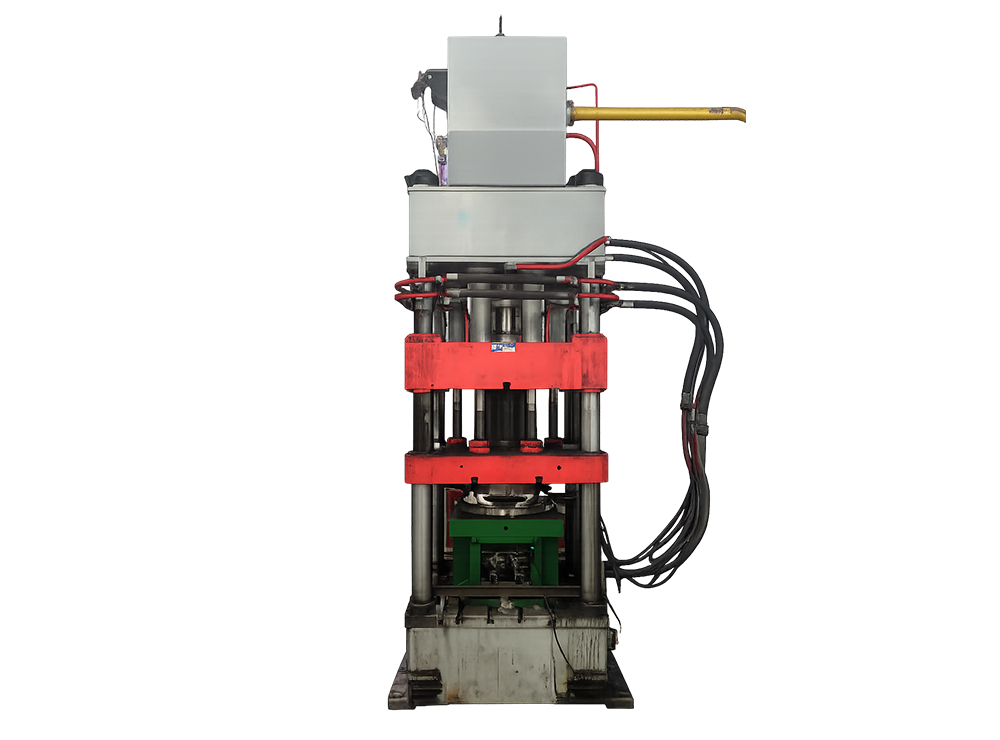
This distinction directly affects the budget. A cylinder manufacturing plant needs deep-drawing presses, trimming equipment, welding systems, heat-treatment equipment, surface-treatment machinery, testing machines, material-handling systems, and inspection facilities. A bottling station requires filling scales, pumps, storage tanks, filling carousels, safety systems, and gas-handling equipment instead.
For a 2026 feasibility plan, I would define the cylinder range first. Common commercial specifications may include 5 kg, 6 kg, 10 kg, 12.5 kg, 15 kg, and 50 kg cylinders, but the actual design must follow destination-market standards, water capacity, wall thickness, valve connection, markings, and testing requirements. Shuofang lists cylinder capacities ranging from 6 L to 118 L and supports several common LPG cylinder sizes for specification-based projects.
2. Complete LPG Cylinder Production-Line Budget Model
The following planning table separates machinery investment from site-specific costs. These figures are preliminary budgeting ranges, not a supplier quotation, and should be replaced with local construction estimates and a detailed technical offer.
| Plant scale | Indicative annual capacity | Machinery package | Site, utilities, and installation | Working capital and pre-operating costs | Indicative total investment |
|---|---|---|---|---|---|
| Small semi-automatic | 150,000–400,000 cylinders | US$0.8–1.8 million | US$0.4–1.0 million | US$0.3–0.7 million | US$1.5–3.5 million |
| Medium automated | 600,000–1.2 million cylinders | US$2.2–4.5 million | US$1.0–2.2 million | US$0.8–1.5 million | US$4.0–8.2 million |
| High-capacity automated | 1.5–3.0 million cylinders | US$5.0–9.0 million | US$2.0–4.5 million | US$1.5–3.5 million | US$8.5–17.0 million |
The machinery package normally represents only part of the LPG cylinder factory setup cost. Imported equipment may also attract freight, insurance, customs duties, local taxes, unloading, assembly, commissioning, operator training, spare parts, and engineering changes. I recommend reserving 10–20% of the machinery value for logistics, installation, commissioning, and project contingencies unless the supplier quotation clearly includes these items.
3. Calculate LPG Cylinder Manufacturing Equipment Cost
The principal equipment categories should be listed separately rather than included under one general “production line” price. This makes supplier comparison easier and shows which components are essential for safety, output, and compliance.
| Equipment category | Main function | Budget planning share |
|---|---|---|
| Coil or sheet preparation | Cutting, blanking, feeding, and material preparation | 5–10% |
| Deep-drawing presses | Forms the two cylinder halves or shells | 15–25% |
| Trimming and edge preparation | Produces accurate shell dimensions and weld edges | 4–8% |
| Valve-neck welding | Joins the valve seat or neck assembly | 5–10% |
| Handle and foot-ring welding | Attaches protective and support components | 6–12% |
| Circumferential welding | Joins the two cylinder halves | 8–15% |
| Heat-treatment system | Relieves welding stresses and stabilizes material properties | 8–15% |
| Shot blasting and surface preparation | Removes scale and prepares the surface | 4–8% |
| Powder coating or painting line | Applies protective and identification coatings | 8–15% |
| Hydrostatic and air-leakage testing | Verifies pressure resistance and sealing performance | 5–10% |
| Valve mounting and marking | Completes assembly and traceability | 3–7% |
| Conveyors, manipulators, and controls | Transfers cylinders and coordinates production | 8–15% |
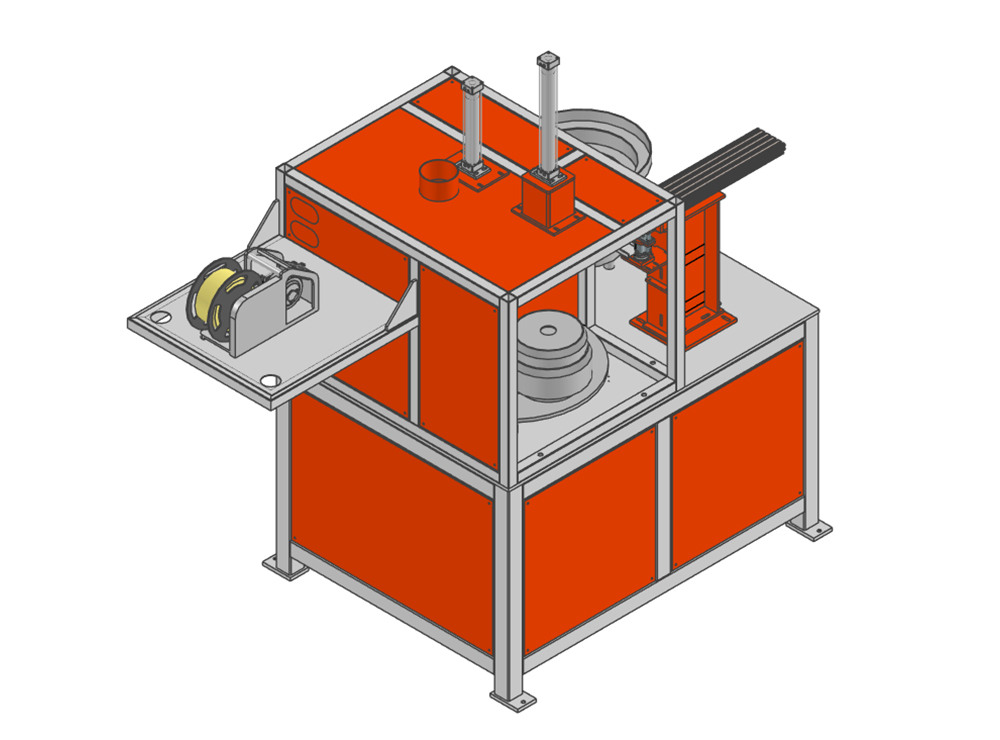
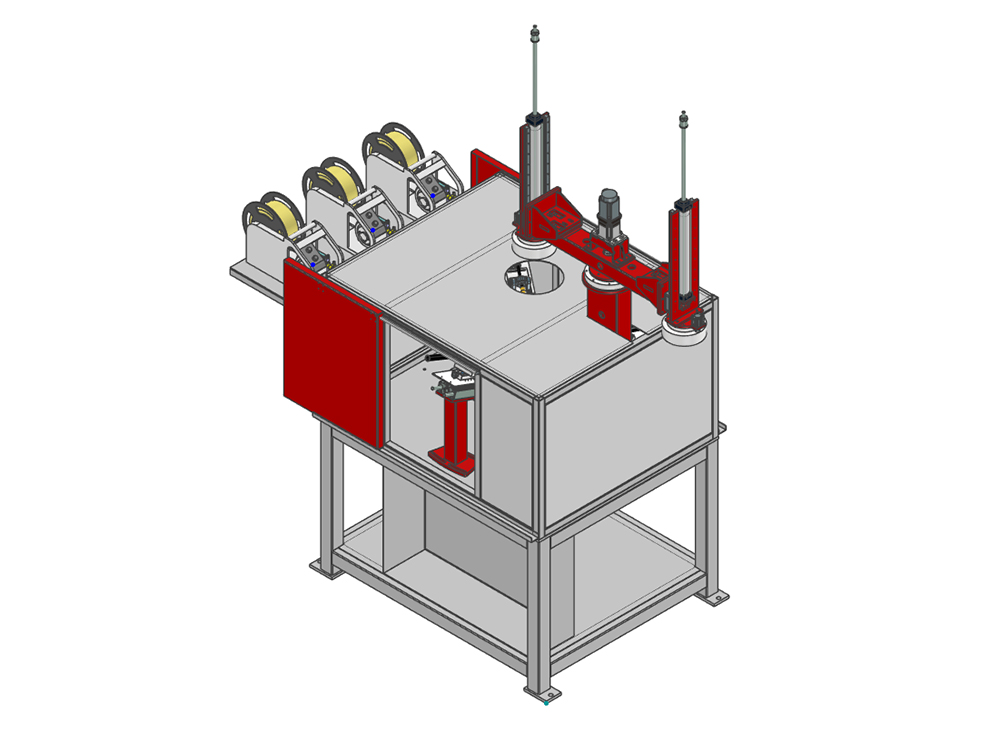
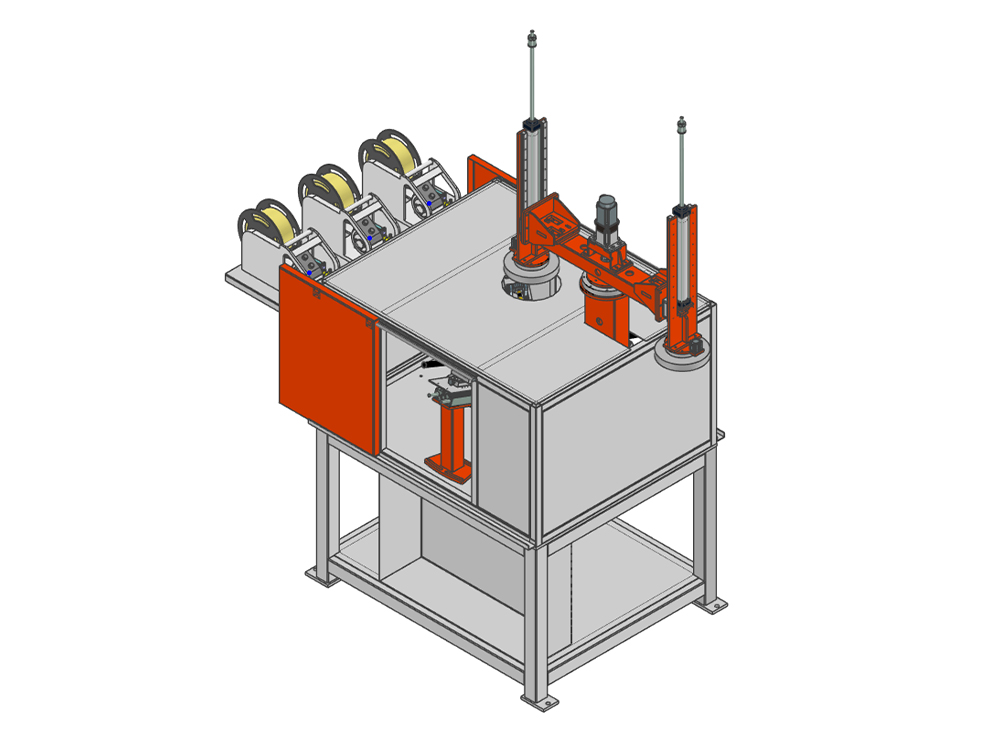
Shuofang’s published equipment categories include deep-drawing machines, automatic and semi-automatic welding lines, trimming machines, powder-coating lines, annealing furnaces, hydro-testing machines, air-leakage testing machines, valve-mounting machines, silk-printing machines, shot-blasting systems, and universal manipulators.
When I evaluate a quotation, I check whether it includes the LPG Gas Cylinder Manufacturing Equipment needed for the complete process or only selected welding machines. A low equipment price may exclude testing systems, furnace controls, molds, dies, material-handling equipment, spare electrodes, control cabinets, or commissioning support.
4. Plan Capacity Before Selecting Automation
LPG cylinder production capacity planning should begin with sales volume, not with the maximum output advertised by a machine supplier. I calculate expected annual demand, operating days, shifts, product mix, planned maintenance, and acceptable utilization before selecting the line speed.
For example, a plant targeting 900,000 cylinders per year might operate 300 days annually and require 3,000 finished cylinders per day. At two shifts of eight hours, the target equals approximately 188 finished cylinders per operating hour before allowance for changeovers, inspection, maintenance, and rejected units.
I normally model three utilization levels:
- Conservative: 50–60% of rated capacity during the first operating year.
- Base case: 65–75% after operators and maintenance teams gain experience.
- Mature case: 80–85% when demand, raw materials, and production controls are stable.
Buying a line rated for 2 million cylinders when the market can absorb only 500,000 creates unnecessary depreciation, energy use, and debt service. A semi-automatic line may be financially more suitable for a regional manufacturer, while an automated line becomes more practical when labor costs, export demand, consistency requirements, and annual volume justify the additional capital.
5. Budget the Factory, Utilities, and Safety Systems
The LPG cylinder factory setup cost includes more than the production hall. I budget separately for land preparation, foundations, workshops, warehouses, offices, laboratories, roads, drainage, fire protection, electrical distribution, compressed air, water treatment, ventilation, waste handling, and security.
A medium plant may require approximately 4,000–10,000 square meters of total site area depending on storage, expansion space, raw-material handling, and finished-goods inventory. The production building should provide a one-directional material flow from steel preparation to forming, welding, heat treatment, coating, testing, and dispatch.
Utilities commonly include:
- Medium- or high-voltage electrical connection and transformer capacity.
- Compressed-air generation and distribution.
- Industrial water supply and cooling systems.
- Furnace fuel or electrical heating capacity.
- Ventilation and dust collection for blasting and coating.
- Fire detection, hydrants, extinguishers, emergency exits, and access lanes.
- Laboratory equipment for dimensional checks, weld inspection, pressure testing, and material verification.
I also distinguish between manufacturing safety systems and LPG handling safety systems. A cylinder manufacturing plant may not require the same LPG storage and filling infrastructure as a bottling station, but it still needs welding controls, furnace safeguards, coating ventilation, pressure-test protection, lifting controls, and procedures for defective cylinders.
6. Include Labor, Quality Control, and Operating Costs
A financial model should include direct operators, welders, maintenance technicians, quality inspectors, laboratory staff, warehouse employees, supervisors, engineers, safety personnel, and administrative workers. A semi-automatic plant may require more direct operators per shift, while an automated line usually requires more controls, maintenance, and process-engineering capability.
The main operating-cost categories are:
- Steel sheet or coil, which may represent 45–65% of manufacturing cost.
- Welding consumables, gases, electrodes, and replacement tooling.
- Electricity, fuel, compressed air, cooling water, and coating materials.
- Direct labor, maintenance, spare parts, testing, packaging, and internal transport.
- Rework, rejected cylinders, warranty claims, and compliance testing.
- Insurance, property taxes, software, security, waste treatment, and administration.
I use a rejection-rate assumption of 2–5% during early production and test the financial model again at 1%, 3%, and 6%. A higher rejection rate reduces saleable output while increasing steel, labor, energy, and inspection costs.
Quality control should be budgeted as production infrastructure, not as an optional laboratory expense. The process may require dimensional inspection, weld monitoring, hydrostatic pressure testing, air-leakage testing, coating checks, marking verification, and sample-based destructive or metallurgical analysis according to the applicable national standard.
7. Build a Feasibility and Return Model
To estimate profitability, I separate capital expenditure, operating expenditure, revenue, and financing costs. A simple revenue model is:
Annual revenue = saleable cylinders × average selling price
A more useful operating model is:
Operating profit = revenue − variable costs − fixed operating costs − maintenance − administration
For illustration, assume a medium plant produces 900,000 saleable cylinders per year, sells each cylinder at an average of US$38, and incurs variable production cost of US$25 per cylinder. Annual revenue would be US$34.2 million, while contribution before fixed costs would be US$11.7 million. If fixed operating costs, maintenance, administration, and local distribution total US$7.0 million, the estimated operating profit would be US$4.7 million before tax and financing.
If annual fixed costs are US$7.0 million and the contribution per cylinder is US$13, the approximate break-even volume is:
US$7,000,000 ÷ US$13 = 538,462 cylinders per year
This result must be tested against debt repayment, tax, depreciation, inventory financing, delayed customer payments, and seasonal demand. A project may show accounting profit while still experiencing negative cash flow if steel suppliers require advance payment and customers pay after 60–90 days.
8. Test Sensitivity Before Approving Investment
I recommend changing one assumption at a time and then running a combined downside case. The following sensitivity ranges are practical starting points:
| Variable | Base assumption | Downside test |
|---|---|---|
| Steel price | 100% of budget | +15% and +25% |
| Utilization | 70% | 50% |
| Rejection rate | 3% | 6% |
| Average selling price | 100% of plan | −10% |
| Labor cost | 100% of budget | +20% |
| Interest rate | Quoted rate | +3 percentage points |
| Exchange rate | Budget rate | 10–15% adverse movement |
| Customer payment cycle | 45 days | 90 days |
| Inventory coverage | 30 days | 60 days |
Steel price and utilization usually have the strongest impact because they affect both gross margin and cash requirements. Financing costs become especially important when imported machinery is paid through loans denominated in a foreign currency while finished cylinders are sold in local currency.
How to Evaluate a Supplier and Quotation
I would request a quotation based on a written technical specification rather than a general request for a “complete line.” The document should state cylinder sizes, annual capacity, shift pattern, automation level, material grade, wall thickness, welding method, testing standard, electrical requirements, floor area, delivery scope, and target acceptance criteria.
The supplier evaluation checklist should include:
- Equipment list with model numbers, quantities, and excluded items.
- Rated output and guaranteed output under defined cylinder specifications.
- Factory acceptance testing before shipment.
- Installation, commissioning, operator training, and production trial support.
- Warranty duration, response time, replacement-part conditions, and exclusions.
- Recommended spare parts for the first 12–24 months.
- Software access, electrical drawings, manuals, and maintenance schedules.
- Energy consumption, compressed-air demand, furnace capacity, and staffing assumptions.
- Site references, operating case studies, and inspection access.
- Lifecycle cost, not only the initial equipment price.
Henan Shuofang Intelligent Equipment Co., Ltd. states that it supplies customized automatic and semi-automatic LPG cylinder production lines and operates its own cylinder production base. Its published service scope includes solution design, equipment manufacturing, installation, commissioning, operation and maintenance support, training, a one-year equipment warranty, replacement parts during the warranty period, and lifetime technical support.
The company also describes a production project with annual output of 1.68 million LPG cylinders, covering forming, welding, heat treatment, shot blasting, and inspection. I would still verify the exact scope, acceptance data, installed capacity, and local-service arrangements during supplier due diligence rather than treating a case-study figure as a guaranteed result for a new project.
Phased Implementation Roadmap
A controlled project should proceed through defined commercial and technical gates:
- Feasibility study: Confirm product sizes, market demand, selling price, steel supply, capacity, and financial assumptions.
- Site selection: Compare land cost, utilities, transport access, labor availability, fire protection requirements, and expansion space.
- Permits and standards review: Identify pressure-vessel, welding, environmental, building, occupational-safety, and product-certification requirements.
- Technical procurement: Issue specifications, compare supplier quotations, inspect references, and negotiate acceptance tests.
- Civil works and utilities: Prepare foundations, buildings, electrical systems, compressed air, water, ventilation, and fire protection.
- Installation and commissioning: Install equipment, calibrate testing machines, train operators, and complete trial production.
- Certification and pilot production: Verify dimensions, weld quality, pressure resistance, leakage performance, coating, marking, and traceability.
- Commercial launch: Begin with controlled production volumes, monitor rejection rates, measure actual cost per cylinder, and release capacity gradually.
Conclusion
Budget Planning for a Complete LPG Cylinder Production Line should combine machinery, civil works, utilities, testing systems, labor, compliance, working capital, and pre-operating expenses rather than focusing only on the equipment quotation. As a preliminary 2026 model, I would consider US$1.5–3.5 million for a small semi-automatic plant, US$4–8 million for a medium automated plant, and more than US$10 million for a high-capacity export-oriented facility.
My next step would be to prepare a product and capacity specification for suppliers such as Shuofang, including cylinder sizes, annual output, automation level, local standards, site conditions, and required installation scope. I would then compare at least three complete quotations using guaranteed output, testing capability, energy consumption, spare parts, commissioning, warranty terms, and lifecycle cost—not the initial machinery price alone.