Automatic vs Semi-Automatic LPG Cylinder Production Lines: Which One Fits Your Factory?
Oct.26, 2026
I compare automatic vs semi-automatic LPG cylinder production lines by production capacity, labor requirements, investment cost, flexibility, quality control, maintenance, and return on investment. The right choice depends less on the equipment label and more on your target annual output, cylinder specifications, workforce availability, factory layout, and expansion plan.
For context, Shuofang provides both automatic and semi-automatic LPG cylinder manufacturing equipment, including forming, trimming, valve-seat welding, handle and base welding, circumferential welding, heat treatment, coating, hydrostatic testing, and leak-testing equipment. Its own production base is used to demonstrate complete manufacturing workflows before equipment delivery.
!
Key Takeaways
- Semi-automatic lines suit lower-volume factories that have available labor and require frequent product changes.
- Automatic lines suit high-volume plants seeking consistent throughput, lower operator dependence, and centralized process control.
- A hybrid line can automate welding, testing, or coating first while retaining manual loading and flexible workstations.
- Total cost includes equipment, labor, energy, maintenance, spare parts, downtime, training, and factory infrastructure.
- The most practical selection method begins with target output, product mix, workforce, budget, and five-year expansion plans.
Automatic vs Semi-Automatic LPG Cylinder Production Lines: Key Differences
Semi-automatic and automatic lines can contain many of the same process machines, but they differ in material handling, workpiece transfer, control logic, inspection integration, and operator involvement. A semi-automatic LPG cylinder production line normally requires operators to load, position, transfer, or unload cylinders between several stations. An automatic LPG cylinder production line connects more stations through conveyors, manipulators, sensors, programmed sequences, and centralized controls.
The table below gives a practical comparison. Actual output must be confirmed through a technical proposal because cylinder diameter, wall thickness, product weight, welding method, cycle time, testing requirements, and the number of parallel stations all affect capacity.
| Factor | Semi-Automatic Line | Automatic Line |
|---|---|---|
| Typical production model | Separate or partially connected workstations | Integrated process flow with automatic transfer |
| Labor requirement | Higher; operators load, position, inspect, and move parts | Lower per unit; operators supervise, replenish, and inspect |
| Output consistency | Depends more heavily on operator timing | More consistent when correctly programmed |
| Product flexibility | Strong for mixed specifications and small batches | Strong for repeat products and stable schedules |
| Initial investment | Lower equipment and integration cost | Higher equipment, controls, handling, and commissioning cost |
| Maintenance | Easier for local technicians to isolate by station | Requires electrical, mechanical, controls, and sensor skills |
| Downtime pattern | One station can often continue independently | A bottleneck or transfer fault may affect connected stations |
| Best-fit factory | Startup, small or medium plant, labor-available operation | High-volume factory with stable demand and expansion plans |
In my assessment, semi-automatic equipment is usually the safer starting point when demand is uncertain or the factory produces several cylinder sizes. Automatic equipment becomes more attractive when labor costs, order volume, quality consistency, and production scheduling justify the additional capital.
How Each Production Configuration Works
How does an automatic LPG cylinder production line work?
An automatic line starts with controlled material feeding and moves steel blanks through forming, trimming, welding, heat treatment, surface preparation, coating, and inspection. Sensors and programmable controls coordinate the transfer between stations, while dedicated manipulators reduce manual handling. In a well-designed system, the operator supervises material supply, machine status, process parameters, safety conditions, and quality records instead of manually positioning every cylinder.
The complete steel LPG cylinder manufacturing process commonly includes blanking, deep drawing or pressing, edge trimming, valve-seat preparation, handle and foot-ring fabrication, longitudinal or circumferential welding, heat treatment, shot blasting or surface preparation, powder coating, hydrostatic testing, air-leak testing, marking, and final inspection. Not every factory requires the same level of integration, so I recommend defining the required process boundary before comparing quotations.
How does a semi-automatic LPG cylinder production line work?
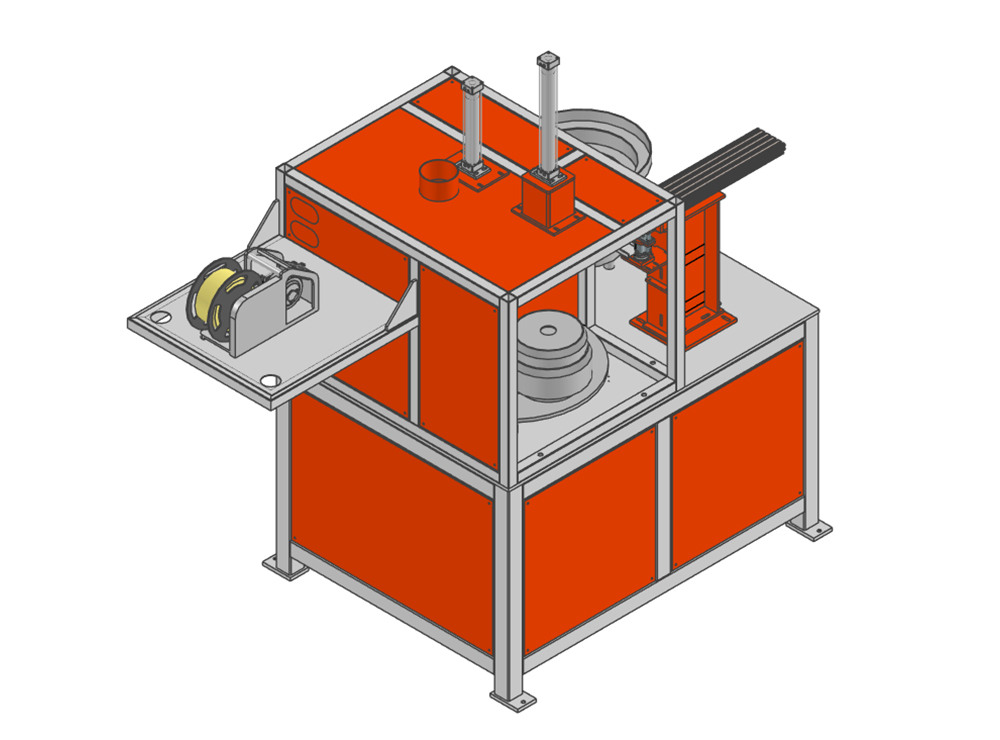
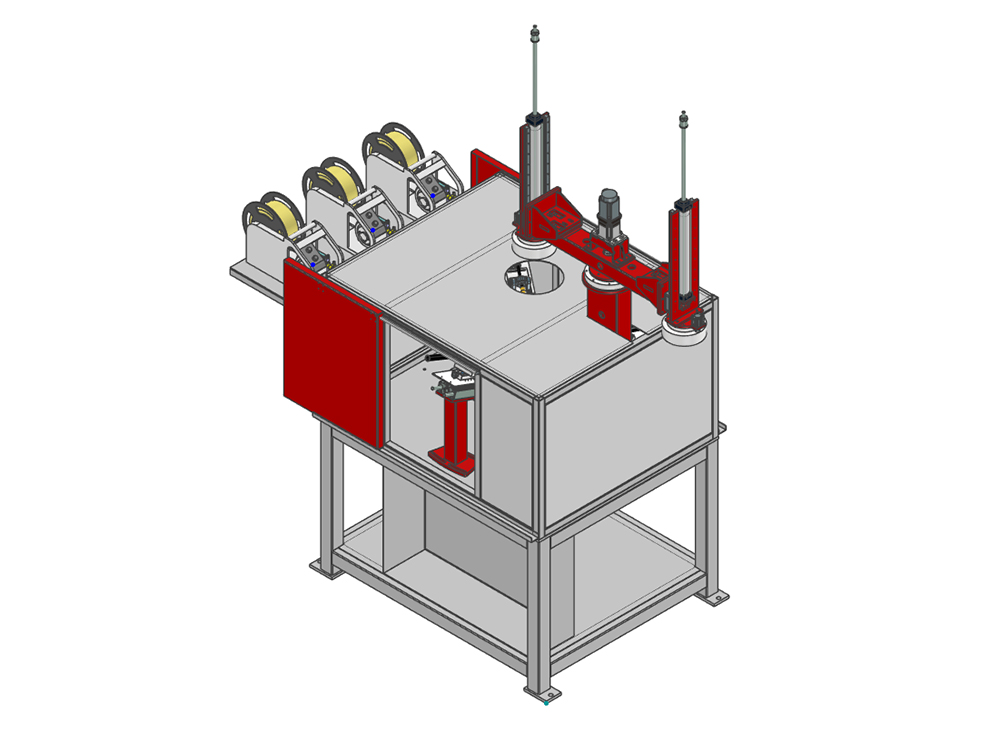
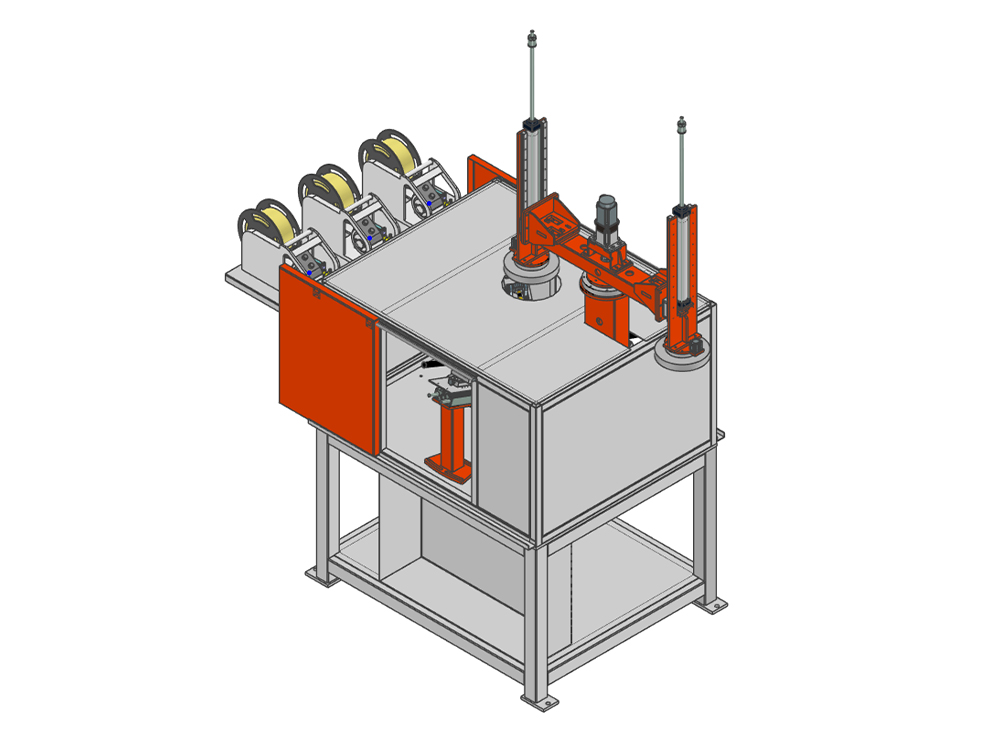
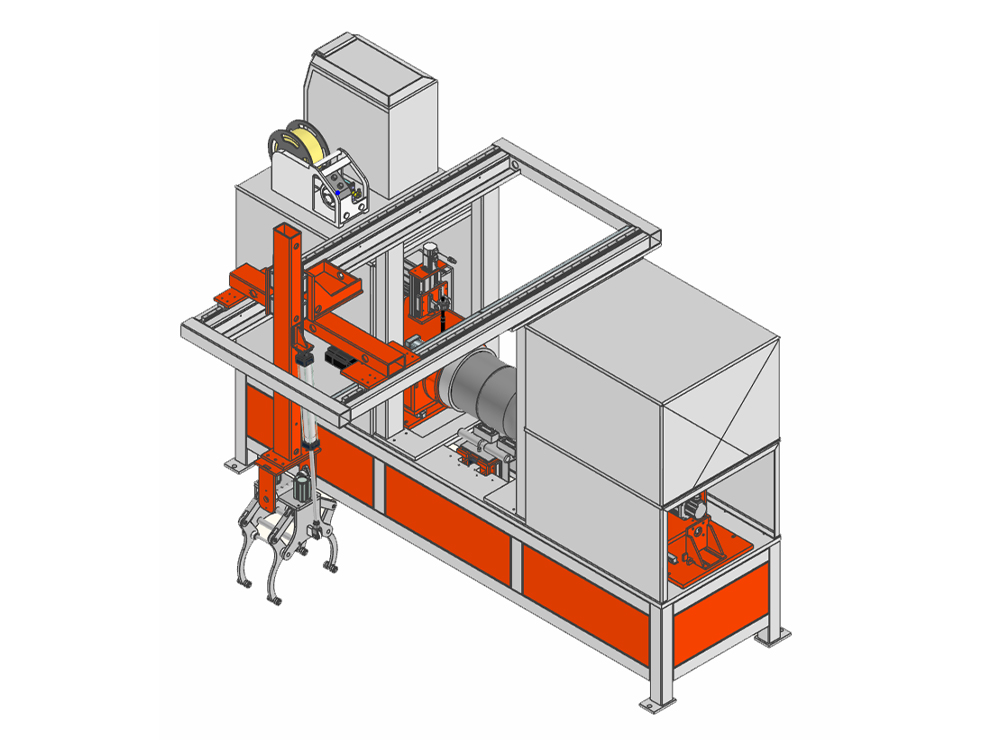
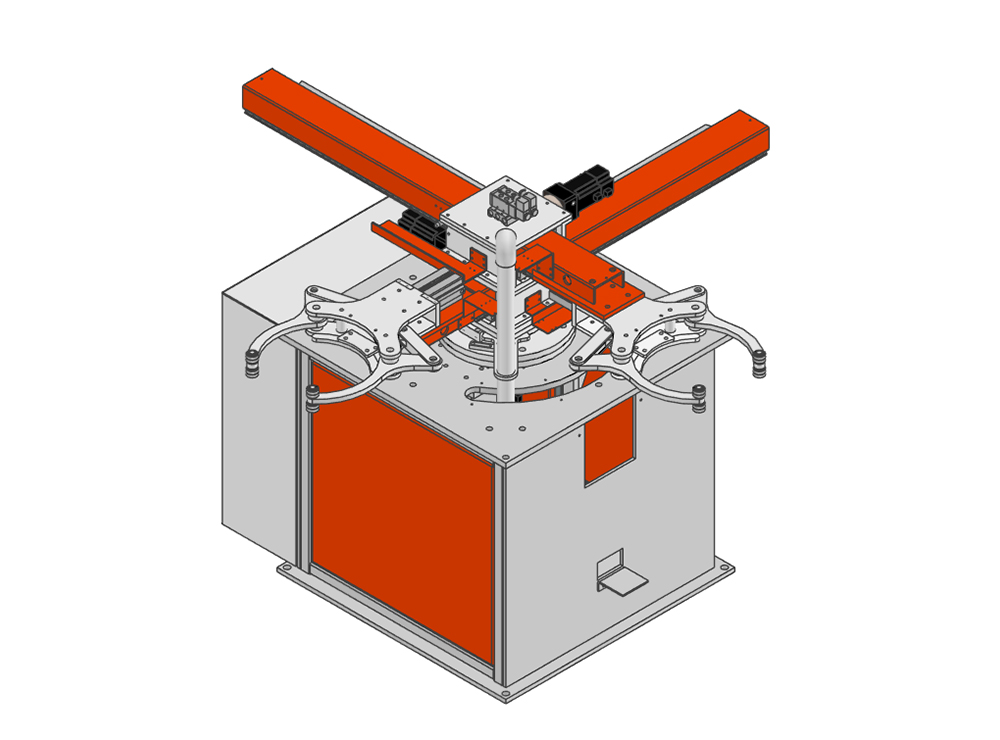
A semi-automatic line uses powered machines for critical operations while operators manage loading, alignment, transfer, and selected inspection tasks. For example, a Semi-Automatic Welding Line may use a dedicated circumferential welding machine, but an operator still loads the cylinder body, positions the components, removes the finished workpiece, and moves it to the next station.
This arrangement reduces the cost and complexity of full-line integration. It also allows a factory to operate separate stations at different speeds, which can be useful when production orders contain multiple sizes or when the plant is still developing its process team.
Production Workflow and Quality-Control Requirements
Blanking and forming
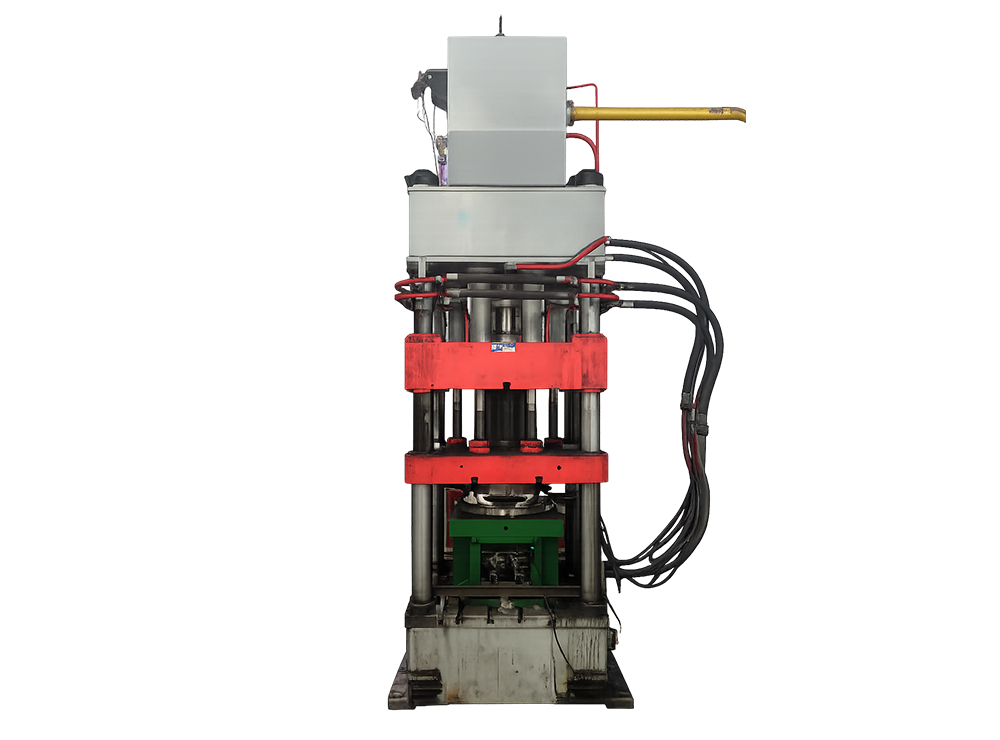
Steel sheet is cut into blanks before deep drawing or pressing creates the cylinder halves or end components. The blank diameter, material grade, thickness, tooling condition, lubrication, and press force affect wall uniformity and dimensional accuracy. Forming defects such as wrinkles, cracks, excessive thinning, and uneven edges should be identified before welding.
Trimming, neck preparation, and component welding
After forming, trimming machines remove excess material and prepare edges for joining. Valve-seat welding, handle or guard-ring welding, and foot-ring welding must be positioned consistently because misalignment can affect assembly, stability, and later inspection. Automatic stations reduce positioning variation, while semi-automatic stations allow operators to compensate for product differences more easily.
Circumferential welding
Circumferential welding connects the cylinder sections and is one of the most important production stages. Welding current, voltage, travel speed, electrode condition, clamping pressure, shielding conditions, and joint preparation must be controlled within the limits defined by the approved process. Shuofang states that some of its circumferential welding equipment uses laser tracking to maintain weld alignment during operation.
Heat treatment and surface coating
Heat treatment can reduce residual stresses created during forming and welding, but furnace temperature uniformity, holding time, loading pattern, and cooling conditions require documented control. Surface preparation may include shot blasting, polishing, or cleaning before powder coating or another specified finish. Coating thickness, adhesion, coverage around welds, and curing temperature should be included in the quality-control plan.
Hydrostatic and leak testing
Hydrostatic testing verifies pressure resistance, while air-leak testing identifies leakage paths that may not be visible during visual inspection. The test pressure, holding time, test medium, machine calibration, safety enclosure, and acceptance criteria must be agreed in the technical specification. Shuofang lists hydro testing machines and air-leak testing machines among its LPG cylinder manufacturing equipment categories.
Capacity, Labor, and Product-Range Comparison
Capacity should be calculated from the slowest process, not from the fastest machine in the quotation. A useful planning equation is:
Annual capacity = accepted cylinders per hour × operating hours per shift × shifts per day × working days per year × utilization rate
The utilization rate must account for setup, material changes, inspection, cleaning, planned maintenance, unplanned downtime, and rejected units. For example, a line rated at a certain hourly output will not produce that number continuously if welding changeovers, furnace loading, testing, or coating curing creates a slower downstream process.
| Factory condition | More suitable configuration |
|---|---|
| Fewer than several consistent production orders per month | Semi-automatic |
| Several cylinder sizes with frequent changeovers | Semi-automatic or hybrid |
| Stable demand and long production runs | Automatic |
| Limited technical maintenance capability | Semi-automatic with local support |
| High labor cost or labor shortages | Automatic |
| Planned expansion over three to five years | Automatic or upgrade-ready hybrid |
| Existing workshop with usable machines | Semi-automatic retrofit or hybrid |
Labor requirements should be measured by station rather than by a single line-wide estimate. A semi-automatic plant may require operators for loading, welding alignment, transfer, visual inspection, testing, and packaging. An automatic plant may need fewer direct operators but more technicians who can manage programmable controls, sensors, servo systems, welding parameters, and preventive maintenance.
LPG Cylinder Production Line Cost and ROI
The LPG cylinder production line cost has five major parts: equipment purchase, factory preparation, installation and commissioning, operating expenses, and financing or working-capital requirements. A lower equipment price does not necessarily produce a lower total cost if it increases labor, scrap, maintenance, spare-parts inventory, or downtime.
I recommend comparing the following cost categories in every quotation:
- Capital equipment: presses, trimming machines, welding stations, manipulators, furnaces, coating equipment, testing machines, conveyors, controls, and safety systems.
- Installation costs: foundations, electrical distribution, compressed air, ventilation, gas or fuel supply, cooling water, exhaust systems, and workshop modifications.
- Labor costs: direct operators, quality inspectors, maintenance technicians, supervisors, and training time.
- Operating costs: electricity, compressed air, welding consumables, coating powder, furnace fuel, cooling water, testing media, and packaging.
- Maintenance costs: planned service, consumable tooling, sensors, electrodes, hydraulic components, control components, and emergency repairs.
- Downtime costs: lost contribution margin, delayed deliveries, overtime recovery, rejected workpieces, and idle labor.
To calculate payback, I use this formula:
Annual net benefit = additional accepted-cylinder contribution margin + labor savings − additional energy − maintenance − financing − quality-loss costs
Payback period = total project investment ÷ annual net benefit
For a semi-automatic line, the investment may be easier to control during the early stage because the factory can purchase essential forming, welding, testing, and coating stations first. For an automatic line, the payback calculation must include the value of higher utilization, lower direct labor per accepted cylinder, improved repeatability, and reduced handling.
A documented Shuofang case reports an automated project reaching an annual production capacity of 1.68 million LPG cylinders after capacity expansion and optimization. That figure should be treated as a project reference rather than a universal guarantee because actual performance depends on product specification, working hours, equipment configuration, and factory management.
Operational Trade-Offs: Downtime, Changeover, and Technical Support
Semi-automatic equipment is often easier to troubleshoot because each process station can be isolated. If a foot-ring welding machine stops, other operations may continue while the problem is corrected. This arrangement can limit the spread of one failure across the whole production flow, although it requires more manual movement and coordination.
Automatic lines reduce repetitive handling but introduce more dependencies between sensors, conveyors, manipulators, programmable logic controllers, servo drives, welding controls, and safety circuits. A small transfer fault can stop several connected stations. For that reason, I would not approve an automatic line without reviewing spare-parts availability, remote diagnostics, local technical support, training depth, and the supplier’s response procedure.
Changeover is another important distinction. Semi-automatic stations usually allow operators to adjust fixtures, tooling, and parameters for different cylinder sizes with less engineering work. Automatic lines can also support multiple products, but the changeover sequence must be designed in advance, and additional fixtures, recipes, tooling, and validation time may be required.
Shuofang describes installation, commissioning, technical training, operation guidance, production tracking, and lifetime technical support as part of its service model. Its published equipment information also states a one-year equipment guarantee with replacement parts during the warranty period. These points should be converted into specific contractual terms covering response time, exclusions, spare-parts delivery, and remote troubleshooting.
A Practical Hybrid Automation Roadmap
A hybrid system is often the most practical answer for factories that want to reduce risk. I would begin by identifying the bottleneck operation rather than automating every station at the same time. In many projects, welding consistency, hydrostatic testing, leak testing, coating, or material transfer creates a stronger business case than automating low-volume component handling.
A staged roadmap can follow this sequence:
- Start with critical quality stations: Install controlled welding and testing equipment where process variation creates safety or rejection risks.
- Add powered forming and trimming: Reduce repetitive manual work while retaining flexible loading and product changeover.
- Automate material transfer: Connect the stations that repeatedly create waiting time or handling injuries.
- Integrate process data: Record production counts, welding parameters, test results, downtime, and rejected cylinders.
- Upgrade bottlenecks: Add parallel stations, automated loading, or additional testing capacity when orders justify the investment.
This approach allows a small or medium factory to begin with a semi-automatic LPG cylinder production line and progressively increase automation. It also creates operational evidence before the factory commits to a fully integrated system.
How to Choose Between an Automatic and Semi-Automatic LPG Cylinder Production Line
| If your priority is... | Choose... | Reason |
|---|---|---|
| Lower initial investment | Semi-automatic line | Fewer integration systems and lower automation scope |
| Frequent cylinder-size changes | Semi-automatic or hybrid | More flexible manual positioning and tooling changes |
| High annual volume | Automatic line | Lower direct labor per unit and more consistent flow |
| Limited technical workforce | Semi-automatic with training | Simpler station-level troubleshooting |
| Labor cost reduction | Automatic line | Reduced manual transfer and handling |
| Existing workshop equipment | Hybrid upgrade | Preserves usable machines and targets bottlenecks |
| Strong long-term expansion plans | Automatic or upgrade-ready hybrid | Supports higher utilization and structured growth |
| Uncertain market demand | Semi-automatic line | Lower financial exposure during market development |
Final Thoughts
Choosing between automatic vs semi-automatic LPG cylinder production lines depends on your factory’s production volume, budget, labor availability, product range, and long-term expansion plans. A semi-automatic LPG cylinder production line is usually appropriate for startups, small and medium factories, mixed product schedules, and markets where trained labor is available. An automatic LPG cylinder production line is more suitable for stable high-volume production, rising labor costs, strict repeatability requirements, and planned capacity expansion.
I recommend preparing a five-year production forecast before requesting equipment prices. Define the cylinder sizes, annual output, shifts, available workforce, testing standards, factory utilities, acceptable downtime, and future expansion stages. Then compare the full cost of ownership rather than only the equipment quotation, using accepted cylinders per hour, operators per shift, utilization, defect rate, maintenance cost, and payback period as the decision metrics.